



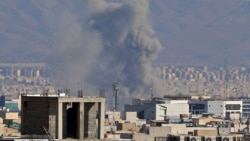
Tehran's Azadi Stadium Destroyed In Strike
Hours after reports emerged of attacks on a location in western Tehran near Azadi Stadium, Iranian news agencies published images showing the total destruction of the indoor 12,000-seat Azadi Sports Complex.
These news agencies wrote, "In this morning's American and Israeli missile attack on the 12,000-seat Azadi Stadium in Tehran, all parts of the stadium and the surrounding buildings were destroyed."
The Azadi Stadium is the largest indoor sports hall in Iran, which opened prior to the 1979 revolution, at the time of the 1974 Asian Games. Most futsal, volleyball, wrestling, basketball, skating, and horse jumping competitions were held at this stadium.
The sports venue was also used for public ceremonies during religious and political occasions.
EU Foreign Policy Chief Says Iran 'Exporting War'
Ahead of an informal video conference with the EU foreign ministers and the ministers from the Gulf states, the European Union's top diplomat, Kaja Kallas, said on March 5 that "Iran is exporting the war, trying to expand it to as many countries as they can to sow chaos."
"When we talk to the countries in the region, they are also worried about civil wars inside Iran because of the regime's leadership and what is going on there," Kallas told reporters in Brussels.

"Well, usually the regimes are trembling from inside, not from attacks from outside. But, of course, the regime has been considerably weakened, so it gives also the opportunities for the Iranian people to actually decide their own future," she added.
"The same drones that are attacking Kyiv are now attacking our partners in the Middle East. So we will explore how we can support drone interceptor production," Kallas wrote in a post on X.
Meanwhile, Ukrainian President Volodymyr Zelenskyy said that countries in the Middle East have asked Ukraine to share its expertise in response to the use of Iranian drones against civilians in those countries.
"They are seeking our expertise. We are open. If their representatives come, we will provide the expertise," he wrote on X.
Michael Knights: Gulf Region On The Precipice Of Fundamental Change
With the US-Israeli military campaign against Iran now into its sixth day, both sides continue to launch attacks amid fears the war could spill over into a broader regional conflict.

Michael Knights, head of research at Horizon Engage, a New York–based strategic advisory firm and an adjunct fellow at The Washington Institute, spoke with RFE/RL's Vazha Taberidze about the likely objectives in the conflict for both sides and what may happen if those aren't achieved.
"Iran is a house with no roof right now. The Israelis and the US will have full freedom of movement for the foreseeable future, maybe forever at this point.
"Once it's at this point, the Israelis will never stop going back on a monthly basis until that regime is gone," he tells RFE/RL. "It is bigger than Lebanon, but it's also very important to the Israelis. And they now have the capability to keep intervening for the foreseeable future.
"What's at stake here is really the whole future of the region. We're at a dividing line right now where the post-1979 experience of the region can be fundamentally changed," he says.
To read the full interview, click here.
NATO Says Activating Article 5 Not On the Agenda
NATO Secretary General Mark Rutte said on March 5 that the North Atlantic Treaty Organization is closely monitoring the situation in the Middle East, but that in the current situation, activating the Article 5 defense clause is not on the agenda.
Article 5 of the NATO Treaty states that in the event of an attack on a member country, other members must rush to the aid of the attacked country.
"Nobody's talking about Article 5," Rutte said in Brussels, where NATO is headquartered, even as he described the incident as "serious."
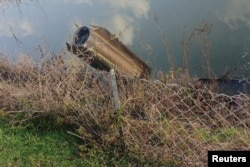
Rutte's comment comes in response to the launch of a ballistic missile from Iran toward Turkey, which Ankara officials say was intercepted in Turkish airspace and destroyed by NATO air defenses.
The Islamic republic denied on March 5 that a missile had been fired into Turkish territory.
In another part of his speech, Rutte confirmed that NATO supports the US attack on Iran, saying that Iran "was close to becoming a threat to Europe as well."
However, several leaders of NATO countries such as Spain and Turkey have criticized the military campaign, warning that it constitutes a dangerous violation of international law.
With reporting by Reuters
Conflict Widens Across Middle East As US, Israel, And Iran Trade Strikes
US and Israeli forces continued to strike Iran as the conflict broadened across the Middle East, with Tehran launching attacks on neighboring countries, including Azerbaijan, and Israel pursuing a "buffer zone" in southern Lebanon.
With the United States and Israel currently engaged in a sixth day of war against Iran, the number of countries in the region to suffer Tehran's retaliatory strikes, which have targeted both military and civilian infrastructure, grew again on March 5.
Neighboring Azerbaijan, which has longstanding ties with Israel, reported attacks launched from Iranian territory on March 5.
To read the latest report in full, click here.
'A Dangerous Situation': Azerbaijan Fears Becoming Embroiled In Widening Iran War
Fears are growing in Azerbaijan, Iran's northwestern neighbor, that the South Caucasus country could become embroiled in the US-Israeli war on Tehran that is widening in scope.
Baku accused Iran of firing drones that struck an airport and school in Azerbaijan's Nakhchivan autonomous region on March 5, calling it an "act of terror" and vowing to respond. Tehran denied it fired the drones that injured two people.
The incident has heightened concerns in Azerbaijan -- which has close military, economic, and energy ties to Israel, Tehran's archenemy -- that it could become a target of the Islamic republic's expanding response to the massive US-Israeli air campaign launched on February 28.
Iran has retaliated by firing missiles and drones at US military and diplomatic facilities and striking key energy infrastructure in the Persian Gulf. Tehran's aim, experts say, is to expand the war and increase the cost of the conflict for Washington and its allies.
To read the full report, click here.
Trump Tells Reuters US To Have Role In Choosing Iran's Next Leader
US President Donald Trump said he backs Iran's Kurds in launching an offensive to help overthrow the Islamic regime and that while it's still early in the process, Washington will have a role in choosing Iran's next leader. Speaking in a phone interview with Reuters on March 5, Trump said he believes having a role in selecting Iran's next leader after Supreme Leader Ayatollah Ali Khamenei was killed in air strikes last weekend, would help ensure stability. "We want to be involved in the process of choosing the person who is going to lead Iran into the future," Trump said. "We don't have to go back every five years and do this again and again...Somebody that's going to be great for the people, great for the country." When asked if he backs the Kurds launching an offensive in Iran, Trump said he thinks "it's wonderful that they want to do that, I'd be all for it." He refused, however, to say if the United States would provide, or had offered, air cover for any Kurdish offensive.
Iranians Flee To Armenia As Air Strikes Continue
Iranians crossing the border into Armenia as they flee US and Israeli air strikes had mixed feelings when they spoke to RFE/RL, painting a picture of the frightening situation they left behind while also expressing relief over the toppling of senior leadership.



Sri Lanka Assisting Second Iranian Vessel After US Sub Sank Warship
Sri Lanka on March 5 begun offloading 208 crew members from a second Iranian vessel off its coast, a day after 87 people were killed after a US submarine sank an Iranian warship in the region with a torpedo.
"After detailed discussions with all parties, Sri Lanka has decided to assist the Iranian vessel," Sri Lankan President Anura Kumara Dissanayake told a news conference in the capital, Colombo.
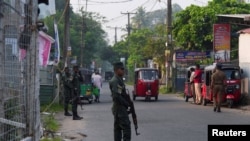
The ship was outside Sri Lankan territorial waters near the port of Colombo, Dissanayake said.
Dissanayake said the second Iranian vessel, the IRINS Bushehr, asked the Sri Lankan government for permission to dock at one of the country’s ports. The government decided to offload the crew and then escort the ship to port on the island nation, which is 27 kilometers from India at its nearest point.
Officials did not confirm if the ship was a naval or commercial vessel. It wasn't immediately clear if the ship crew feared attack or if there had been technical issues.
The crew included 53 officials, 84 cadets, 48 senior sailors, and 23 sailors, Dissanayake said.
Some crew members would remain on board to help Sri Lanka's navy bring the vessel to a port in the eastern part of the island, the president added.
A US submarine sank the first ship, the IRIS Dena, on March 4 some 20 nautical miles off Sri Lanka's southern port city of Galle.
IRIS Dena had participated in an India-organized naval exercise in the Bay of Bengal on February 18-25 and was returning to its home port, naval records and Sri Lankan officials said.
Sri Lankan officials said 87 sailors were killed, while military crews rescued 32 survivors. Ten remain missing, officials said. Initial reports said 60 were unaccounted for, but the number was later amended.
The attack dramatically widened the scope of the war, which began on February 28 when US and Israeli air strikes pounded Iranian sites. Iran has retaliated with missile and drone strikes at Israel, Arab Gulf allies of the United States, and other countries including Azerbaijan and Turkey.
French Military Allows US Support Jets To Use Istres Air Base
The French military said US support jets have been permitted to use a French air base, saying it had "full guarantees" the aircraft were not involved in strikes on Iran.
"US aircraft providing operational support (not combat aircraft) have been accepted at the Istres air base in France," the general staff said.
"France has required that the assets involved in no way take part in the operations conducted by the United States in Iran, but strictly in support of the defense of our partners in the region. It has obtained full guarantees to that effect," it said.
The Istres-Le Tube Air Base is large facility near Istres, northwest of Marseille. US forces have in the past used the base during missions involving French and American forces.
Separately, Alice Rufo, the minister delegate to the defense minister, said, "There is no use of French bases in the Near and Middle East for American offensive action."
The comments come two days after French President Emmanuel Macron said US-Israel military operations in Iran were conducted "outside international law."
With reporting by AFP