



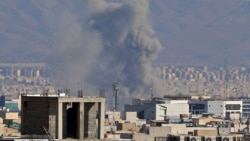
US House Follows Senate, Rejects Curbs On Trump's War Authority
The US House of Representatives on March 5 rejected an effort to limit President Donald Trump's authority to wage war against Iran.
The measure led by Republican Thomas Massie and Democrat Ro Khanna was defeated 212-219. It would have required Trump to obtain congressional authorization before continuing military operations against Tehran.
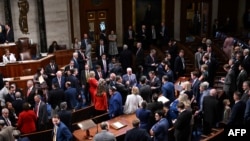
It came a day after the Senate rejected a similar effort, underscoring the Republican-controlled Congress's reluctance to confront Trump as US forces conduct joint air strikes with Israel on Iran.
Trump would have been able to veto the legislation, even if it had successfully passed both chambers.
A two-thirds majority in both chambers would have been required to override the veto -- an almost impossible undertaking given in the current makeup of Congress.
Under the US Constitution, Congress has the power to declare war. The 1973 War Powers Resolution was intended to prevent presidents from committing US forces to long conflicts without getting approval of Congress.
"I think passage of a war powers resolution right now would be a terrible, dangerous idea...It would empower our enemies," Republican House Speaker Mike Johnson told reporters ahead of the vote.
Chuck Schumer, who leads the Senate's Democratic minority, said, "Republicans had their chance to do something that would have been overwhelmingly popular: to say no to Trump's war."
"Instead, they enthusiastically said yes, and now they own this war with Iran just as much as Donald Trump does."
Based on reporting by Reuters and AFP
Israel Strikes Lebanon As Lawmaker Says Goal Is To 'Topple Regime' In Iran
Israel aimed a new wave of attacks at Iran and added targets in southern Lebanon on the sixth day of the joint US-Israeli campaign. Reporting from Tel Aviv, RFE/RL correspondent Ray Furlong spoke to Israelis taking shelter as air raid sirens went off, and interviewed one prominent opposition politician who said Israel's goal for a "final result" of the war is to bring down the regime in Tehran.

Trump Offers ‘Immunity’ to Iranian Forces Who Surrender, Urges Civilian Uprising
WASHINGTON -- US President Donald Trump called on members of Iran’s military, police, and the Islamic Revolutionary Guard Corps (IRGC) to lay down their arms, promising “total immunity” if they abandon the country’s ruling clerical establishment.
Speaking at the White House on March 5, Trump urged security forces to side with the Iranian public and help bring down the government that has ruled the country since the 1989 Iranian Revolution.
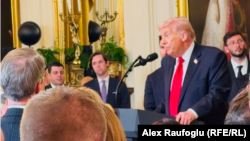
“I’m once again calling on all members of the Iranian Revolutionary Guard, the military, and the police to lay down their arms,” Trump said. “Now is the time to stand up for the Iranian people and help take back your country.”
He emphasized those who surrender would receive protection. “We’ll give you immunity,” Trump said, adding that those who defect would be on “the right side of history.”
“You’ll be perfectly safe with total immunity, or you’ll face absolutely guaranteed death. And I don’t want to see that,” he said.
Trump also appealed to Iranian diplomats stationed abroad to request asylum and assist in shaping Iran's future.
“We urge Iranian diplomats around the world to request asylum and help us shape a new and better Iran with great potential,” he said.
Claim of Heavy Military Losses
The US president claimed that Iranian military capabilities had been severely degraded during recent fighting.
“In three days, their anti-aircraft weapons are gone. They have no air force. They have no air defense,” Trump said. “All of their airplanes are gone. Their communications are gone.”
He also said roughly 60 percent of Iran’s missiles and 64 percent of its launchers had been destroyed and that the country’s navy had lost 24 ships.
“Their navy is gone,” he said.
Trump also made it clear that the US would ensure that Iran’s next leadership does not threaten regional countries or America’s interests.
“The United States will ensure that whoever leads the country next, Iran will not threaten America or its neighbors -- Israel, anybody,” he said.
He accused Tehran of previously aiming missiles at several Gulf countries, including Qatar, Saudi Arabia, and the United Arab Emirates.
“They were going after the entire Middle East,” Trump said. “Then we came along. We blew up their party.”
Oil Market Measures
Amid concerns about rising energy prices following US and Israeli strikes on Iran, Trump said Washington had taken steps to stabilize oil markets. These included offering political risk insurance for oil tankers passing through the Persian Gulf, which he described as a “dangerous territory.”
Further measures to ease pressure on oil prices would be announced soon, he said.
US Issues Alert After Drone Strike In Azerbaijan Region
WASHINGTION -- The United States has warned its citizens in Azerbaijan to avoid travel to the Nakhchivan region after drones struck the autonomous exclave earlier on March 5, an incident that sharply escalated tensions between Baku and Tehran.
In a security alert issued March 5 through the US Embassy in Azerbaijan, the State Department said an “unknown number of drones” struck the Nakhchivan Autonomous Republic around noon local time, hitting the terminal building at Nakhchivan’s international airport and landing near a school building.
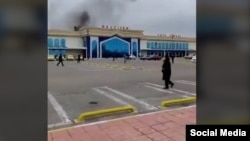
The advisory said US government personnel are prohibited from traveling to the region and urged American citizens to closely monitor developments and seek assistance if needed.
The warning came hours after Azerbaijani authorities said the drones had crashed in the exclave bordering Iran and Armenia, prompting Baku to close airspace near its border with Iran for 12 hours as a precaution.
Azerbaijan’s president, Ilham Aliyev, condemned the incident as an “ugly act of terror” and demanded an apology from Tehran, saying those responsible must be “immediately held accountable.” Tehran denied involvement.
Tehran denied it fired the drones.
Quieter Night In Israel As Military Chief Says War Enters 'New Phase'
- By Ray Furlong
TEL AVIV -- Israel had a quieter night after its top military commander said the war against Iran was now entering a "new phase."
Israeli Defense Force (IDF) chief Eyal Zamir said on the evening of March 5 that the next stage of the conflict would "further dismantle the regime and its military capabilities."
He also said waves of strikes had destroyed 80 percent of Iran's air defenses and 60 percent of its missile launchers, though he cautioned that "the threat has not yet been removed."
Later, at around 11 p.m. local time, sirens sounded and people took cover as a fresh ballistic missile strike was detected. The strike included a cluster warhead that caused a fire but no injuries, authorities said.
Zamir did not go into much detail about the nature of the next stage of the war, which Israel launched with air strikes on Iran nearly a week ago. Media reports here suggest it will focus on deep underground ballistic missiles bunkers.
The IDF released a video on March 6 of what it said was the destruction of Iranian ballistic missile launchers that were about to fire on Israel.
Other strikes on Israel included hits areas in the north of the country, near the border with Lebanon, and the Israeli-annexed Golan Heights.
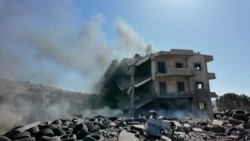
In Lebanon, fighting continued with Tehran-backed Hezbollah. The IDF said it made fresh air strikes on March 6, hitting a drone store and command base.
The Lebanese Health Ministry said 123 people had been killed in Israeli air strikes. Tens of thousands of people have fled their homes in southern Lebanon and Beirut after warnings from Israel of forthcoming operations.
Zelenskyy Says Ukraine Ready To Help US And Gulf Countries Counter Iranian Drones

Ukrainian President Volodymyr Zelenskyy says the United States has requested Kyiv’s assistance in countering Iranian Shahed suicide drones.
“We have received a request from the United States for special assistance in countering Shahed drones in the Middle East,” Zelenskyyt wrote on X, adding that he has “issued "instructions to provide the necessary means and ensure the presence of Ukrainian specialists who can guarantee the required security.”
According to the Ukrainian president, the country is helping its partners who "help ensure our security and protect the lives of our people."
In recent days, Zelenskyy had offered assistance and the deployment of Ukrainian specialists to leaders of Gulf countries that have been affected by Iranian drone attacks.
The relatively inexpensive Shahed drones were initially developed and produced only in Iran, but Russia now produces similar versions under the name “Geran” and uses them against Ukraine.
The US military has also recently announced the development of drones based on the same model.
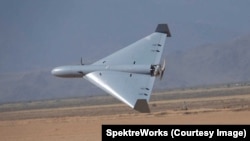
Return To Sender? America's 'Shahed Clone' Included In Military Buildup Around Iran
After Week Of Closures, Government Offices And Banks In Tehran Restricted Until Further Notice
After a week of closures, activity at government offices and banks in Tehran has been restricted until further notice.
As a week-long shutdown declared after the death of Iranian Supreme Leader Ayatollah Ali Khamenei comes to an end, Iranian media reported that operations at government offices and banks in the capital, Tehran, will remain restricted until further notice.
Tehran’s governor announced on March 5 that, beginning on March 7, all ministries, organizations, and executive bodies located in Tehran Province will operate with 20 percent of staff present in person until further notice. All female employees will also work remotely until further notice.
According to the announcement, managerial positions in Tehran Province are exempt from remote-work arrangements and are required to be present at their workplaces. The operational units of municipalities, medical centers, military, police, and security forces are also exempt from the restrictions.
The governor also said that administrative and technical units of banks will operate with 20 percent of staff, while selected bank branches will remain open on a rotating basis.
At the same time, an official from Iran’s Central Bank said the bank has proposed postponing the due dates for checks and loan repayments and submitted the proposal to the government. Its implementation is pending government approval.
Tehran Under Heavy Bombardment As Attacks Intensify
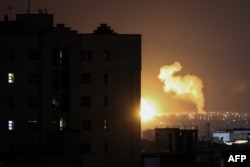
Residents of Iran’s capital witnessed one of the heaviest bombardments of the past week in the early hours of March 6, according to news and reports published on social media.
Images shared on social media indicate that the attacks were particularly intense in central parts of Tehran and around major government buildings.
In addition to the city center, reports also point to attacks on other parts of Tehran in both the eastern and western areas of the city. Many witnesses in these reports mentioned hearing fighter jets and, in some cases, being able to see them in the skies over Tehran.
Some users also reported houses shaking and some localized power outages in areas near the bombed locations.
Earlier, Israel’s Chief of Staff said the military campaign against Iran was entering a new phase, while several U.S. officials -- including defense chief Pete Hegseth -- warned that the intensity of the strikes could increase in the coming days.
UK Arrests 4 People On Suspicion Of Spying For Iran
British police have announced the arrest of four people suspected of spying for Iran and monitoring locations and individuals connected to the Jewish community in London.
London’s Metropolitan Police said on March 6 that the arrests were made as part of an investigation into suspected surveillance of certain locations and individuals within London’s Jewish community.
According to the report, one of those arrested is an Iranian citizen, while the other three hold dual British–Iranian nationality. The suspects were detained following police operations in Barnet, in north London, and in Watford, north of the capital.
Police said the individuals are between 22 and 55 years old.
Helen Flanagan, head of Counter Terrorism Policing London, said the arrests are part of a long-running investigation.
Police also announced that six other men were arrested during the operation on suspicion of assisting an offender.
In recent years, British lawmakers and intelligence agencies have repeatedly warned about threats posed by Iran to the United Kingdom.
Azerbaijan Evacuates Diplomats From Iran After Drone Incident
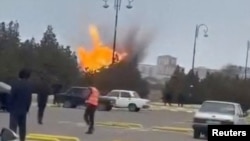
Azerbaijan is evacuating its diplomats from Iran for their own safety, Azerbaijani Foreign Minister Ceyhun Bayramov announced on March 6.
The move comes a day after Baku reported that four Iranian drones had crossed into its territory, injuring four people in the Nakhchivan exclave.
Speaking at a joint press conference with Moldovan counterpart Mihai Popsoi in the Azerbaijani capiral, Bayramov said the evacuation affects staff at Azerbaijan's embassy in Tehran and its consulate general in Tabriz, a city in northwestern Iran that is home to a large ethnic Azeri population.
"Following orders from President Ilham Aliyev, instructions have been issued to evacuate our embassy in Tehran and the consulate general in Tabriz, and these measures are already underway," he said. "We cannot risk the lives of our personnel," he said.
A day earlier, Baku accused Iran of firing drones that struck an airport and school in Azerbaijan's Nakhchivan autonomous region, calling it an "act of terror" and vowing to respond. Tehran denied it fired the drones, which injured four people.
President Aliyev said that "Iran committed an act of terror against the territory of Azerbaijan, against the state of Azerbaijan."