

Western Leaders Crank Up Pressure On Iran Amid Crackdown On Protesters
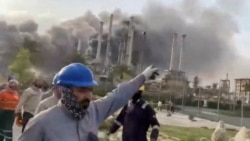
Iran has entered a 14th night of protests as authorities seemed to be intensifying their crackdown and Western leaders -- including US President Donald Trump -- stepped up pressure on Tehran.
Speaking at a meeting with oil and gas executives at the White House on January 9, Trump said that "Iran is in big trouble. It looks to me that the people are taking over certain cities that nobody thought were really possible just a few weeks ago."
"We're watching the situation very carefully. I've made the statement very strongly that if they start killing people like they have in the past, we will get involved. We will be hitting them very hard where it hurts. That does not mean boots on the ground, but it does mean hitting them very, very hard where it hurts."
This was followed up by a short post on X by US Secretary of State Marco Rubio on January 10, stating that the United States “supports the brave people of Iran.”
The protests, which began on Tehran's Grand Bazaar on December 28, quickly snowballed, spreading to dozens of towns and cities.
By the evening of January 8, videos poured in from nearly every corner of the country showing huge crowds chanting and marching.
Authorities first throttled nationwide Internet speeds before enforcing a near-total blackout at 10:15 p.m. local time on January 8, severing phone lines too.
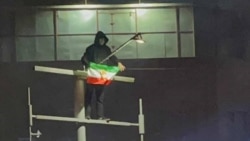


With the blackout now lasting more than 40 hours there is no precise information about the number of people killed, injured, or detained across the country with widespread fears that the cut is being used to hide state violence against protesters.
Amnesty International released a statement on January saying that it was investigating "distressing reports that security forces have intensified their unlawful use of lethal force against protesters" which has “led to further deaths and injuries.”
There have also been media reports, including by AFP, that hundreds of people had been taken to a Tehran hospital with “severe eye injuries” caused by pellet gun fire.
The Human Rights News Agency (HRANA), which covers human rights-related news, has reported that at least 2,311 people were arrested in the first 13 days of the protests and that demonstrations were reported in 512 locations across 180 towns and cities amid a near-total Internet shutdown. Additionally, the Norway-based Iran Human Rights has said that 51 protesters have been killed as of January 9.

In a joint statement issued on January 9, the leaders of France, Germany, and the United Kingdom expressed “deep concern about reports of violence by Iranian security forces, and strongly condemn the killing of protestors.”
The text also added that the Internet blackout "has sparked fears among activists that authorities are now violently cracking down on the protests, with less chance the proof will reach the outside world."
An EU statement issued on the same day also called for “the right of access to information, including by restoring access to the Internet for all” while expressing “solidarity with the Iranian people as they voice their legitimate aspiration for a better life, freedom and dignity.”
Prince Reza Pahlavi, whose father -- Iran's last shah Mohammad Reza Pahlavi -- was ousted by the Islamic Revolution in 1979, issued a message of support on social media for the protesters, telling them that they have “won the admiration of the world with your courage and steadfastness” while announcing that he was planning to return to Iran in the near future.
Protesters came out in force on January 8 and January 9 night following calls by Reza Pahlavi for sustained street demonstrations.
Iranian Supreme Leader Ayatollah Ali Khamenei addressed supporters of the regime on January 9, saying that "saboteurs, agitators" had "destroyed the country's buildings to please" President Trump.
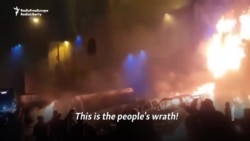
He added that Trump has the "blood of Iranians on his hands" following US strikes on Iran in June, and that the US leader would be "overthrown."
The Iranian army later issued a statement announcing it would join other armed forces to "guard and protect the country's strategic infrastructure and public property" during the protests.
Separately, the authorities said several members of the security forces have been killed as state TV broadcast images on January 10 of funerals of security officers allegedly killed in the protests, including a large gathering in the southern city of Shiraz.
Amid an Internet blackout in Iran, RFE/RL’s Radio Farda is broadcasting into the country on shortwave radio. You can get details in Persian here.
From 'Rioters' To 'Terrorists': Iranian State Media Hardens Tone On Protesters
State-affiliated media outlets in Iran that have continued operating for about 48 hours after a nationwide Internet shutdown have for the past two days been increasingly referring to protesters opposing the government using terms such as “terrorists” or “armed terrorists.”
The Tasnim News Agency, which is close to the Islamic Revolutionary Guards Corps, and the state-controlled IRIB news broadcaster had previously described the protests as “riots” and protesters as “rioters.” However, as demonstrations intensified on January 8 and January 9, their narrative has shifted.
Iran’s state radio and television news outlets have adopted a similar approach.
The nationwide Internet shutdown in Iran, which began on the evening of January 8, has been so extensive that even official and state-run media have been unable to publish content online, and access to their websites has not been possible.
Meanwhile, echoing state media, several Iranian officials have issued statements over the past two days, claiming that “terrorists” were involved in the protests. Officials within Iran’s judiciary have also issued strong threats against protesters.
On January 10, Iran’s prosecutor-general called for indictments and a “decisive crackdown” against protesters, grouping together demonstrators, alleged saboteurs, and armed actors under a single set of charges. State media, including Tasnim, disseminated his remarks under headlines referring to protesters as “terrorists,” while in recent interviews on state TV Tehran Mayor Alireza Zakani has similarly described the unrest as “terrorist incidents.”
A message from European Commission President Ursula von der Leyen:
Trump Says US ‘Ready To Help’
- By RFE/RL
US President Donald Trump has issued a message of support on social media for protesters in Iran.
“Iran is looking at FREEDOM, perhaps like never before. The USA stands ready to help!!!” he wrote on his Truth Social account on January 2.
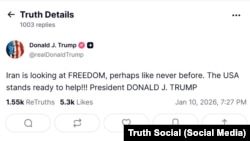
Trump has said on several occasions that a harsh crackdown by Tehran could trigger a US response.
On January 2, he said Washington would intervene in Iran if it kills protesters, stating in a Truth Social post: "We are locked and loaded and ready to go."
A week later, speaking at a meeting with oil and gas executives at the White House on January 9, the US President said that "Iran is in big trouble. It looks to me that the people are taking over certain cities that nobody thought were really possible just a few weeks ago."
"We're watching the situation very carefully. I've made the statement very strongly that if they start killing people like they have in the past, we will get involved,” he added. “We will be hitting them very hard where it hurts. That does not mean boots on the ground, but it does mean hitting them very, very hard where it hurts."
Videos from inside Iran circulating on social media on January 10 indicated that crowds continued to gather in various parts of the capital, Tehran, and in the cities of Tabriz and Rasht.
'Hundreds Of Gunshots': Witness Tells RFE/RL Of Iran Protest Violence
RFE/RL's Radio Farda has spoken to an Iranian man who says he witnessed protests in the southeastern city of Kerman on January 8 and January 9.
Nader B, whose name and voice have been changed to protect his identity, says security forces launched a violent crackdown in the city on January 9 with hundreds of gunshots being fired.
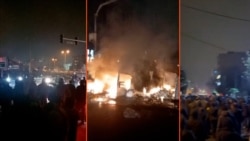
Good morning. We'll start the live blog today with the news that the Iran's Internet blackout has now lasted more than 60 hours, according to the digital rights watchdog and monitor NetBlocks.
'Being Away From Home Under These Conditions Has Made Life Feel Impossible'
With Iran currently experiencing a dayslong digital blackout since late evening on January 8, RFE/RL's Radio Farda has been in touch with Iranians outside the country who can't reach their families because of the shutdown back home. For safety reasons, some of those who responded asked to remain anonymous, while others requested that only their first names be used.
Farnaz, Turkey
Since Thursday, I have lost all contact with my family. I left Iran for a business trip, while my child and the rest of my family remain there. I have no way of knowing whether they are alive or what is happening to them. We are hearing so much devastating news, and with every hour, the stress and horror increase. People who are outside Iran, for whatever reason, are going through unbearably difficult moments. We are constantly searching for any way to communicate, but there is none.
Shahnaz, Berlin
I have been nonstop trying to reach my friends and family, many of whom I know were participating in the protests. Unfortunately, none of my messages on Instagram, WhatsApp, or Telegram are being delivered. Since this morning, I have also been trying to reach them through direct phone lines, without success. I have no idea what condition they are in.
Anonymous woman, Germany
Since Thursday night, I have lost contact with my family and friends. Even though I know there is almost no chance of getting through, I keep dialing their numbers obsessively. I have read their last messages thousands of times. It feels as if, in a matter of seconds, I have lost all of them. With endless thoughts and worries, imagining the worst, and having access to only limited information, passing these hours and days feels like a nightmare -- one that I don’t know when or how it will end.
Anonymous man, Italy
From the deepest part of my heart, I wish I were there with my people during this historic moment, facing the danger alongside them. Instead, I am here, trying to maintain a life that now feels almost impossible to manage. My friends, my 76-year-old father, and other relatives wanted to go out into the streets, and not knowing what has happened to them is unbearable.
My mother is very sick; I used to speak with her every day, and my father was taking care of her. Not knowing how either of them is doing is devastating. At the same time, my partner’s father was admitted to the ICU a few days ago in critical condition. She is an only child and had been in daily contact with him. Now she can barely speak. Being away from home under these conditions has made life feel impossible.
The UN's independent fact-finding mission in Iran has issued a statement calling on the country's leadership to restore Internet connectivity and "to immediately desist from any unnecessary and disproportionate use of lethal force." It said the "current crackdown mirrors patterns previously documented," including "gross human rights violations, and a systemic lack of accountability."
'Given Orders To Do Whatever They Want': Tehran Man Describes 'War Scenes' Amid Crackdown
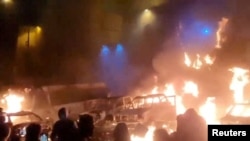
A man who witnessed a crackdown on protests in eastern Tehran told Radio Farda late on January 10 that the repression of demonstrations has intensified.
He said that with the large-scale deployment of Revolutionary Guards, Basij militia forces, and riot police units, the possibility of forming gatherings has effectively disappeared and the city has taken on a heavily securitized atmosphere.
According to him, the continuous sound of pellet-gun fire has been heard across the Iranian capital in recent nights, while drones have been flying constantly over neighborhoods to monitor streets and alleyways.
The man, whose name is not being published for safety reasons, added that the level of violence has increased sharply and that the complete Internet shutdown has created the sense that authorities have been “given orders to do whatever they want.”
He claimed the violence was initiated by security forces and that protesters were not the instigators of clashes.
He also stressed that the streets have become completely unsafe, recounting that while returning home he was suddenly confronted at very close range by several motorcyclists armed with shotguns and felt he could be shot at any moment.
He added that indiscriminate gunfire continues at night, and said security forces seemed to be treating the presence of any individual on the streets late in the evening as grounds for being targeted.
The man said that -- after clearing the main thoroughfares -- security forces have moved into residential districts.
"The streets were deserted, except for the locals standing their ground at the entrance of the alleys in their own neighborhoods," he said. "They were firing tear gas into every alleyway and even into houses wherever the sound of chanting was heard."
He described the situation in the city as resembling “war scenes,” citing the presence of spent shell casings, shattered glass, and the lingering smell of burning tires and tear gas throughout the city.
It’s staggering -- the yellow haze of the gas is everywhere, just blanketing the streets," he said. "In the past, they would never leave a trace; they used to come and collect the spent canisters. Now, they’re just left scattered all over the curbside."
He said the presence of plainclothes Basij forces and armed motorcyclists has created an atmosphere of fear and intimidation, and that by around 10:30 p.m. on January 10, the streets were virtually empty.
The man also said shops have been closing earlier than usual, very long bread lines have formed, and shortages of some essential goods, including cooking oil, have been reported. He added that concerns about insecurity, attacks, or looting have led some shopkeepers to stay overnight in their stores.