




Iran's foreign minister insisted on his country's right to enrich uranium, striking a defiant note as a US naval strike force sailed in regional waters amid weeks of unprecedented domestic turmoil inside Iran.
Abbas Araqchi's comments followed talks between US and Iranian officials in Oman over the fate of Iran's nuclear programs. Tehran says its programs are peaceful in nature, aimed at generating electricity; Washington and other countries suspect Tehran is striving to build an atomic weapon.
"Zero enrichment can never be accepted by us," Araqchi was quoted as saying on February 8. "Hence, we need to focus on discussions that accept enrichment inside Iran while building trust that enrichment is and will stay for peaceful purposes."
"Iran's insistence on enrichment is not merely technical or economic [...] it is rooted in a desire for independence and dignity," he said. "No one has the right to tell the Iranian nation what it should or should not have."

The talks, which took place in Oman, came amid an American military buildup in the Middle East.
Tensions have spiked in recent weeks as Iran has been roiled by unprecedented street protests in Tehran and other cities.
Authorities have brutally cracked down on the demonstrations -- the biggest since the 1979 Islamic Revolution -- and rights groups say thousands of civilians have been killed.



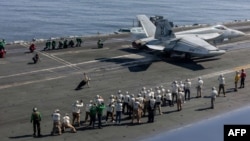
US President Donald Trump has threatened to attack, citing possible executions of protesters, and saying “help is on its way.” He ordered the USS Abraham Lincoln aircraft carrier and a flotilla of accompanying ships to the region.
In June, the United States attacked Iranian nuclear facilities at the end of a 12-day Israeli bombing campaign.
In a social media post on February 7, President Masoud Pezeshkian said that the Oman talks were a "step forward" and that Tehran wanted its rights under international treaty to be respected. Trump also praised the talks, saying "Iran looks like it wants to make a deal very badly."


Ali Vaez, Iran project director at the International Crisis Group, said it appeared that the Oman talks didn't fail, and neither side walked away from negotiations.
"Maybe they felt enough common ground or that both sides put some concessions on the table that were attractive enough for both sides to continue the talks," he told RFE/RL's Radio Farda.
Following the Oman talks, the US State Department announced new sanctions on Iran's oil exports, targeting 15 entities and 14 shadow fleet vessels.
Netanyahu To Meet Trump
Israeli Prime Minister Benjamin Netanyahu, meanwhile, will meet with Trump in Washington on February 11 to discuss "negotiations with Iran."
Netanyahu has consistently urged Trump and previous US presidents to take a hard line with bitter rival Iran.
Netanyahu last month said Israel would hit back if attacked by Tehran with a "force Iran has never seen."
On February 7, White House envoy Steve Witkoff, who headed the negotiations in Oman, visited the Abraham Lincoln along with the head of US Central Command, Admiral Brad Cooper.

“Today [we] met with the brave sailors and Marines aboard the USS Abraham Lincoln, her strike group, and Carrier Air Wing 9 who are keeping us safe and upholding President Trump’s message of peace through strength,” Witkoff said on social media.
He was joined by Trump's son-in-law Jared Kushner, who has played a central role in negotiations as well.

