Farhad Shinwari is a correspondent for RFE/RL's Radio Mashaal in the Khyber district of Pakistan's Khyber-Pakhtunkhwa Province.
Two months ago, Afghanistan sealed its eastern border with neighboring Pakistan soon after Islamabad shut down all routes into the landlocked country. But the longest border closure is now wreaking economic havoc in both countries.
Thousands of Afghan refugees living in Pakistan have been forcibly repatriated since Pakistani authorities set an April 10 deadline for those without documents to leave the country. Many refugees are reluctant to return to the Taliban-controlled country.
Pakistan's deportation of Afghan migrants is drawing global condemnation, as rights groups warn of grave dangers for returnees. Families are being split, students uprooted, and lives upended, with up to 3 million at risk of forced return to Taliban-controlled Afghanistan.
With Pakistan enforcing a deportation deadline that passed on March 31, hundreds of thousands of Afghans who fled the Taliban's takeover in 2021 now face an uncertain future. Other Afghans have lived in Pakistan's Mardan camp for generations, and many have never lived in Afghanistan.
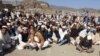
Tens of thousands of ethnic Pashtuns attended the beginning of a three-day Jirga or grand assembly on October 11 near Peshawar in northwest Pakistan. The meeting was called by the nonviolent PTM, or Pashtun Tahafuz Movement, to advocate for Pashtun rights.
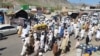
Hundreds of people gathered in Pakistan's Khyber tribal district on June 19 for the funeral of journalist Khalil Afridi, who was gunned down a day earlier in the northwestern Khyber Pakhtunkhwa Province.
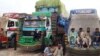
Hundreds of trucks, many loaded with perishable goods, were blocked at a key Pakistan border crossing with Afghanistan on January 16. Citing security concerns, Islamabad has been demanding that Afghan truckers have visas before passing the Pakistan checkpoints.
Truckers hauling cargo from Pakistan into Afghanistan though the main border crossing between the two countries have complained of bribes, long delays, and harassment by police and transport union officials.
Members of Pashtun tribes in northwestern Pakistan’s Khyber district are reluctant to end their protest over the alleged extrajudicial killing of a local young man.
Gurmeet Singh, a grocery store owner in Jamrud, a dusty town at the gateway to the historic Khyber Pass, says he is upholding a family tradition by offering discounts to his Muslim clientele during the Islamic holy month of Ramadan.
Pashtun tribal leaders criticized the security forces for raiding their homes in the Khyber Pass.
Islamabad has granted some representation and citizenship rights and recognized tiny Sikh, Hindu, and Christian minorities as local residents in its restive western tribal areas.
The scantly reported fighting between Afghan and Pakistani militants in a remote district of eastern Afghanistan has forced thousands to flee their homes.
It appears that a Pakistani doctor will spend the rest of his life in prison for his role in aiding the raid that killed Osama bin Laden. But loopholes in the tribal justice system that sentenced him could offer a way to freedom.
Most observers would agree that the sun set on the British Empire many years ago. But in one small town in northwest Pakistan, Britain's imperial heritage lives on through a few small reminders of colonial life -- the stamping tools at the local post office.
Two years after Islamic extremists forcibly trimmed his distinctive mustache, a Pakistani businessman has reemerged from hiding with his "handlebars" on full display. Restoring his lip decoration, however, meant giving up his home.