Charles Recknagel is standards editor for RFE/RL.
What keeps Iran's Green Movement alive, despite being muscled off the streets? One big factor is anger over President Mahmud Ahmadinejad's peculiar vision of economics.
Former British Prime Minister Tony Blair told a government panel investigating how Britain became involved in the Iraq war today he made no "covert" deal with former U.S. President George W. Bush to invade Iraq in 2003.
China has overtaken Russia in the number of scientific research papers it publishes. That is the finding of a recent study that looked at what percent of the world’s scientific research papers are published by which countries.
The U.S. administration has sharply criticized Beijing’s policy of censoring access to the Internet. But is the Internet really such an effective democracy-building tool that it needs to be defended by U.S. foreign policy?
Iran is set to phase out the decades-long use of state subsidies to keep the costs of staple goods artificially low. This is intended to save the government billions of dollars annually, but it could also spark higher inflation, and risks adding economic discontent to Iran's political unrest.
Decades of disruptions have hindered the middle class across much of Eurasia. But with time and the development of commerce, the middle class should get stronger. But will it seek greater democracy?
There are many people from the Balkans to Russia to Afghanistan who define themselves as middle class, either by their income level or their educational level. But as a social force for change in their societies, this emerging middle class remains noticeably weak.
From the Balkans to Russia to Afghanistan, the middle class and the people who might have become a middle class have trouble making ends meet and little voice in how their countries are governed. Why is the middle class in this region so weak, and what is needed to strengthen it?
Drug smuggling is big business in northern Afghanistan, where one-fifth of the country's illegal exports goes across the Afghan-Tajik border. The business enriches the drug lords. But it terrifies ordinary villagers, who often become pawns in the game.
China proved its economic might while most others were laid low by global recession.
Divisions between developed and developing countries are threatening to derail climate talks in Copenhagen. At times the divisions appear eerily reminiscent of the Cold War, with Russia and China championing the developing world's demands that the world's richest countries shoulder the heaviest burden for reducing emissions.
Does broad public interest in climate change mean we're more united over what to do?
This week's UN Climate Change Conference has all the elements of a science-fiction thriller. It's a global meeting aimed at averting a threat to the entire planet. And the menace, if most scientists are right, is growing greater and nearer with each passing decade.
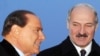
Italian Prime Minister Silvio Berlusconi has become the first Western government leader in years to travel to Belarus, considered a pariah by the West. The trip is partly a matter of diplomatic protocol. But it may also be a chance for Berlusconi to explore better Western ties with Minsk while representing little risk for the EU.
Washington says that Iraq's national elections, scheduled for January, could be postponed due to a continuing dispute in Baghdad over the election law.
The World Health Organization (WHO) says antiviral medicines like Tamiflu should be used much earlier by doctors in order to prevent deaths from swine flu. The UN agency also says it is sending more supplies of antivirals to developing countries most affected by swine flu. Those countries include Afghanistan, Azerbaijan, Belarus, Kyrgyzstan, and Ukraine.
The coming years could see the price of natural gas fall as demand weakens but new supplies keep flowing into the market. That is according to a report by the International Energy Agency (IEA) published today. The annual report, which is used by many governments to help set energy policies, suggests that major gas exporters like Russia, Iran, and Qatar will be particularly affected.
As concerns over massive outbreaks of swine flu rise in many countries with the onset of the influenza season, doctors say much is misunderstood about how people contract the disease. We speak to experts to learn more, and whether there is any cause for panic. RFE/RL correspondent Charles Recknagel reports.
Public fears of a major outbreak of swine flu are growing in countries from Ukraine to Afghanistan. What is not clear is how many cases are actually the dreaded H1N1 strain, and whether fears of a pandemic are justified.
Can local forces help turn the tide against the Taliban? Washington is looking at that possibility as it weighs a new strategy for Afghanistan. The model is the success of tribal forces in marginalizing Al-Qaeda in Iraq. But many Afghans say turning to local militias can be a risky business. We look at why in this second of a two-part series on local militias in Afghanistan.
Load more