



Accessibility links

Breaking News

White House Outlines Broader European Security Plan Ahead Of Ukraine Peace Talks

Updated
US President Donald Trump’s envoy Jared Kushner (left) met Ukrainian, NATO, and European officials in Brussels. (file photo)

WASHINGTON -- The White House has outlined a proposed European security framework alongside security guarantees for Ukraine, as the Trump administration prepares for trilateral peace talks with Ukraine and Russia in Abu Dhabi next week.

US President Donald Trump’s envoy Jared Kushner detailed the initiative in a November 5 social media post, following discussions in Brussels with Ukrainian, NATO, and European officials.

The proposed framework includes permanent security consultations, crisis communications, greater military transparency, reciprocal measures to reduce escalation risks, and a long-term arrangement for European security and stability.

Kushner said the initiative would respect the sovereignty and territorial integrity of every country, with no state having a veto over another’s security choices or alliances. NATO, he added, would remain central to European collective defense.

Ukraine's Quiet Counteroffensive: Inside Operation Vivaldi
please wait

No media source currently available

0:00 0:05:03 0:00

The announcement followed Trump’s November 5 meeting at the White House with Russian President Vladimir Putin’s special envoy, Kirill Dmitriev. Trump said he believed a “big, beautiful agreement” could be close and suggested it might involve not only Ukraine but “all of Europe.”

“It’s going to be a big agreement, and it’s going to involve more than Ukraine,” Trump told reporters, predicting that “everyone’s going to be thrilled.”

Kushner said consultations would continue through the so-called Shell Bay format, involving Ukraine, NATO, the European Union, and other European partners, with Russia also participating in the peace negotiations.

Security Concerns

The proposed link between Ukraine’s security guarantees and a broader European security architecture has prompted questions from Russia specialists about the scope of the initiative and its implications for NATO.

Glen Howard, president of the Saratoga Foundation and a longtime Russia strategist, told RFE/RL that Kushner’s announcement could be intended to reassure Ukraine and European allies that Washington was not abandoning their interests while putting pressure on Russia ahead of the negotiations.

But Howard said the reference to a broader European security architecture was particularly concerning.

He pointed to remarks by Kremlin foreign-policy adviser Yury Ushakov last week calling for a return to NATO’s pre-1997 posture, before the alliance expanded into Eastern Europe and the Baltic states.

“Since when does Russia get a say about the future of NATO and undoing the eastern flank?” Howard asked, questioning what concessions Russia would offer in return.

He warned that even putting NATO’s posture on the negotiating table could establish a precedent for Russia and future US administrations.

Howard compared the potential approach to the 1938 Munich agreement, which let Nazi Germany annex part of Czechoslovakia for Hitler’s promise of no more territorial claims, citing broader concerns about the Trump administration’s posture toward Russia, including comments by senior Pentagon official Elbridge Colby urging Baltic states to tone down anti-Russian rhetoric.

He also suggested that French and British preparations for possible peacekeeping deployments to Ukraine, as well as discussions about rerouting gas through Ukraine, could form part of a wider strategy surrounding the negotiations.

John Herbst, a former US ambassador to Ukraine and senior director at the Atlantic Council’s Eurasia Center, also expressed little optimism about the upcoming talks.

He cited Russian Foreign Minister Sergei Lavrov’s recent statement that Moscow would make no compromises and the reported appointment of Vladimir Medinsky to head the Russian delegation in Abu Dhabi. Medinsky previously led Russian negotiating teams without securing a breakthrough.

Herbst said European involvement could help sustain support for Ukraine and encourage Washington to take a stronger position. But he cautioned that European efforts to influence the administration had limited impact compared to the Kremlin’s ability to sway Trump.

He questioned why Washington was focusing on postwar security arrangements and de-escalation before obtaining a meaningful Russian commitment to stop fighting.

Herbst suggested that Russia’s refusal to make concessions had prompted the Trump administration to seek progress in other areas rather than exert greater pressure on the Kremlin.

The challenge, he said, was to devise guarantees strong enough to reassure Ukrainian President Volodymyr Zelenskyy but not so extensive that Russia rejected a settlement.

“That’s an impossible task,” Herbst told RFE/RL, arguing that Russia does not want serious security guarantees for Ukraine, while Kyiv needs them for its survival as an independent state.

For Herbst, a meaningful breakthrough would be a clear Russian commitment to stop fighting, which he considers unlikely. He said Putin still seeks control over Ukraine and wants Trump to persuade Kyiv to surrender the remaining Ukrainian-held parts of the Donbas.

Unable to capture the territory militarily, Putin could continue attacking Ukrainian cities and civilian infrastructure to force Kyiv to give in, Herbst said.

While not mentioning Trump specifically, the EU played down suggestions of a quick deal.

"We all wish that we will have a peace deal soon. We're all working in that regard," EU spokeswoman Paula Pinho said. "But there is a lot of work that needs to go into it and, above all, there needs to be a willingness on the side of the one who first started the war."

"It's obviously up to the European Union to decide on matters which affect its security," she added.

Abu Dhabi Expectations

The trilateral US-Ukraine-Russia discussions are scheduled for November 10-11 and will be the first such peace talks since February, according to Kushner.

Mark Temnycky, a nonresident fellow at the Atlantic Council’s Eurasia Center, told RFE/RL he expected incremental progress but no breakthrough.

The main obstacles, he said, remain territorial disputes and Ukraine’s postwar security.

For security guarantees to be credible, Washington and European capitals must agree on how they would be enforced and who would finance Ukraine’s reconstruction.

The World Bank Group, European Commission, United Nations, and Ukrainian government estimate reconstruction needs at nearly $588 billion over the next decade.

'We Escaped Hell': Oleshky Residents Reach Ukraine After Years In War-Torn City
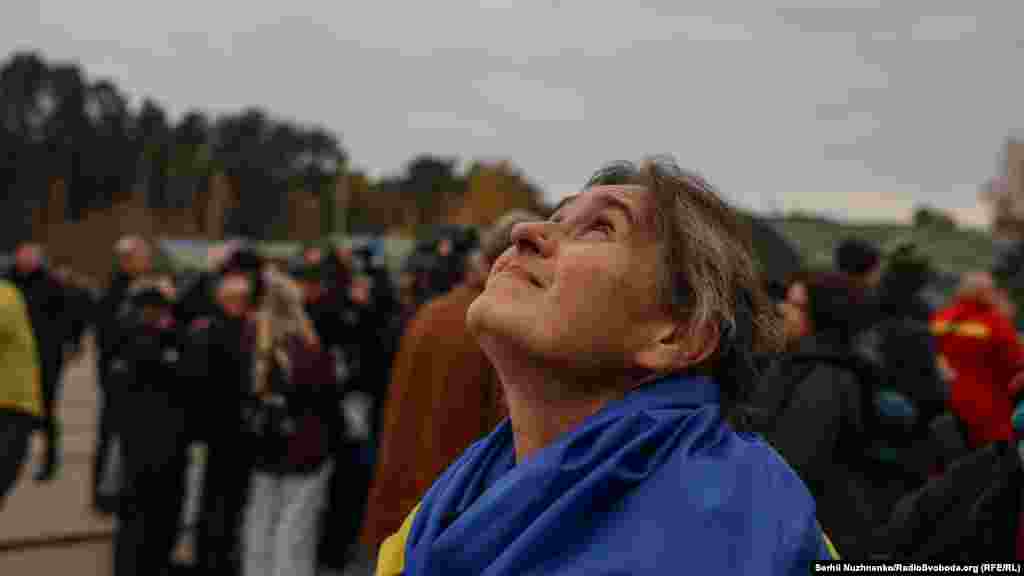
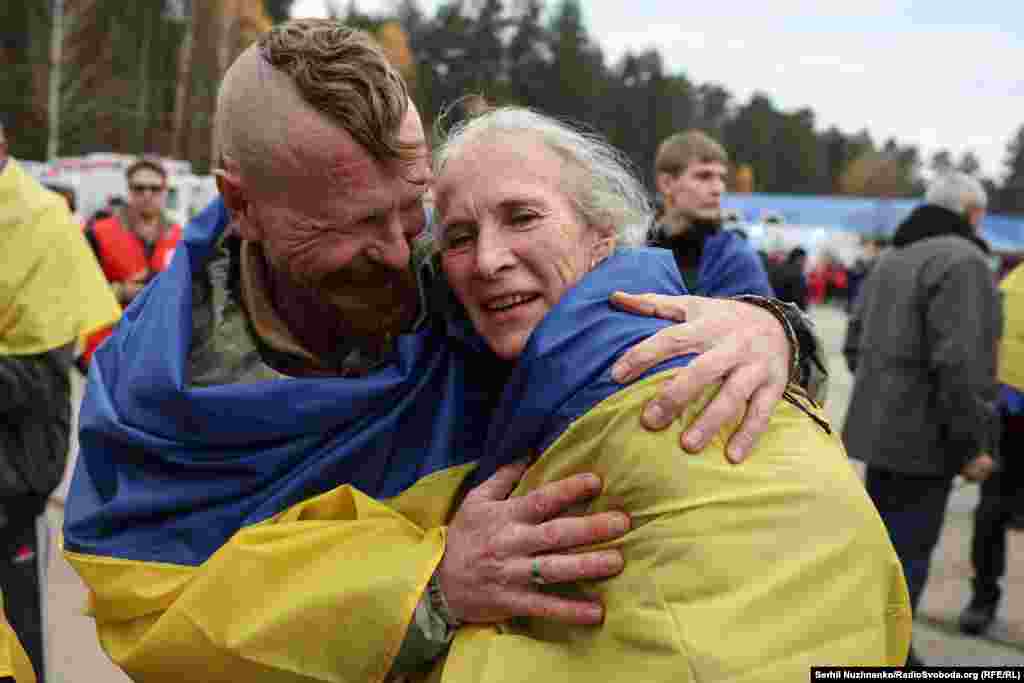
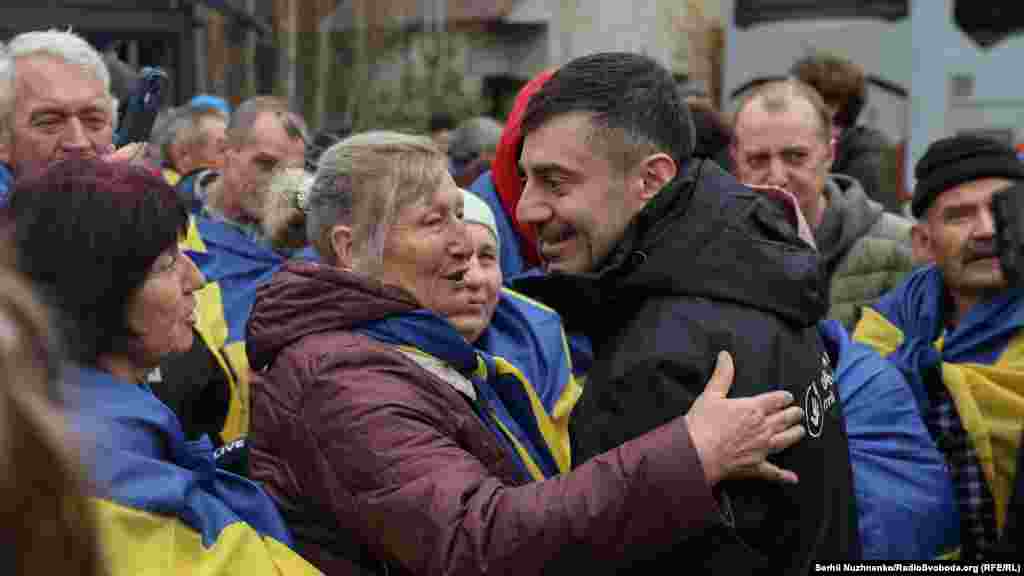
Shaking with joy, relatives of Ukrainians who have endured years under Russian occupation with almost no food, water, or electricity rushed to greet their loved ones in tears in Chernihiv on October 31.<br><br>The evacuation of residents followed a localized cease-fire between Ukraine and Russia brokered by US first lady Melania Trump.<br><br>Dozens of buses carrying civilians left the war-torn town of Oleshky for the first time in more than four years on October 30, with people choosing whether to travel to Ukrainian- or Russian-controlled territory.
1/9 Shaking with joy, relatives of Ukrainians who have endured years under Russian occupation with almost no food, water, or electricity rushed to greet their loved ones in tears in Chernihiv on October 31.

The evacuation of residents followed a localized cease-fire between Ukraine and Russia brokered by US first lady Melania Trump.

Dozens of buses carrying civilians left the war-torn town of Oleshky for the first time in more than four years on October 30, with people choosing whether to travel to Ukrainian- or Russian-controlled territory.
Shaking with joy, relatives of Ukrainians who have endured years under Russian occupation with almost no food, water, or electricity rushed to greet their loved ones in tears in Chernihiv on October 31.
Show more Show less
Less than 10 kilometers away from the regional capital of <a href="https://www.rferl.org/a/kherson-ukraine-elation-relief-city-recovery/32133749.html" class="wsw__a"><strong>Kherson</strong></a>, on the other side of the Dnieper River, which Ukraine retook in 2022, Oleshky has been a major frontline town.<br><br>Its residents were effectively trapped, with no way to escape the area, surrounded by land mines and cut off from the outside world.</br><br>"We managed to escape from this hell," an evacuee named Liubov (not pictured) told RFE/RL's Ukrainian Service as buses arrived in Ukraine's northern Chernihiv region on October 31.
2/9 Less than 10 kilometers away from the regional capital of Kherson, on the other side of the Dnieper River, which Ukraine retook in 2022, Oleshky has been a major frontline town.

Its residents were effectively trapped, with no way to escape the area, surrounded by land mines and cut off from the outside world.

"We managed to escape from this hell," an evacuee named Liubov (not pictured) told RFE/RL's Ukrainian Service as buses arrived in Ukraine's northern Chernihiv region on October 31.
Shaking with joy, relatives of Ukrainians who have endured years under Russian occupation with almost no food, water, or electricity rushed to greet their loved ones in tears in Chernihiv on October 31.
Show more Show less
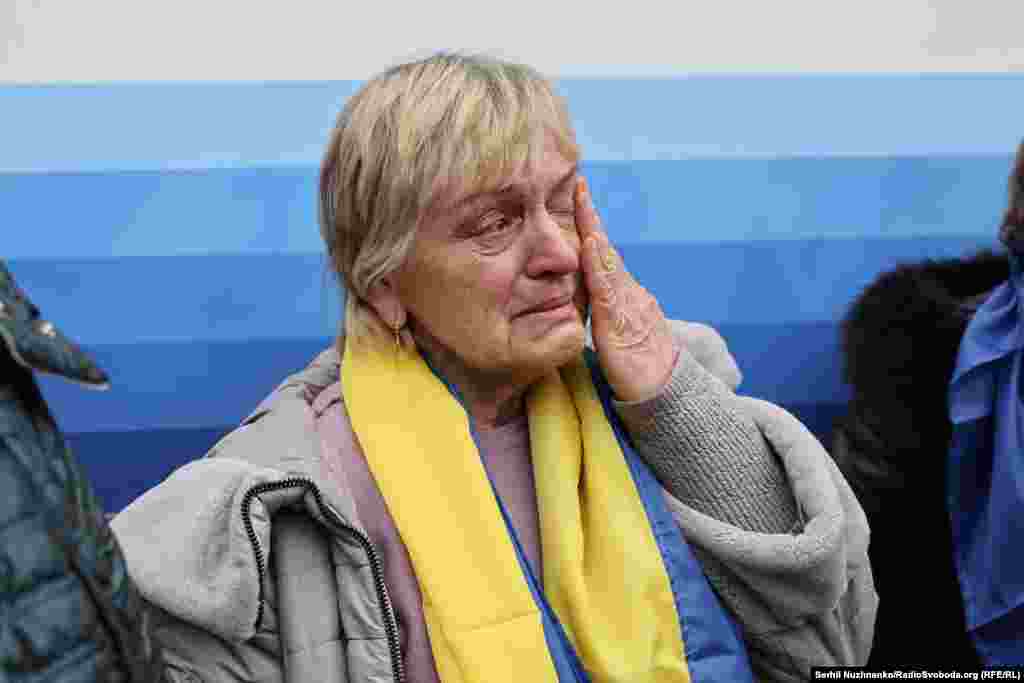
A woman wipes tears from her eyes after arriving in Chernihiv.<br><br>"My head is spinning. We are completely exhausted," she told RFE/RL. "We don't know what to say when we are completely overwhelmed with emotion."<br><br>"It was horrifying," said another evacuee, Viktor (not pictured), adding it was impossible to safely leave the city before the recent humanitarian efforts. "The road was simply covered in mines."<br><br>Once home to around 24,000 people, Oleshky's population dwindled to fewer than 2,000 since the full-scale war began in February 2022.
3/9 A woman wipes tears from her eyes after arriving in Chernihiv.

"My head is spinning. We are completely exhausted," she told RFE/RL. "We don't know what to say when we are completely overwhelmed with emotion."

"It was horrifying," said another evacuee, Viktor (not pictured), adding it was impossible to safely leave the city before the recent humanitarian efforts. "The road was simply covered in mines."

Once home to around 24,000 people, Oleshky's population dwindled to fewer than 2,000 since the full-scale war began in February 2022.
Shaking with joy, relatives of Ukrainians who have endured years under Russian occupation with almost no food, water, or electricity rushed to greet their loved ones in tears in Chernihiv on October 31.
Show more Show less
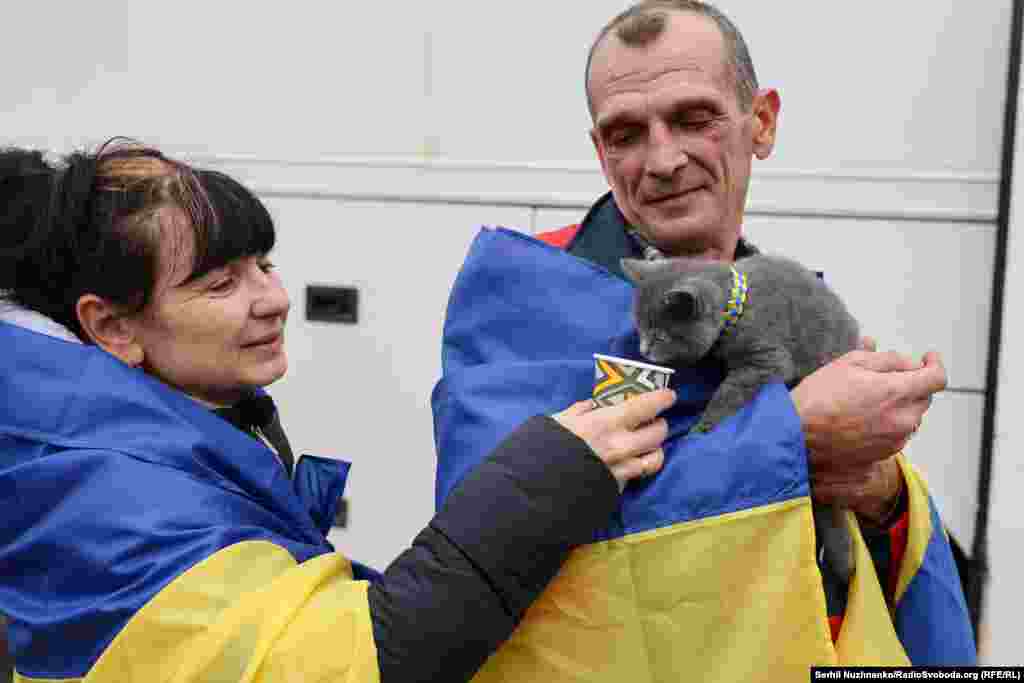
Still speechless after leaving behind one of the direst areas along the front line in Russia's long-running full-scale war against Ukraine, many evacuees told RFE/RL they still couldn't believe they had made it out of Oleshky.<br><br>"Until we got on the buses, we were still afraid," Liubov said. "We were so worried and nervous. Before that, we couldn't sleep at night, wondering how this would go."
4/9 Still speechless after leaving behind one of the direst areas along the front line in Russia's long-running full-scale war against Ukraine, many evacuees told RFE/RL they still couldn't believe they had made it out of Oleshky.

"Until we got on the buses, we were still afraid," Liubov said. "We were so worried and nervous. Before that, we couldn't sleep at night, wondering how this would go."
Shaking with joy, relatives of Ukrainians who have endured years under Russian occupation with almost no food, water, or electricity rushed to greet their loved ones in tears in Chernihiv on October 31.
Show more Show less
"It was so hard," Liubov (not pictured) recalled of life in the city, saying people in Oleshky didn't believe they would ever leave, with hope only kindled when their plight started garnering global attention.<br><br>"We finally began to believe it when everyone started raising the issue," she said. "That's when we believed it would actually happen."<br><br>"Until we got on the buses, we were still afraid. We were so worried and nervous. Before that, we couldn't sleep at night, wondering how this would go."
5/9 "It was so hard," Liubov (not pictured) recalled of life in the city, saying people in Oleshky didn't believe they would ever leave, with hope only kindled when their plight started garnering global attention.

"We finally began to believe it when everyone started raising the issue," she said. "That's when we believed it would actually happen."

"Until we got on the buses, we were still afraid. We were so worried and nervous. Before that, we couldn't sleep at night, wondering how this would go."
Shaking with joy, relatives of Ukrainians who have endured years under Russian occupation with almost no food, water, or electricity rushed to greet their loved ones in tears in Chernihiv on October 31.
Show more Show less
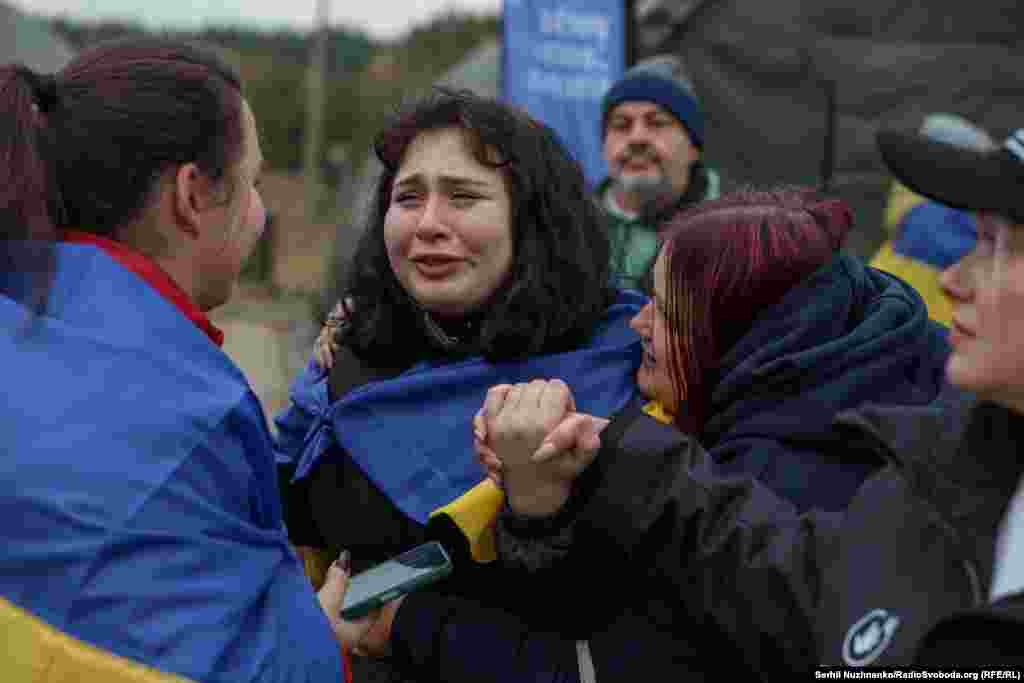
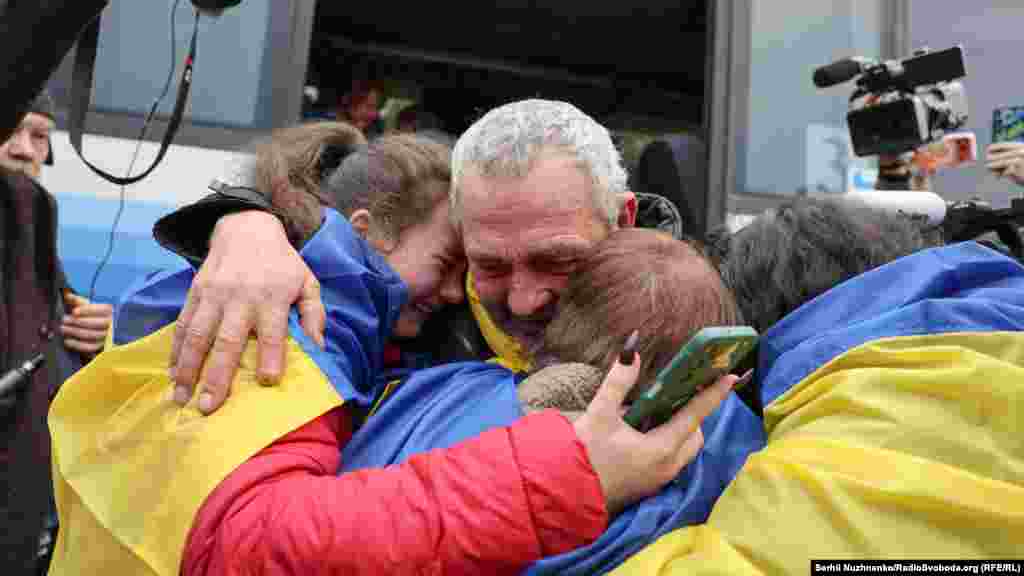
A woman draped in a Ukrainian national flag rushes forward to an  arriving bus, crying with happiness after spotting a loved one.<br><br>Since October 27, Ukraine and Russia have observed a localized cease-fire in Oleshky, with no violations reported. Melania Trump announced the agreement a week earlier.<br><br>"Let Oleshky become the starting point for lasting peace," she <a href="https://x.com/melaniatrump/status/2116902464293073393?s=46" target="_blank" class="wsw__a"><strong>wrote on X</strong></a><strong> </strong>on November 1.
6/9 A woman draped in a Ukrainian national flag rushes forward to an arriving bus, crying with happiness after spotting a loved one.

Since October 27, Ukraine and Russia have observed a localized cease-fire in Oleshky, with no violations reported. Melania Trump announced the agreement a week earlier.

"Let Oleshky become the starting point for lasting peace," she wrote on X on November 1.
Shaking with joy, relatives of Ukrainians who have endured years under Russian occupation with almost no food, water, or electricity rushed to greet their loved ones in tears in Chernihiv on October 31.
Show more Show less
"I thank everyone who made it possible for us to bring our dad home, for helping him get out safely, in one piece and unharmed. I am so happy," said Zhanna (not pictured), who previously lived in Oleshky.<br><br>Fewer than 2,000 people remained in the city by the fall, most of them elderly residents who had been unable or unwilling to leave.<br><br>According to Ukraine's ombudsman, Dmytro Lubinets, the oldest person evacuated from occupied Oleshky was 94, while the youngest was just over 1 year old.
7/9 "I thank everyone who made it possible for us to bring our dad home, for helping him get out safely, in one piece and unharmed. I am so happy," said Zhanna (not pictured), who previously lived in Oleshky.

Fewer than 2,000 people remained in the city by the fall, most of them elderly residents who had been unable or unwilling to leave.

According to Ukraine's ombudsman, Dmytro Lubinets, the oldest person evacuated from occupied Oleshky was 94, while the youngest was just over 1 year old.
Shaking with joy, relatives of Ukrainians who have endured years under Russian occupation with almost no food, water, or electricity rushed to greet their loved ones in tears in Chernihiv on October 31.
Show more Show less
Despite his age and years of severe hardship, when asked what he planned to do after finally arriving home, Zhanna's relative (not pictured) said, "I'll look for a job so I can feed my family."<br><br>The moment brought tears and sparked laughter around, with many Oleshky residents finally able to smile after escaping what they called "hell."
8/9 Despite his age and years of severe hardship, when asked what he planned to do after finally arriving home, Zhanna's relative (not pictured) said, "I'll look for a job so I can feed my family."

The moment brought tears and sparked laughter around, with many Oleshky residents finally able to smile after escaping what they called "hell."
Shaking with joy, relatives of Ukrainians who have endured years under Russian occupation with almost no food, water, or electricity rushed to greet their loved ones in tears in Chernihiv on October 31.
Show more Show less
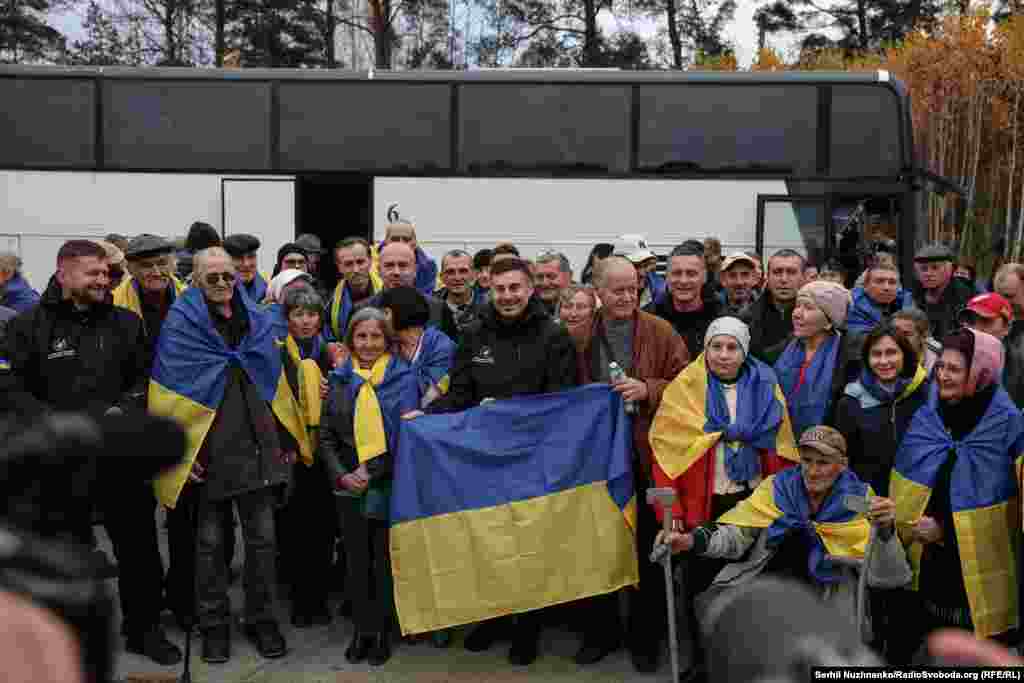
The residents of Oleshky who were evacuated to Chernihiv pose for a group photo on October 31.
9/9 The residents of Oleshky who were evacuated to Chernihiv pose for a group photo on October 31.
Shaking with joy, relatives of Ukrainians who have endured years under Russian occupation with almost no food, water, or electricity rushed to greet their loved ones in tears in Chernihiv on October 31.
Show more Show less
Previous slide
Next slide

Temnycky also cautioned that Washington cannot simply offer Ukraine EU membership as part of a settlement. The decision rests with all 27 EU member states.

Two senior European diplomats in Washington told RFE/RL on November 5 that European leaders do not believe Russia is prepared to make genuine concessions on Ukraine or European security.

Parallel Diplomatic Efforts

The latest diplomatic activity coincided with several other initiatives aimed at building momentum toward a settlement.

On November 5, first lady Melania Trump hosted Russian and Ukrainian representatives at the White House to mark a six-day cease-fire she helped broker in the Russian-occupied city of Oleshky in Ukraine’s Kherson region. Nearly 800 people were evacuated during the pause in fighting, announced in late October.

“We have chosen humanity over war,” Melania Trump said, urging the parties to use the initiative to find common ground through concern for civilians.

Meanwhile, Zelenskyy arrived in Spain for talks on strengthening Ukraine’s air defenses and meetings on the sidelines of the Ibero-American summit. He said further contacts with US officials were planned before the Abu Dhabi negotiations.

“We’re coordinating with our partners to achieve concrete results on security issues and the next steps toward peace,” Zelenskyy wrote on social media.

Trump’s meeting with Dmitriev also drew attention because the Russian envoy remains under US Treasury sanctions as of November 5.

A US official told RFE/RL that it was not the two men’s first White House meeting and rejected suggestions that sanctions had prevented Dmitriev from traveling to the US, saying waivers had been issued to facilitate the visit. No official decision to remove him from the sanctions list has been announced.

  • 16x9 Image

    Alex Raufoglu

    Alex Raufoglu is RFE/RL's senior correspondent in Washington, D.C.

This item is part of
​
XS
SM
MD
LG