




Ukrainian officials sharply criticized US President Donald Trump's decision to waive sweeping planned sanctions against Russia, saying that it "sends the wrong message to the aggressor" and "helps only the Russians."
US Secretary of State Marco Rubio said the administration needed up to 60 days to assess the potential economic impact of the sanctions and tariffs, while the White House argued that imposing them immediately could hinder efforts to negotiate a peace agreement between Russia and Ukraine.
"If Russians are cheering yesterday's decisions in the US, it is certainly not about effective pressure to end the war," Ukrainian Foreign Minister Andriy Sybiha wrote on X on October 17. "Indecisiveness sends the wrong signal to the aggressor. It only prolongs the war."
He added that "Lindsey Graham understood this well," referring to the late senator of South Carolina for whom the sanctions legislation, known as the Lindsey O. Graham Sanctioning Russia and Iran Act of 2026 -- was named. Graham, who died on July 11, was a prominent congressional supporter of Ukraine.
The bill passed Congress with overwhelming bipartisan support and was signed into law by Trump in September. But in an executive order signed late on October 16, Trump said withholding the measures was in the national interest of the United States. The order came just two days before the sanctions package was due to take effect on October 18.
The move prompted sharp criticism from Ukraine advocates and lawmakers from both parties who say the move undermines efforts to force Moscow to negotiate.
Ukrainian President Volodymyr Zelenskyy said removing the sanctions "definitely helps only the Russians."
"The decision to undo all of this, to block all of it, seems wrong to me," Zelenskiy wrote on X on October 17.
The law was designed to give the administration additional leverage over Russian President Vladimir Putin by authorizing tariffs of up to 100 percent on major purchasers of Russian oil and gas, including China and India, and providing for sanctions targeting Russian officials, financial institutions, and the country's so-called shadow fleet of tankers used to circumvent existing restrictions.
Rubio defended the White House's decision to waive new sanctions on Russia on October 17, saying Washington needed time to assess the economic consequences of additional penalties as conflicts across several regions strain global energy supplies.
Speaking to reporters at Joint Base Andrews before departing for a series of diplomatic and trade talks in Central Asia, Rubio defended the administration's efforts to balance pressure on Moscow against economic concerns.
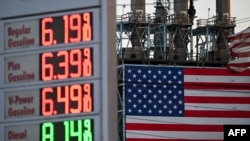
The waiver followed a diesel deal Trump announced with Russia on October 9 that prompted criticism that Washington was prioritizing domestic fuel prices over efforts to constrain the Kremlin's war against Ukraine.
Zelenskyy called the waiver was an unfortunate decision to backtrack on the sanctions at a time when "pressure is needed."

"At a time when the Russians have carried out such a massive attack on our energy sector, a decision was unfortunately made in America to completely disregard the Lindsey Graham Act, which was supposed to impose truly effective pressure on Russia to bring this war to an end," Zelenskyy wrote on X.
"Russia is trying to cause a blackout in Ukraine -- right before winter," he said. "Russia is trying to leave millions of our people without electricity and heating. Pressure is needed to stop this. A U.S. sanctions blackout, easing pressure on the aggressor, financial rewards for Putin -- all of this only encourages him to keep attacking."
A senior envoy to Russian President Vladimir Putin, meanwhile, praised the waiver as "a truly historic moment."
Kirill Dmitriev, who heads Russia’s sovereign wealth fund, wrote on X late on October 16 that "economic cooperation between Russia and the United States serves the interest of both nations."
Energy Costs Complicate Russia Sanctions
Rubio said the administration needed 60 days to assess the effects of sanctions and tariffs, including their potential impact on countries such as India, which continues to rely substantially on Russian energy despite efforts to diversify its supplies.
He pointed to disruptions involving Iran, the Strait of Hormuz, attacks by Yemen's Houthi movement, and the war between Russia and Ukraine as factors putting pressure on global energy markets.
"These conflicts around the world are starting to crash into each other," Rubio said.
The United States was paying higher prices than it wanted, he said, while some other countries were approaching a crisis over energy costs and availability.
Rubio also defended the administration's diesel deal with Russia -- which Zelenskyy called "a gift" to Putin -- arguing the fuel would have reached international markets regardless of whether the United States purchased it. "The only difference is how much of it the United States was going to get," he said.
Energy analysts have questioned whether the deal would significantly lower prices for American consumers, while warning that easing restrictions could provide Moscow with substantial economic benefits.
The waiver blocks additional sanctions and tariffs approved by Congress to discourage major purchasers of Russian oil and gas, although existing sanctions remain in place.
The decision drew sharp criticism from both parties.
Republican Senator Thom Tillis called it "beyond irresponsible," while Senator John Cornyn said the late senator Graham "would be appalled." Democratic lawmakers also accused Trump of helping Russia finance its war.