



1,000 Years Of War And Renewal: Kyiv's Monastery Of The Caves
- By Amos Chapple
A blaze on June 15 amid Russia's all-out invasion of Ukraine is the latest war wound inflicted on Kyiv's centuries-old Pechersk Lavra, the most iconic religious landmark in the Ukrainian capital.

1
Kyiv residents woke on June 15 to find their city’s most revered religious monument in flames after Russia launched a massive drone and missile barrage on sites throughout Ukraine. It is the latest war damage inflicted on the Dormition Cathedral of the Kyiv-Pechersk Lavra in the monastery's turbulent, nearly 1,000-year history.
2
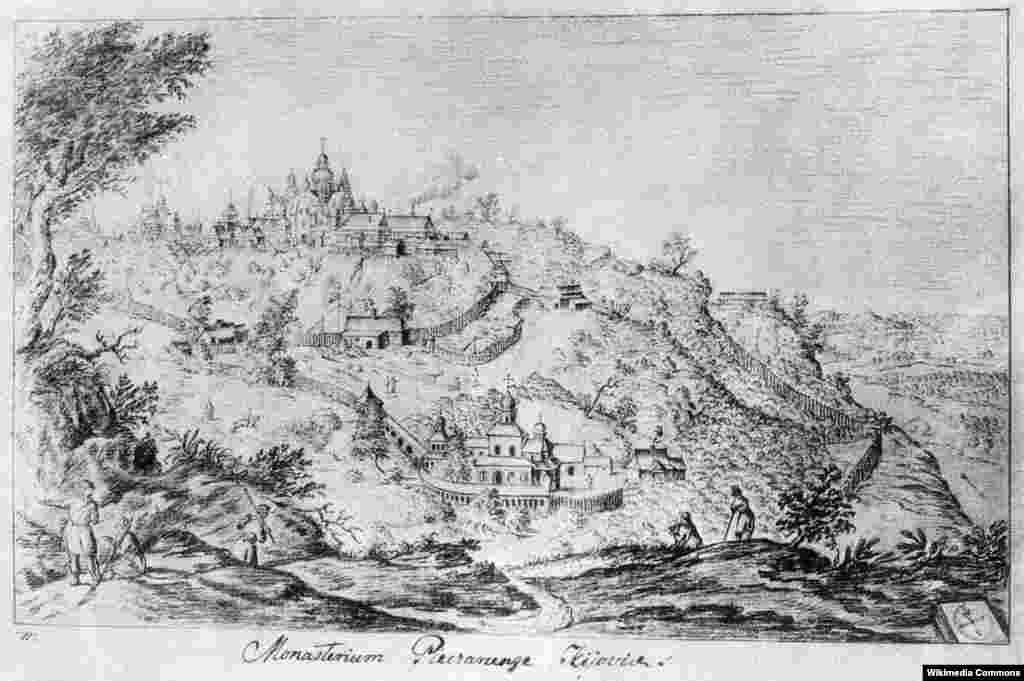
A 1651 sketch of the Kyiv-Pechersk Lavra. A lavra is a monastery that includes cells for hermits, while pechersk means “of the caves.” The monastery complex was founded in the 11th century on a prominent hill overlooking the Dnieper River. Between 1096 and 1416 the Lavra was variously sacked and burned by Cuman raiders, and later Mongolian and Golden Horde invaders.

3
A courtyard within the monastery photographed in 1902, when Kyiv was a city within the Russian Empire. The monastery complex features catacombs holding the mummified remains of saints revered by Orthodox Christians, including Nestor the Chronicler, a monk credited with writing the Primary Chronicle of Kievan Rus.
4
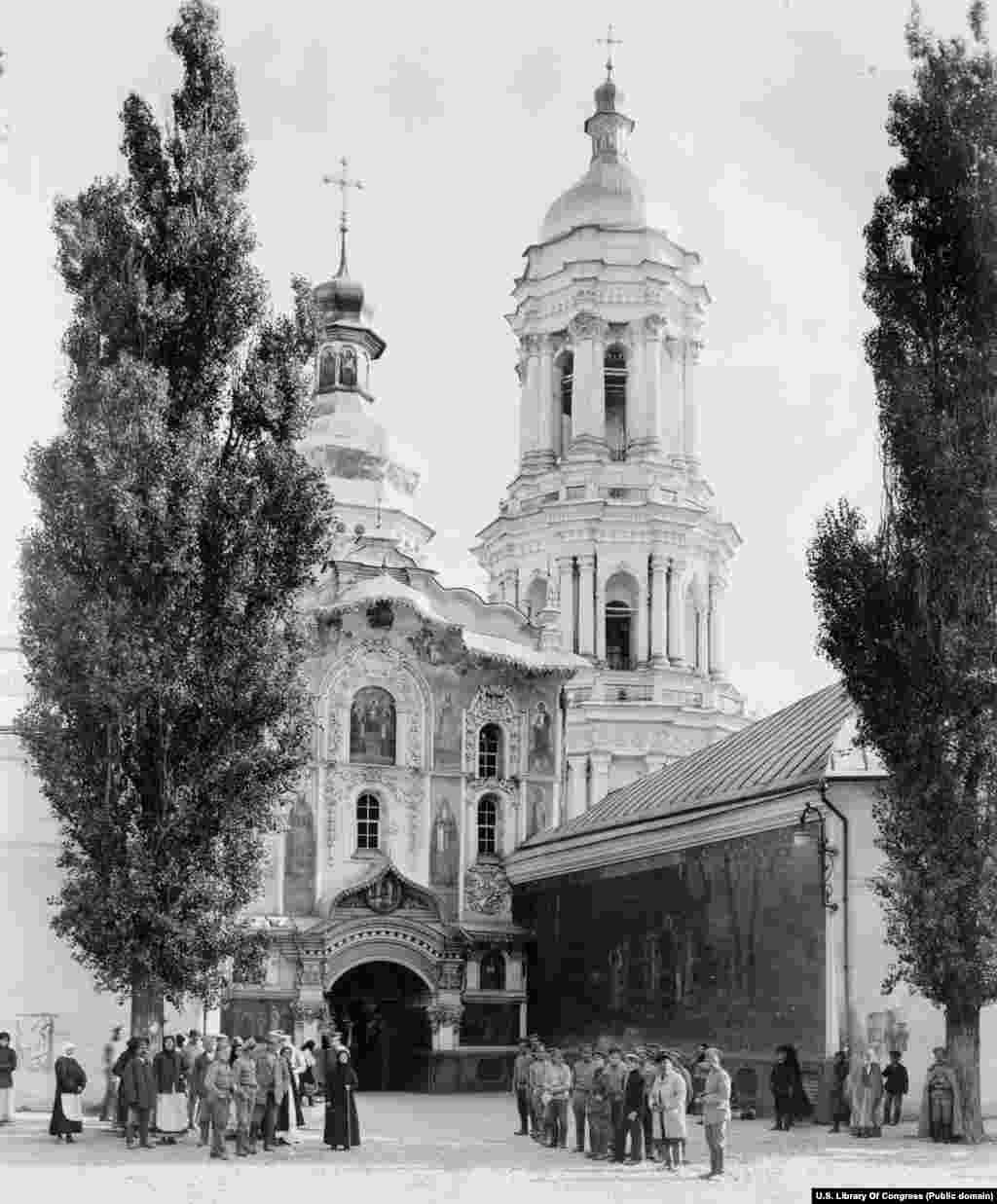
An entrance to the monastery complex photographed in 1918. During the Ukrainian-Soviet war, pro-Bolshevik militants executed the Metropolitan of the Russian Orthodox Church near the walls of the Lavra in early 1918. After the Soviet takeover of Ukraine, the monastery’s valuables were confiscated by the state and the complex was converted into a museum.

5
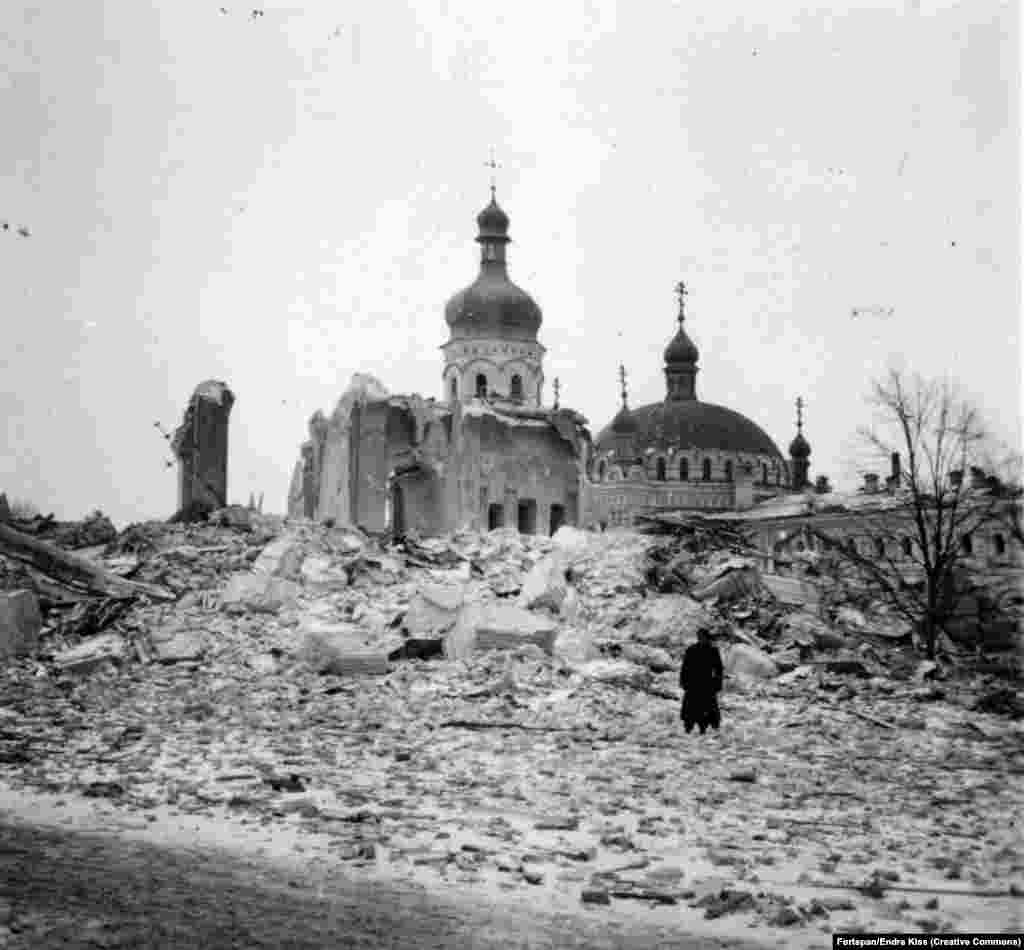
A German soldier in the Kyiv-Pechersk Lavra bell tower in September 1941, during the Nazi-led occupation of Kyiv. Weeks after this photo was taken, the Dormition Cathedral of the Lavra was destroyed in an explosion widely believed to have been caused by mines left by retreating Red Army forces.
6
The rubble left from the November 1941 explosion that destroyed the Dormition Cathedral. This photo was made in 1942, when Kyiv remained under Nazi occupation. The city was recaptured by Red Army forces in late 1943.
7
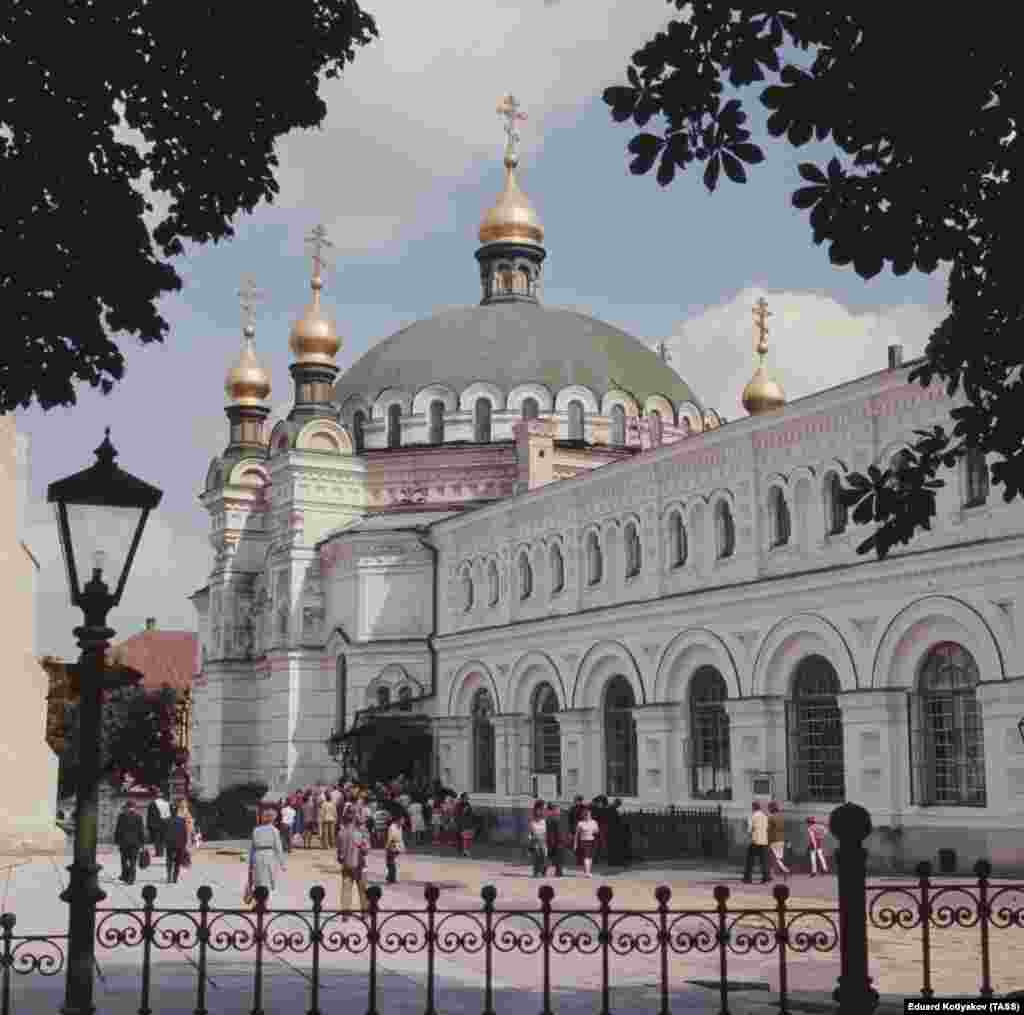
A 1977 photo of the Refectory Church of the monastery, which survived World War II. The destroyed Dormition Cathedral (out of frame to left of this image) remained unreconstructed throughout the Soviet postwar period.
8
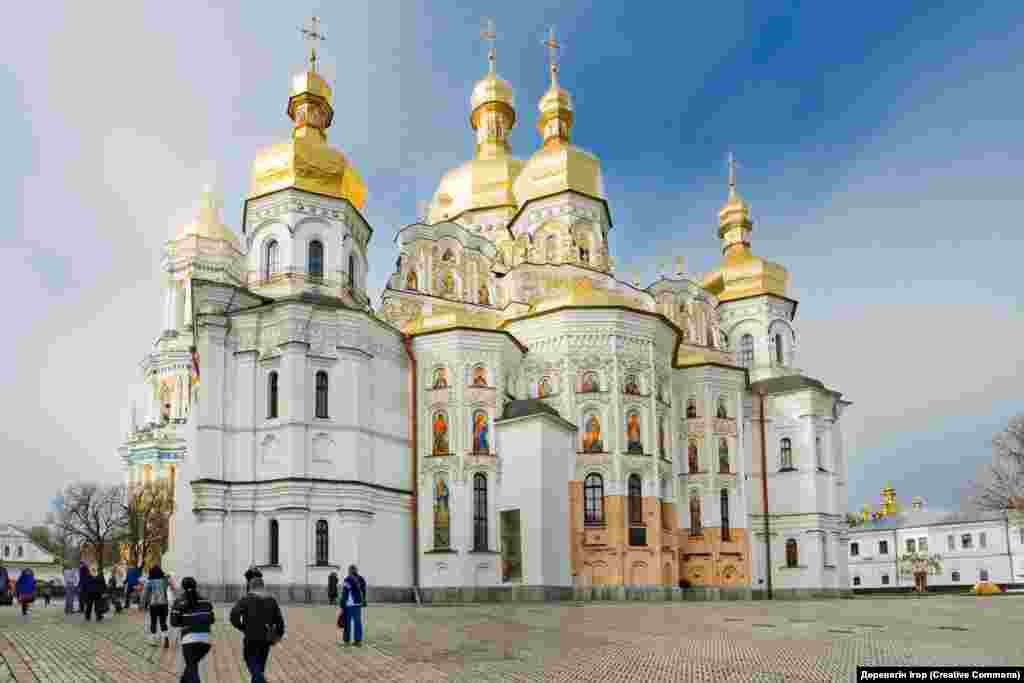
After Ukraine won its independence from the Soviet Union in 1991, the Dormition Cathedral (pictured here in 2013) was rebuilt in time for Ukraine’s Independence Day celebrations in 2000.
9
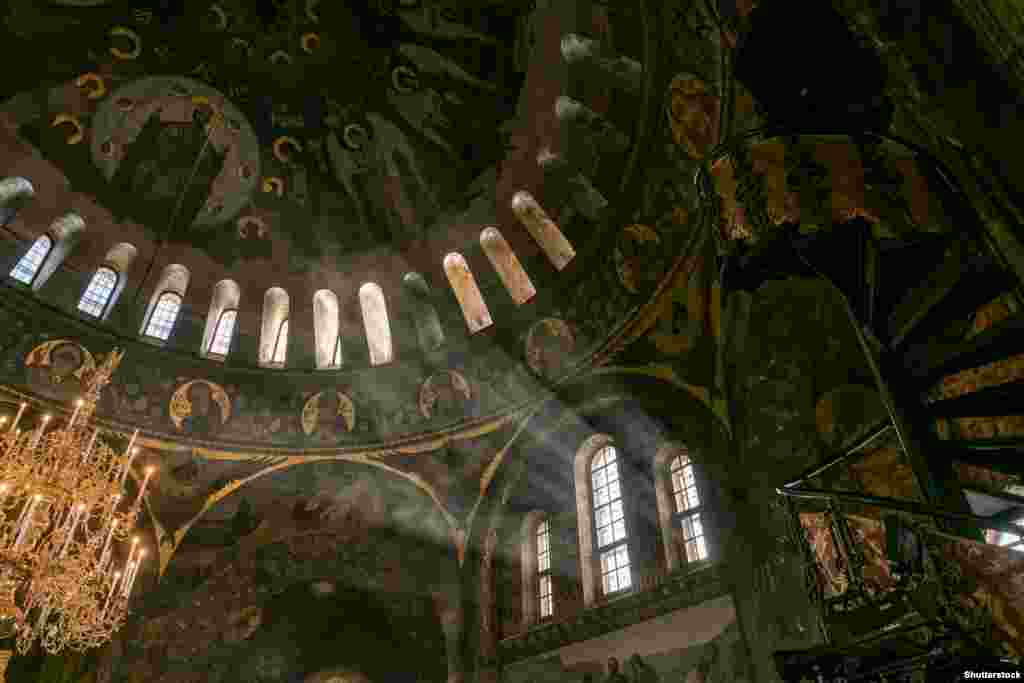
Sunlight streams through the interior of the Refectory Church of the Kyiv-Pechersk Lavra. The monastery operated under the authority of the Moscow-affiliated branch of the Ukrainian Orthodox Church (UOC). The UOC cut ties with the Russian Orthodox patriarch in Moscow in May 2022 and condemned the full-scale invasion of Ukraine. Kyiv authorities have accused the UOC of maintaining links to Russia.
![Ukrainian soldiers pass a monk in the Kyiv-Pechersk Lavra in March 2023. The monastery was raided by police soon after a video surfaced in November 2022 showing worshippers inside a church in the complex singing a patriotic Russian song that ended with a line: “The ringing [of church bells] floats, floats over Russia, Mother Russia is awakening.”](https://gdb.rferl.org/01000000-0aff-0242-bbc4-08db2569c978_w1024_q10_s.jpg)
10
Ukrainian soldiers pass a monk in the Kyiv-Pechersk Lavra in March 2023. The monastery was raided by police soon after a video surfaced in November 2022 showing worshippers inside a church in the complex singing a patriotic Russian song that ended with a line: “The ringing [of church bells] floats, floats over Russia, Mother Russia is awakening.”
11
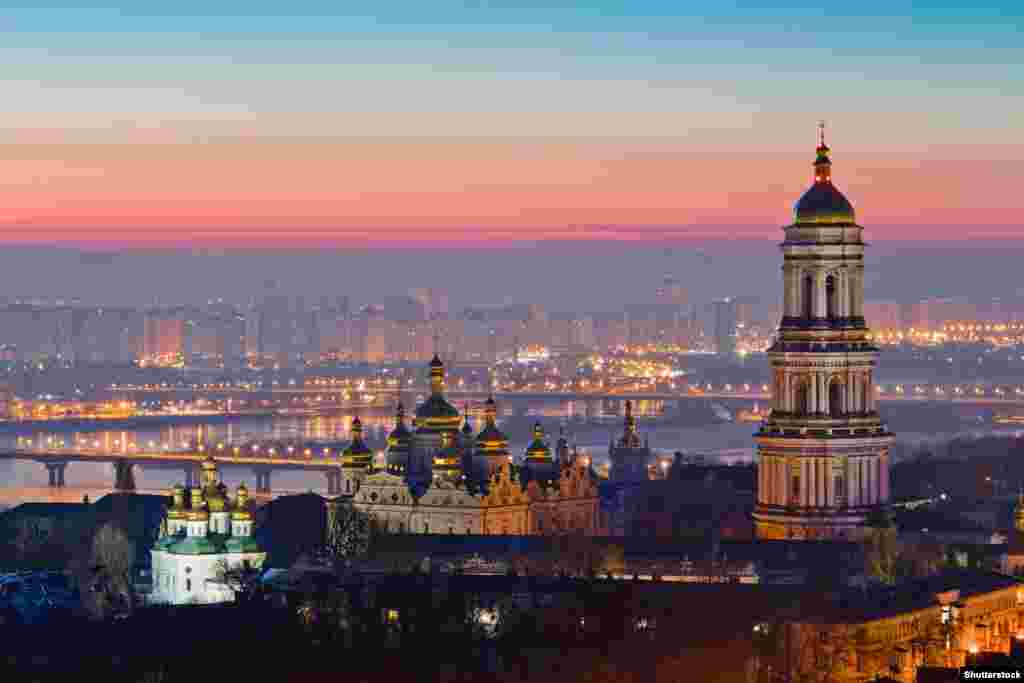
In March 2023, Ukraine’s Culture Ministry terminated a lease that had allowed the UOC to use part of the monastery, but clerics of the church defied an eviction order. As of June 2026, scores of priests and monks from the UOC remained in the Lavra.

12
The apparent impact site of a drone on the Dormition Cathedral seen on June 15. Images from the site appear to show extensive damage to the roof of the cathedral, which was set ablaze during the overnight barrage, but little damage to its interior. Ukrainian President Volodymyr Zelenskyy said that Russian drones "deliberately targeted" the part of the city where the monastery complex is located. Archimandrite Avraamiy, a vicar at the Lavra, told RFE/RL that the strike felt like "an enemy bullet had hit you straight in the heart." Russia denies it targeted the monastery and claimed the damage was due to wayward Ukrainian air defenses, but did not provide evidence. Numerous Russian drone and missile attacks have hit apartment buildings, civilian facilities, and cultural sites, causing widespread damage and casualties.


