




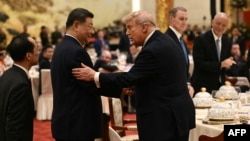
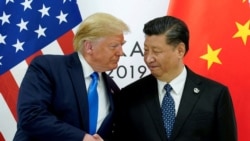
US President Donald Trump and Chinese leader Xi Jinping wrapped up more than two hours of talks in Beijing on May 14, with both sides agreeing that the Strait of Hormuz must remain open amid mounting global economic anxiety tied to Washington's standoff with Iran, according to the White House.
The summit, the first face-to-face meeting between the two leaders since October 2025, blended ceremonial pageantry with difficult negotiations over trade, Taiwan, technology, and the widening fallout from the Iran conflict.
Trump attended a lavish welcome ceremony at Beijing’s Great Hall of the People before the two delegations met behind closed doors for talks that lasted more than two hours. The leaders later attended a state banquet, where Xi urged closer cooperation and Trump invited the Chinese leader to visit the White House on September 24.
The White House described the talks as “a good meeting” and said Trump and Xi discussed Iran, fentanyl trafficking, market access for US companies in China, increased Chinese investment in the United States, and additional purchases of American agricultural goods.

"The two sides agreed that the Strait of Hormuz must remain open to support the free flow of energy," the White House said in a summary.
A Chinese readout of the talks did not mention the strait, saying only that the two leaders "exchanged views on major international and regional issues such as the situation in the Middle East, the Ukraine crisis, and the Korean peninsula."
The war in Iran and disruptions to shipping through the Strait of Hormuz have become a major backdrop to the summit, adding urgency to efforts by both governments to prevent further deterioration in ties between the world’s two largest economies.
China remains one of the largest buyers of Iranian oil and maintains close ties with Tehran, while Washington has pressed Beijing to use its leverage to encourage Iran to accept a broader peace arrangement and ease restrictions on maritime traffic through the strategic waterway.
Trump, however, downplayed suggestions before departing Washington that the United States needed China's help to resolve the conflict by saying he doesn't "think we need any help with Iran."
US Secretary of State Marco Rubio told Fox News while en route to China that the United States had made its case to Beijing on why it should take a more "active role" in resolving the conflict in Iran.
"I'd expect there to be a lot of behind the scenes talk about Iran," Yvonne Chiu, a fellow at the American Enterprise Institute, told RFE/RL. "But I don't expect it to be public, partly because that brings some reputational risk for China in case those efforts fall short."
Xi Pushes 'Stable Relationship,' Dangles Business Opportunities
Xi used the summit to publicly advocate for what he called a more stable framework for bilateral ties despite intensifying rivalry.
According to a Chinese Foreign Ministry readout, the two leaders agreed to pursue a "constructive strategic stable relationship." In his opening remarks, Trump called Xi a "friend" and said "the relationship between China and the USA is going to be better than ever before."
Despite the conciliatory language, deep divisions remain across a range of issues, from advanced technology and trade restrictions to military competition in Asia. Analysts say both sides appear more focused on preventing escalation than achieving any transformational breakthrough.
"Trump wants stability heading into the midterms and while the United States remains tied down by the Iran conflict," Daniel Russel, a fellow at the Asia Society Policy Institute and a former US assistant secretary of state for East Asian and Pacific Affairs, told RFE/RL. "Beijing wants a stable external environment while managing economic pressures at home."
Trade and economic issues remain central to the summit. The White House said Trump raised market access concerns for US firms in China and pushed for additional Chinese purchases of American agricultural products.
Earlier on May 14, updated Chinese customs data showed Beijing had approved export licenses for several hundred American slaughterhouses to resume beef shipments to China after the licenses expired in 2025 amid escalating tariffs.
Trump was accompanied by several prominent business executives, including Tesla CEO Elon Musk, Nvidia CEO Jensen Huang, and Apple CEO Tim Cook, at the meeting with Xi.

Xi also told the delegation of US business executives that China will "open wider" to the world, although did not offer any formal commitments.
"Despite any sweeping declarations, the long-term trajectory remains strategic rivalry," said Russel. "Most outcomes will be limited, transactional, and potentially reversible."
Taiwan Remains A Flashpoint
Taiwan emerged as one of the clearest focal points during the talks.
According to China's state news agency Xinhua, Xi warned Trump that the issue could push the two countries toward direct confrontation if mishandled.
"Handled well, the two countries can maintain stability," Xi said, according to the Chinese readout. "If handled poorly, the two countries will collide or even clash, putting the entire US-China relationship in an extremely dangerous situation."

China claims the self-governed island as part of its territory and has vowed to eventually bring it under Beijing's control, by force if necessary. Chinese officials have long opposed US arms sales and political support for Taipei.
The Trump administration reportedly delayed notifying Congress about a planned arms package worth about $14 billion for Taiwan ahead of the summit to avoid inflaming tensions with Beijing. Taiwan’s legislature recently approved $25 billion in special funding to pay for the missiles and other weapons from the United States.
Taiwan's Foreign Ministry responded to Xi's comments after the meeting in Beijing by accusing China of being "the sole risk to regional peace and stability."
In a statement, Taipei pointed to what it described as China's "military harassment" and gray-zone pressure campaigns around Taiwan and elsewhere in the region. The ministry also said Beijing had "no right to make any claims on behalf of Taiwan internationally."
Analysts say Taiwan remains Beijing's most sensitive security issue and one of the areas most likely to destabilize the broader US-China relationship.
The summit will continue on May 15 with additional discussions expected to focus on artificial intelligence, export controls, and geopolitical tensions tied to Russia and the war in Ukraine.
"Xi Jinping would like some concessions on or some reassurances about Taiwan and what Trump would do in the event that China ramps up the pressure on the island," Chiu said. "That also relates to a bigger goal for Beijing, which is pushing back the United States in the Indo-Pacific."