




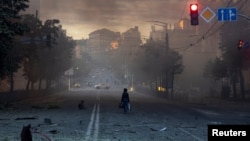
Russia sharply escalated threats against Kyiv, warning of "systematic and consistent strikes" as Russia's top diplomat urged American citizens to evacuate the Ukrainian capital.
A day after Moscow pummeled the Kyiv region with hundreds of drones -- and a powerful new hypersonic missile -- Foreign Minister Sergei Lavrov called US Secretary of State Marco Rubio on May 25 to advise him to pull American diplomatic staff and US citizens out of Kyiv.
Russia has justified its increasing threats citing an attack on a school dormitory in the Russian-occupied Ukrainian region of Luhansk last week. Local officials said more than 20 people were killed in the town of Starobilsk. Russian officials accused Ukraine of deliberately targeting a civilian location.
In a speech last week, Russian President Vladimir Putin gave an unusually belligerent statement, accusing Kyiv of "terrorism."
Ukrainian military officials have said its forces hit the headquarters of a Russian drone unit and it rejected the allegation that civilian facilities were hit.
On May 24, Kyiv and other Ukrainian cities were targeted with a major barrage of drones and missiles. It was one of the worst to hit the Ukrainian capital in recent memory. At least three people were killed and scores wounded.
Russia also fired a new nuclear-capable missile called the Oreshnik at a town south of Kyiv, in what appeared to be a signal to Ukraine. It was the third time Russia has fired the Oreshnik at a Ukrainian target, and the first time it has targeted a site close to Kyiv.
In the call with Rubio, the Russian Foreign Ministry said Lavrov warned that Moscow was planning to launch "systematic and consistent strikes" against Ukrainian military sites in Kyiv and "relevant decision-making centers."
He also advised Rubio that US citizens and diplomats should be evacuated from Kyiv.
In a separate statement, the Russian ministry said it had warned foreign embassies had been warned about possible new strikes in Kyiv, and that it had notified diplomatic missions and international organizations "of the need to leave the city as soon as possible."
The State Department did not issue a detailed statement about the call with Rubio.
However, in comments to reporters traveling with him in India, Rubio confirmed Lavrov's advice -- and threat.
"I think he was just calling me personally to tell me" about the advisory, he said. "Kyiv’s been a very dangerous place now for a number of years. Look, the danger in all of these wars as they continue and then they go on is that they always have the threat of escalation, of spreading into something new. "
"It’s why the war needs to come to an end," he said.

Ukraine’s Foreign Ministry condemned the Russian warning as “shameless blackmail” intended to intimidate foreign diplomats and international organizations based in Kyiv.
"Russia wants fear. Panic. The isolation of Ukraine," Katarina Maternova, Ukraine's ambassador to the European Union, said in a post to Facebook. "It will not work."
Foreign diplomats also pushed back against the warning.
Russia should "immediately cease its unjustified and unlawful aggression," Poland’s Foreign Ministry said.
A spokeswoman for the EU foreign affairs office said Russia's top diplomat in Brussels had been summoned to complain about the threats. EU diplomats would also remain in Kyiv, spokeswoman Anita Hipper said.
Rubio also confirmed that US-brokered peace talks between Moscow and Kyiv are frozen.
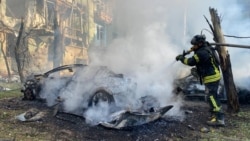
Hours before the Lavrov-Rubio call, Kramatorsk -- a heavily defended Ukrainian city located 15 kilometers from the front line -- was hit by heavy Russian "glide" bombs -- damaging residential buildings and injuring more than 10 people, according to officials.
The powerful bombs have been used to devastating effect on Ukrainian defenses, and have been increasingly used to pound civilian locations as well.

Now in its fifth year, Russia's all-out invasion of Ukraine has hit a near stalemate, as Ukrainian forces have battled Russian troops to a standstill in many places along the 1,100-kilometer front line.
In recent weeks, Ukrainian troops have also eked out small gains of territory, pushing back Russian troops.