





Russia is proposing an overhaul of its system for recruiting foreign workers beginning in 2027, tying migrants to specific employers, jobs, and regions in a move authorities say will give the state greater control over labor migration.
But the plan is already drawing concern from migration experts and businesses. They warn that tighter restrictions could drive migrant workers into informal employment and further worsen workforce shortages in a country that relies heavily on foreign labor.
The four-year experiment, scheduled to run from January 1, 2027, through the end of 2030, would cover 87 Russian regions, excluding Moscow and the Moscow region.
Russian authorities estimate that more than 1.7 million foreign workers could be affected, including large numbers from Central Asia.
The new system would move away from the “work-patent” mechanism that has been the main route to legal employment for migrants from visa-free countries such as Uzbekistan and Tajikistan.
In 2025, foreigners obtained about 2.3 million Russian work patents, according to Interior Ministry figures.
That represented more than 40 percent of all foreigners in Russia and almost 77 percent of officially employed foreign workers.

Russia remains heavily dependent on foreign labor.
About 3 million foreigners were officially working in the country at the beginning of 2026, while the total number of foreign nationals in Russia, including migrants’ family members, exceeded 5.7 million, according to the ministry.
Under the proposed system, migrants would arrive in Russia already matched with a particular employer and vacancy.
A new information system would maintain registries of employers and foreign workers and match workers with jobs based on regional labor-market needs.
The system would also expand the amount of information authorities collect on migrants before they enter Russia. In addition to photographs and fingerprints, migrants would undergo mandatory genomic registration and medical examinations.
'No Rights For The Migrant'
For migrants, however, the biggest change could be the loss of freedom to change jobs.
Under the proposed rules, once in Russia, workers recruited through the new system would not be allowed to work for a different employer, in a different profession, or outside the region specified in the registry until their employment contracts expire.

Violating those rules could result in removal from the foreign-worker registry and an obligation to leave Russia.
Such workers could then only reenter the system and regain the ability to work in Russia after a year.
“During my nearly 15 years in Russia, I have always stayed in the same city, but I changed my work several times with different private construction companies, depending on the money and conditions they offered,” Sarvar, a Tajik worker in the Russian city of Surgut, told RFE/RL.
“I don’t know much about this plan yet, but I fear that if my employer knows that I can’t easily change my job, it would be difficult for me to negotiate my salary or other things.”
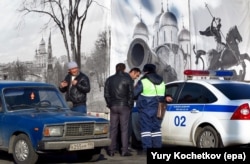
Valentina Chupik, a human-rights advocate who heads Tong Jahoni, an organization that assists migrants, said the restrictions could leave workers particularly vulnerable to abusive employers.
“There will be no rights for the migrant. He will be firmly attached to the employer,” Chupik said, describing the proposed system as “organized slavery.”
The government says the new model is intended to make migration more transparent and reduce illegal employment by giving authorities more information about workers before they arrive.
It also says the model is intended to increase employers’ responsibilities.
Divided Opinion
The proposed changes have divided migration experts.
Mikhail Burda, head of the Center for Migration Studies at the Moscow-based Tsargrad Institute, argues that the country will remain attractive because of the size of its labor market and its established ties with Central Asia.
“Targeted organized recruitment should become the only possible procedure for temporary employment in Russia for mass migration,” Burda said. “The formula ‘come, work, leave’ should be implemented in its absolute sense, without reservations or exceptions.”

Karimjon Yorov, a Tajik migration expert, takes a sharply different view. He said the additional procedures and restrictions could make it harder for Central Asian workers to enter Russia.
“I can say with confidence that there is nothing good in it,” Yorov said. “Unfortunately, the consequences will be bad...for all migrants.”
Yorov warned that the new recruitment system could create opportunities for corruption if intermediaries begin charging migrants for access to jobs or recruitment lists.
He recalled that when work permits cost 1,000 to 2,000 rubles ($12-$24 at current exchange rates), they were sometimes resold for 20,000 to 50,000 rubles ($240-$600).
Russia’s business community is also worried about the potential consequences.
The Russian Union of Industrialists and Entrepreneurs has warned the government that tying migrants to a single employer could push some workers out of the formal economy.
The group wants migrants to be allowed to work for multiple employers and for the process of changing jobs to be made easier.
The business group has also proposed delaying the experiment from 2027 to 2028 and introducing a two-year transition period during which the new system would operate alongside existing patent and work-permit mechanisms.
Moscow has begun reviewing its agreements with Uzbekistan and Tajikistan, two major sources of migrant labor, on organized recruitment.
Yorov told RFE/RL that Tajikistan has begun preparing for the new system, with centers being established to prepare prospective migrants and conduct medical examinations, fingerprinting, and photography.