




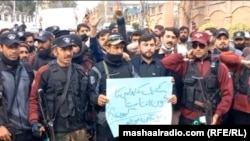
Dozens of police officers protested in Peshawar on February 1 to demand the government conduct a full and transparent investigation of a suicide attack on a mosque earlier this week that killed 101 people and injured 221 others.
The attack on January 30 killed mostly police officers in the Sunni mosque located inside a high-security police facility.
The police who protested on February 1 gathered in front of the Peshawar Journalists' Center and were joined by civil and political activists.
Sajid Ali, one of the protesters, told RFE/RL that the police officers were compelled to protest to put pressure on authorities and because police officers “are dying amid this terrorism and insecurity.”
Ali Daraz, another protester, said police officers want answers about how the explosives got into the compound and said he believes there were at least two suicide bombers because of the amount of destruction. Daraz added that there have been complaints for years about a lack of equipment to fight terrorists.
"It seems like there were many explosives used there because even two suicide bombers could not cause that much destruction," he told RFE/RL.
The attack in Peshawar, capital of the volatile Khyber Pakhtunkhwa Province, which borders Afghanistan, was one of the deadliest that targeted Pakistani security forces in recent years.
Suicide Bombing Kills Dozens At A Mosque In Pakistan


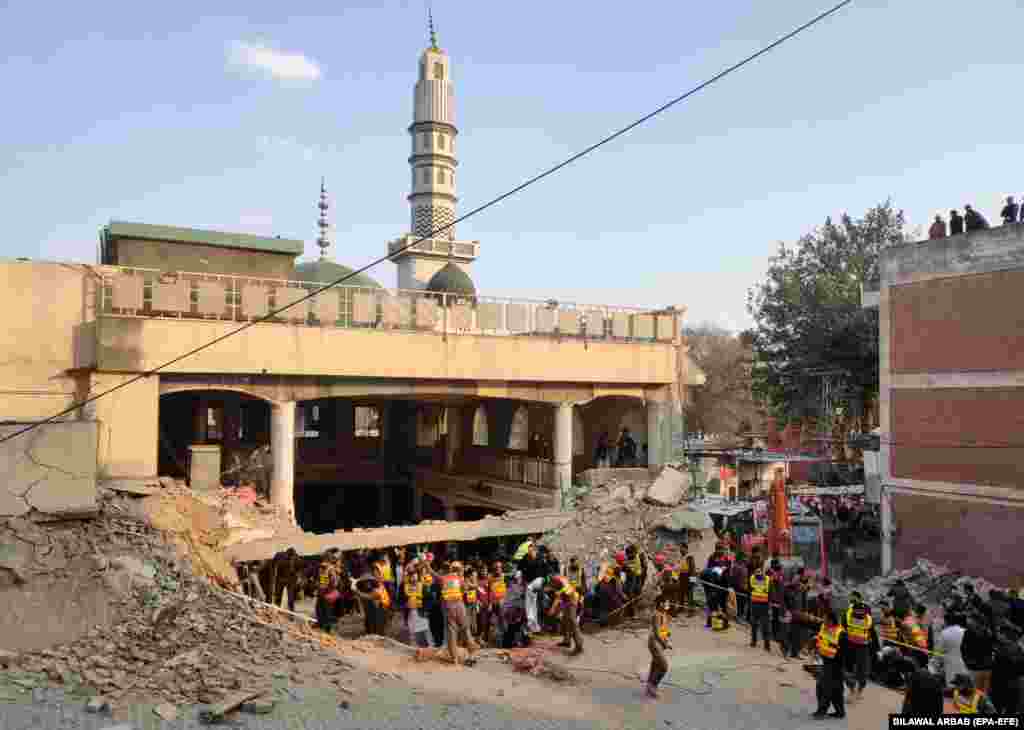
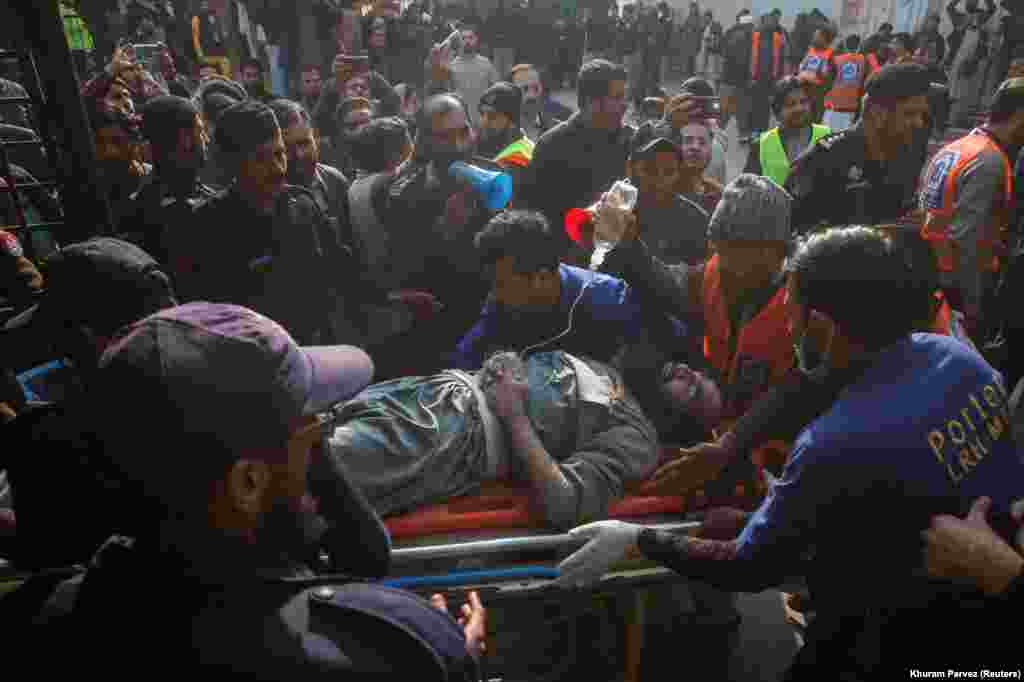
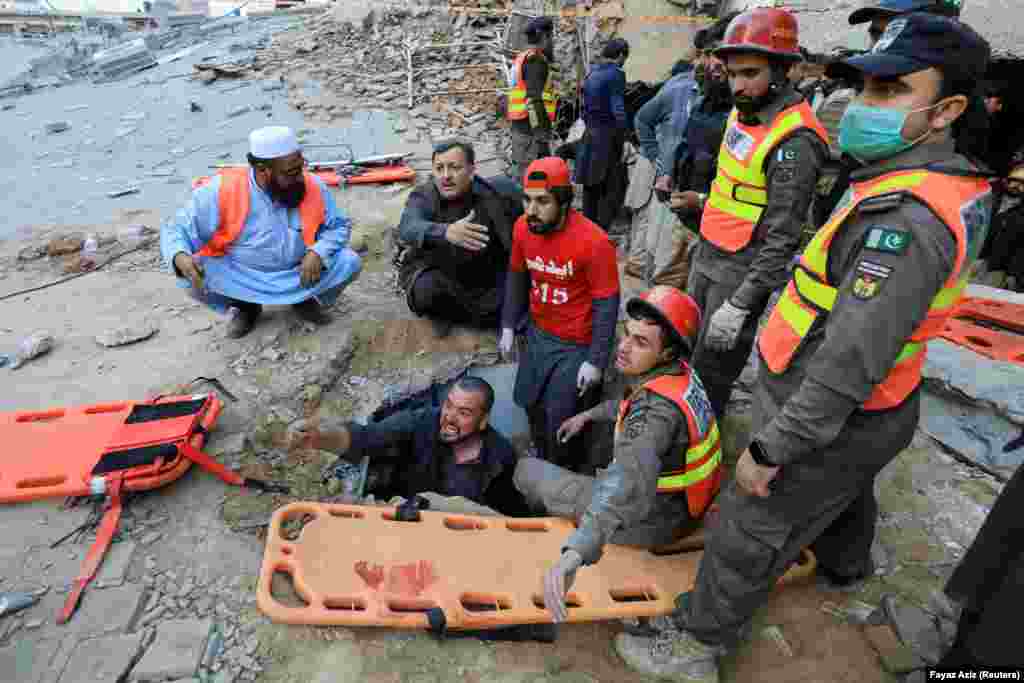
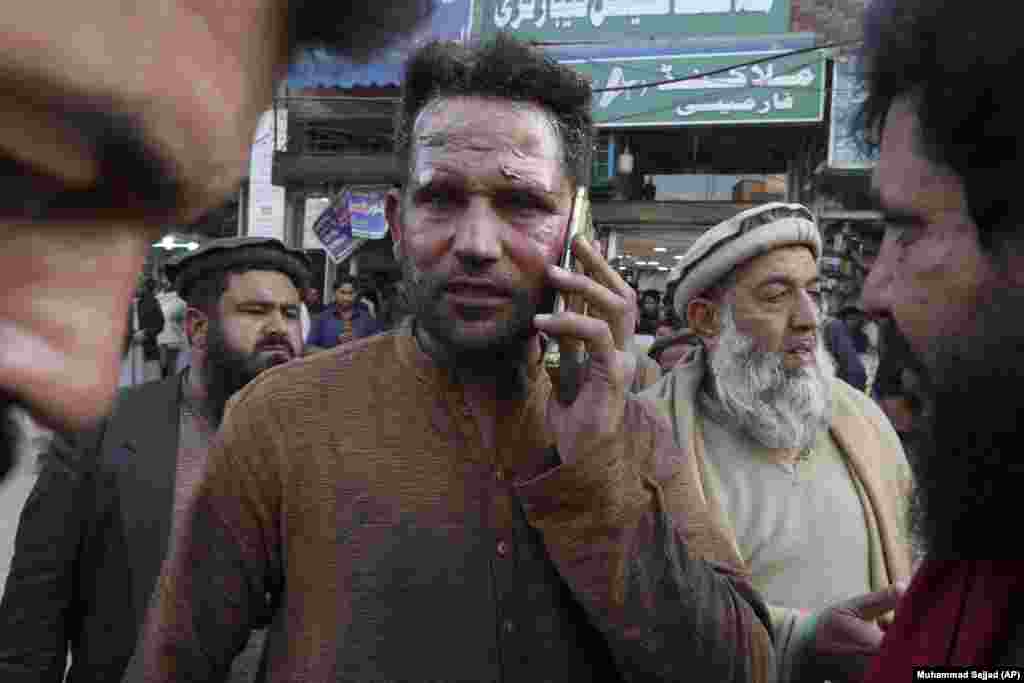
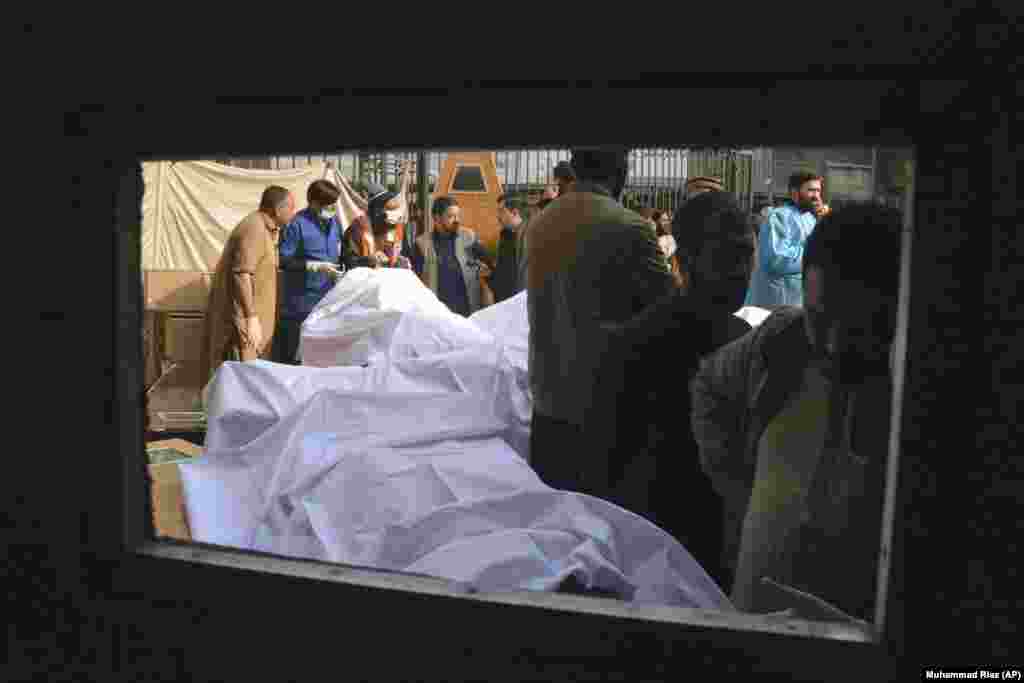
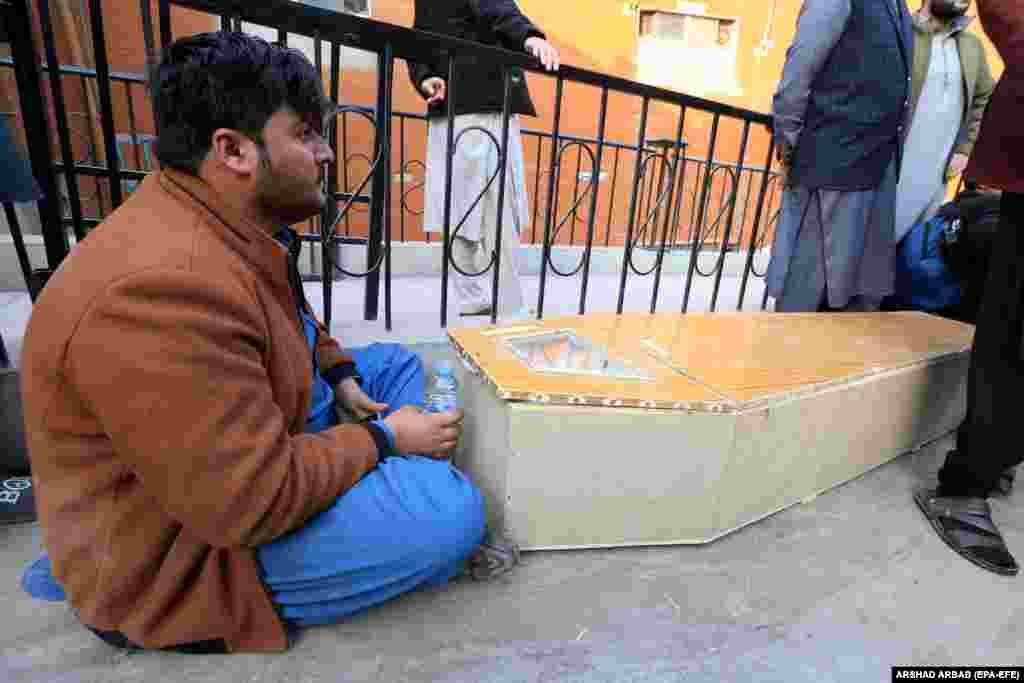
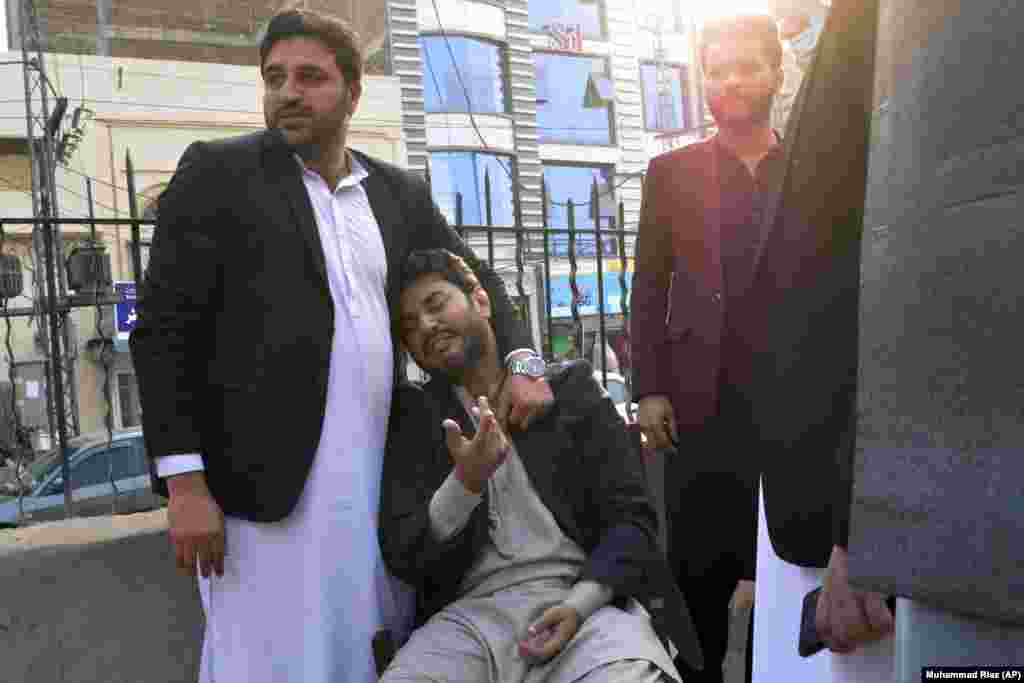
The interim government of Khyber Pakhtunkhwa has formed a team to investigate the attack, including how a major security breach could happen in a compound that houses intelligence and counterterrorism bureaus.
Eyewitnesses told Radio Mashaal that suicide bombers standing in the first row in the compound's mosque behind the imam detonated explosive vests as worshippers gathered for the afternoon prayers in the Police Line Mosque on January 30.
A commander for the Pakistani Taliban known as Tehrik-e Taliban Pakistan (TTP) initially claimed responsibility for the attack, but hours later, TTP spokesman Muhammad Khurasani denied involvement, saying it was not the group's policy to target mosques, seminaries, and religious places.
Ibrahim Kamil, a participant in the protest and a leading member of the Pashtun Tahafuz Movement, told RFE/RL that a number of policemen are now feeling insecure about their own security.
There have been dozens of attacks in recent years, but the January 30 attack was a different incident because "people who protect us are facing so much danger in their own mosque."
Kamil added that the investigation should determine how the assailants got past checkpoints to enter the building and the mosque.

