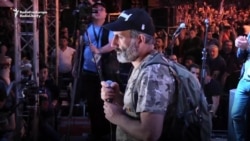
YEREVAN -- Armenian protest leader Nikol Pashinian has been officially nominated as a candidate for the post of prime minister in the upcoming vote on May 8, after he secured the backing of 41 lawmakers in the 105-seat parliament, a member of the Pashinian-led Yelk faction told RFE/RL on May 3.
Ararat Mirzoian's statement came amid a pause called by Pashinian on May 2 in the three-week-long demonstrations, after the ruling Republican Party (HHK) indicated that it would support him for prime minister in a May 8 parliamentary vote.
Separately, in a video posted on Facebook, Pashinian said on May 3 that he had a meeting with the head of the parliamentary faction of the HHK, Vahram Baghdasarian, who assured him that the HHK will support him as the “people’s candidate,” reiterating his party's support for any candidate who secured the backing of one-third of lawmakers.
Pashinian has been antigovernment protests that forced Republican leader and former President Serzh Sarkisian to step down as prime minister just days after he was elected to the position by the parliament.
WATCH: Live stream from RFE/RL's Armenian Service
Sarkisian had been president for a decade but term limits forced him to step aside last month. However, the HHK-dominated parliament quickly appointed him as prime minister, a switch made possible by constitutional changes that weakened the presidency while bolstering the prime minister's powers.
The move prompted thousands to heed Pashinian's call and to take to the streets, outraged that the new system would have allowed Sarkisian to remain Armenia's leader indefinitely.
Pashinian-led protests which expanded beyond the capital, Yerevan, forced the parliament to hold a first vote on May 1 on a new prime minister to replace Sarkisian, but the HHK-controlled legislature voted 55-45 against Pashinian, and protests continued the following day.
After calling on May 2 for a halt in protests, Pashinian on May 3 asked all his supporters to come to Yerevan's Republic Square at 11 a.m. on May 8 -- the day the parliament votes again on a prime minister. Until then, he told supporters to stay in touch with him through Facebook, should the political situation change.
PHOTO GALLERY: General Strike Paralyzes Armenian Capital (click to view)
General Strike Paralyzes Armenian Capital
1/13Protesters gathered in Yerevan's Republic Square on May 2 after opposition leader Nikol Pashinian called for "nonviolent, peaceful acts of civil disobedience."
Normal life in the Armenian capital, Yerevan, ground to halt after thousands of supporters of protest leader Nikol Pashinian joined mass protests and a general strike on May 2. Pashinian had called for a day of nonviolent, civil disobedience after the Armenian parliament rejected his bid to become interim prime minister. (Photos by RFE/RL's Giorgi Gogua)
Show moreShow less
2/13Protesters used cars to block roads throughout the Armenian capital.
Normal life in the Armenian capital, Yerevan, ground to halt after thousands of supporters of protest leader Nikol Pashinian joined mass protests and a general strike on May 2. Pashinian had called for a day of nonviolent, civil disobedience after the Armenian parliament rejected his bid to become interim prime minister. (Photos by RFE/RL's Giorgi Gogua)
Show moreShow less
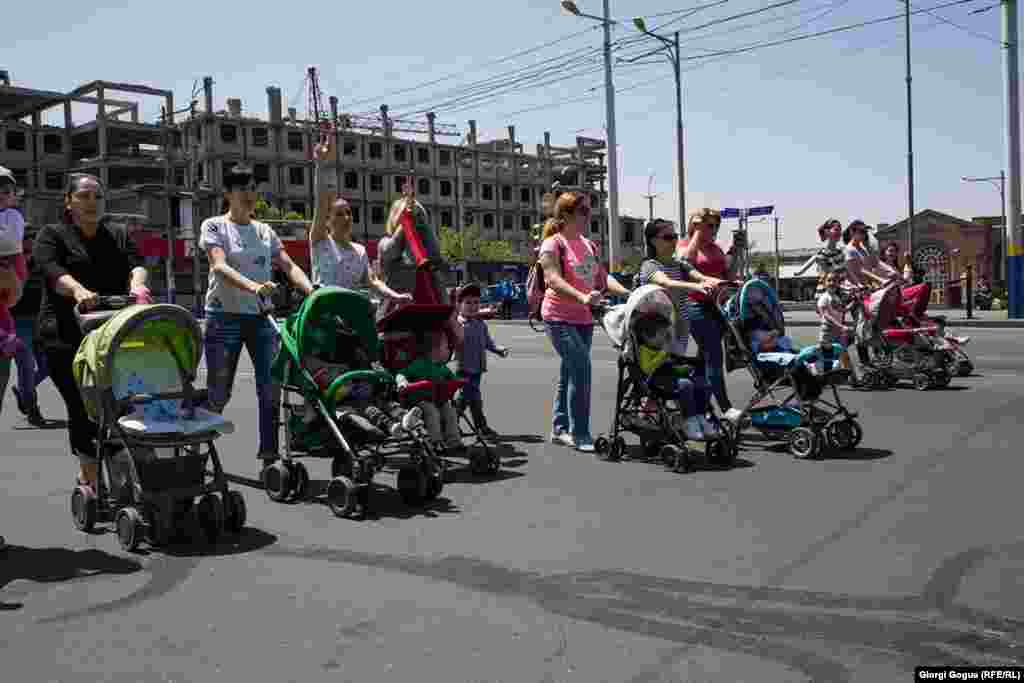
3/13With their strollers and young children, a group of mothers joined protesters on the streets of Yerevan.
Normal life in the Armenian capital, Yerevan, ground to halt after thousands of supporters of protest leader Nikol Pashinian joined mass protests and a general strike on May 2. Pashinian had called for a day of nonviolent, civil disobedience after the Armenian parliament rejected his bid to become interim prime minister. (Photos by RFE/RL's Giorgi Gogua)
Show moreShow less
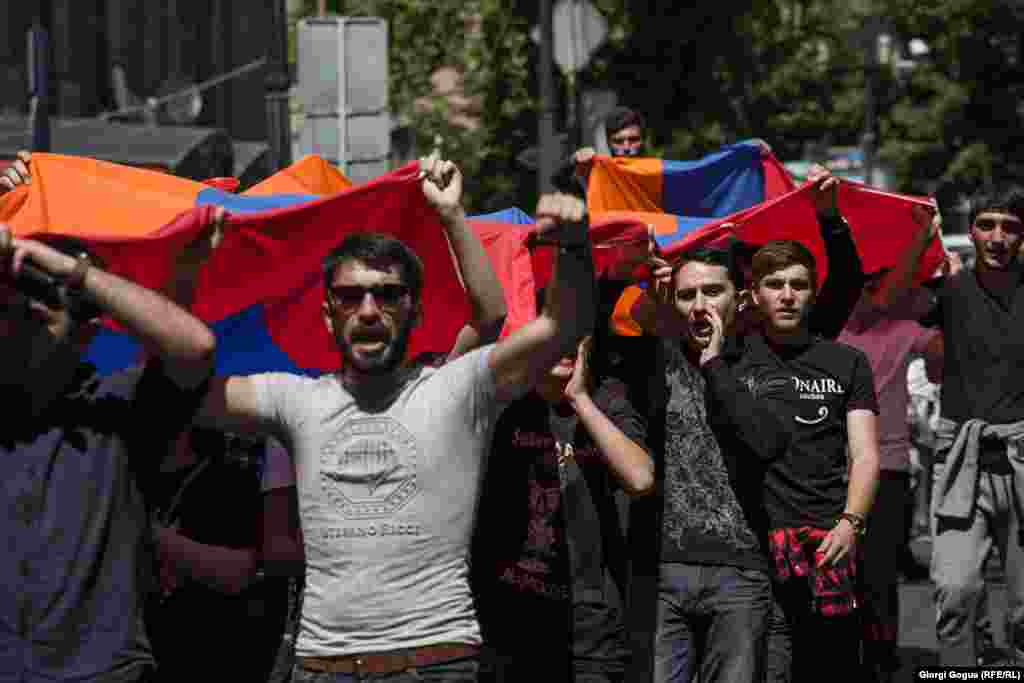
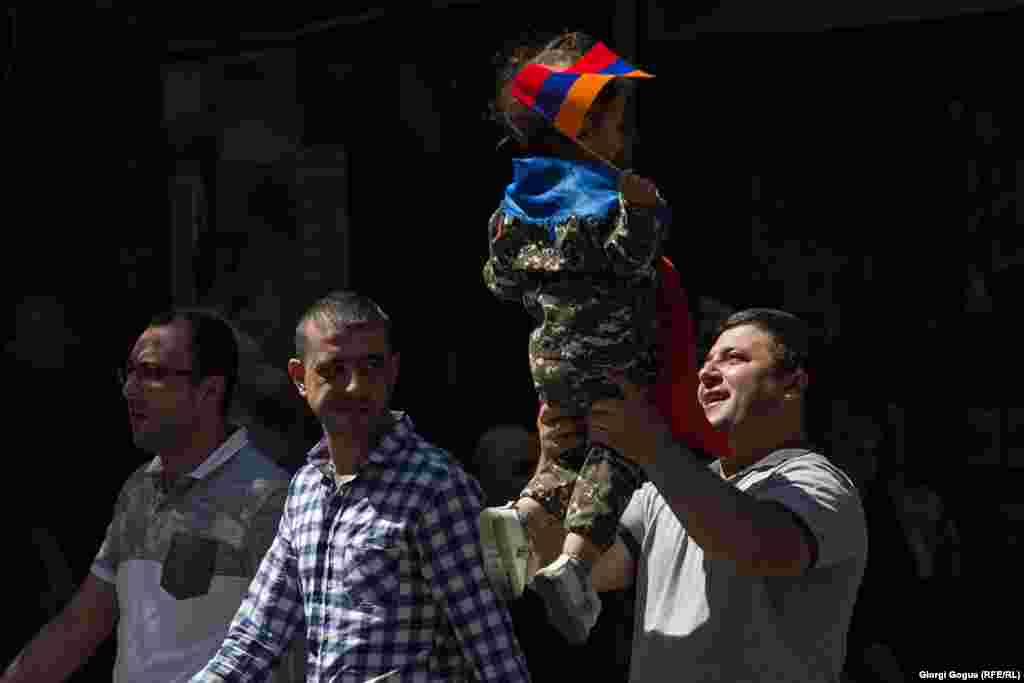
4/13Young supporters of protest leader Nikol Pashinian march with the Armenian flag.
Normal life in the Armenian capital, Yerevan, ground to halt after thousands of supporters of protest leader Nikol Pashinian joined mass protests and a general strike on May 2. Pashinian had called for a day of nonviolent, civil disobedience after the Armenian parliament rejected his bid to become interim prime minister. (Photos by RFE/RL's Giorgi Gogua)
Show moreShow less
5/13The name of Armenia's ruling Republican Party (HHK) crossed out on the hood of a protester's car in Yerevan. Opposition leader Nikol Pashinian said the HHK's parliamentary faction had "destroyed itself irreversibly" and announced "war against its own people" by refusing to support his candidacy for prime minister.
Normal life in the Armenian capital, Yerevan, ground to halt after thousands of supporters of protest leader Nikol Pashinian joined mass protests and a general strike on May 2. Pashinian had called for a day of nonviolent, civil disobedience after the Armenian parliament rejected his bid to become interim prime minister. (Photos by RFE/RL's Giorgi Gogua)
Show moreShow less
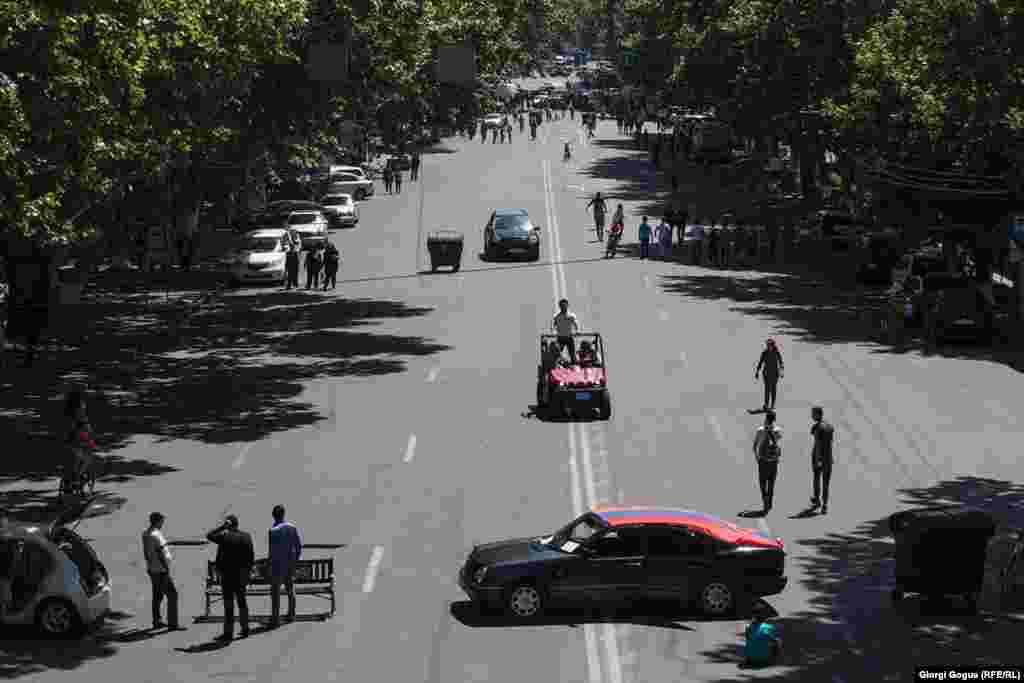
6/13Many streets in the Armenian capital were mostly empty on May 2 as protesters used benches and cars to block traffic.
Normal life in the Armenian capital, Yerevan, ground to halt after thousands of supporters of protest leader Nikol Pashinian joined mass protests and a general strike on May 2. Pashinian had called for a day of nonviolent, civil disobedience after the Armenian parliament rejected his bid to become interim prime minister. (Photos by RFE/RL's Giorgi Gogua)
Show moreShow less
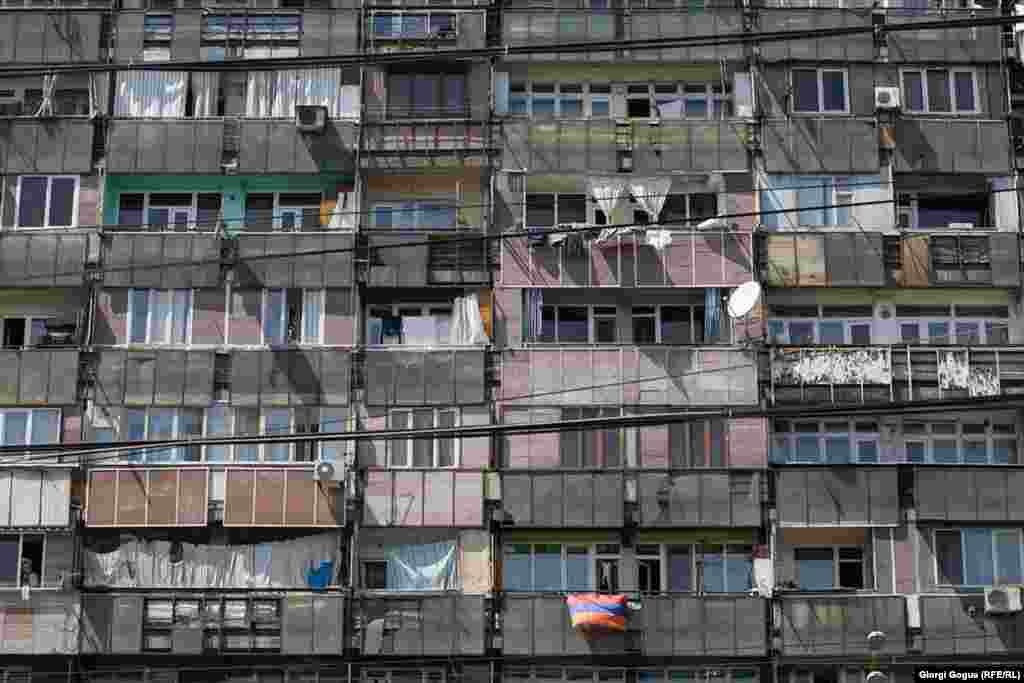
7/13Some Yerevan residents hung Armenian flags from their windows in a show of support for protesters.
Normal life in the Armenian capital, Yerevan, ground to halt after thousands of supporters of protest leader Nikol Pashinian joined mass protests and a general strike on May 2. Pashinian had called for a day of nonviolent, civil disobedience after the Armenian parliament rejected his bid to become interim prime minister. (Photos by RFE/RL's Giorgi Gogua)
Show moreShow less
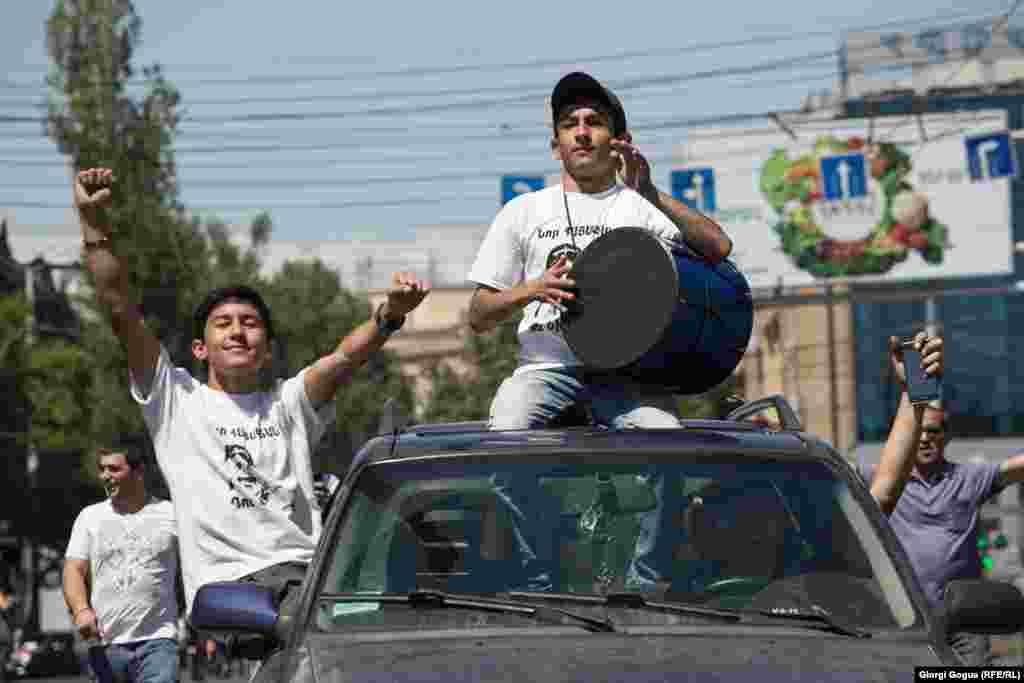
8/13Supporters of opposition leader Nikol Pashinian played instruments and danced in the streets of the capital.
Normal life in the Armenian capital, Yerevan, ground to halt after thousands of supporters of protest leader Nikol Pashinian joined mass protests and a general strike on May 2. Pashinian had called for a day of nonviolent, civil disobedience after the Armenian parliament rejected his bid to become interim prime minister. (Photos by RFE/RL's Giorgi Gogua)
Show moreShow less
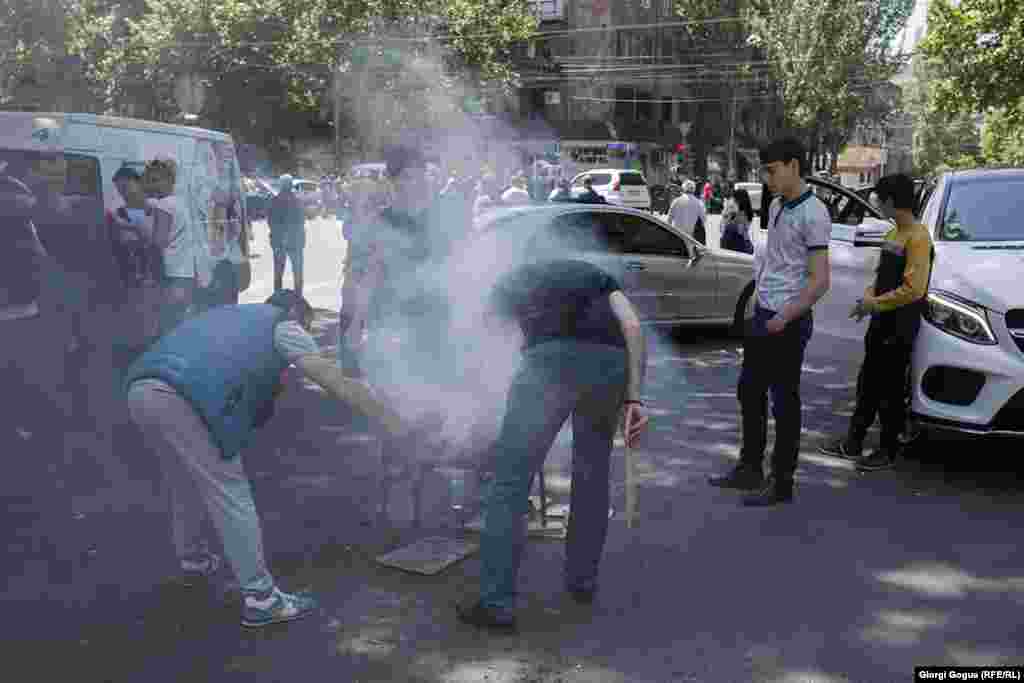
9/13Protesters hold a barbecue on Yerevan's Shashlik Street. The general strike often took on a festive atmosphere.
Normal life in the Armenian capital, Yerevan, ground to halt after thousands of supporters of protest leader Nikol Pashinian joined mass protests and a general strike on May 2. Pashinian had called for a day of nonviolent, civil disobedience after the Armenian parliament rejected his bid to become interim prime minister. (Photos by RFE/RL's Giorgi Gogua)
Show moreShow less
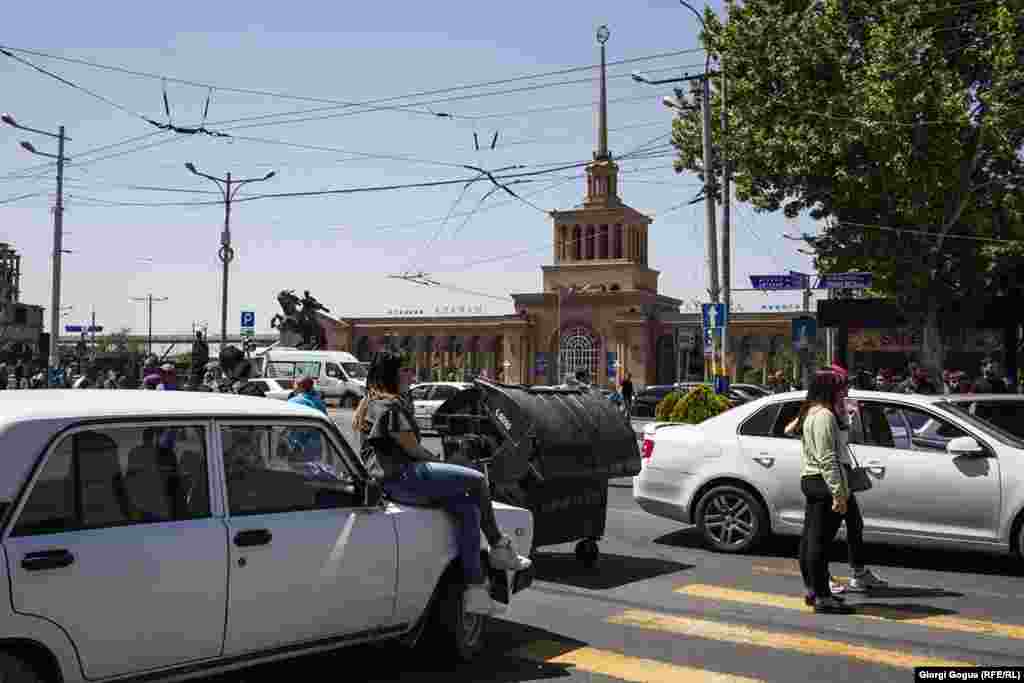
10/13Protesters blockade roads outside Yerevan's main railway station.
Normal life in the Armenian capital, Yerevan, ground to halt after thousands of supporters of protest leader Nikol Pashinian joined mass protests and a general strike on May 2. Pashinian had called for a day of nonviolent, civil disobedience after the Armenian parliament rejected his bid to become interim prime minister. (Photos by RFE/RL's Giorgi Gogua)
Show moreShow less
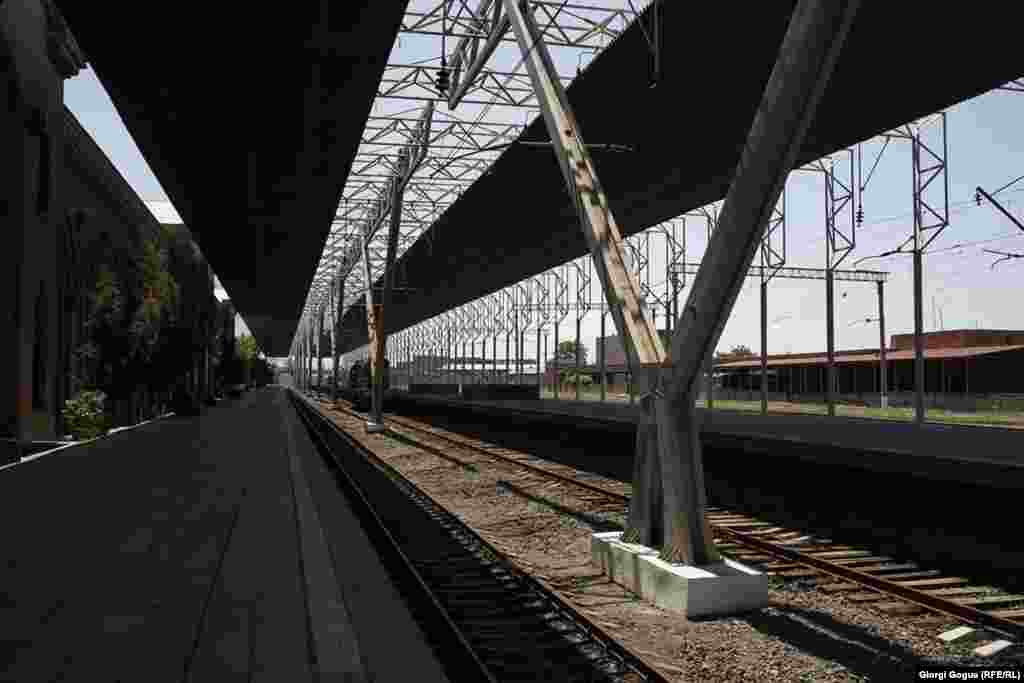
11/13Train stations in Yerevan and across the country fell silent on May 2 after railway workers went on strike.
Normal life in the Armenian capital, Yerevan, ground to halt after thousands of supporters of protest leader Nikol Pashinian joined mass protests and a general strike on May 2. Pashinian had called for a day of nonviolent, civil disobedience after the Armenian parliament rejected his bid to become interim prime minister. (Photos by RFE/RL's Giorgi Gogua)
Show moreShow less
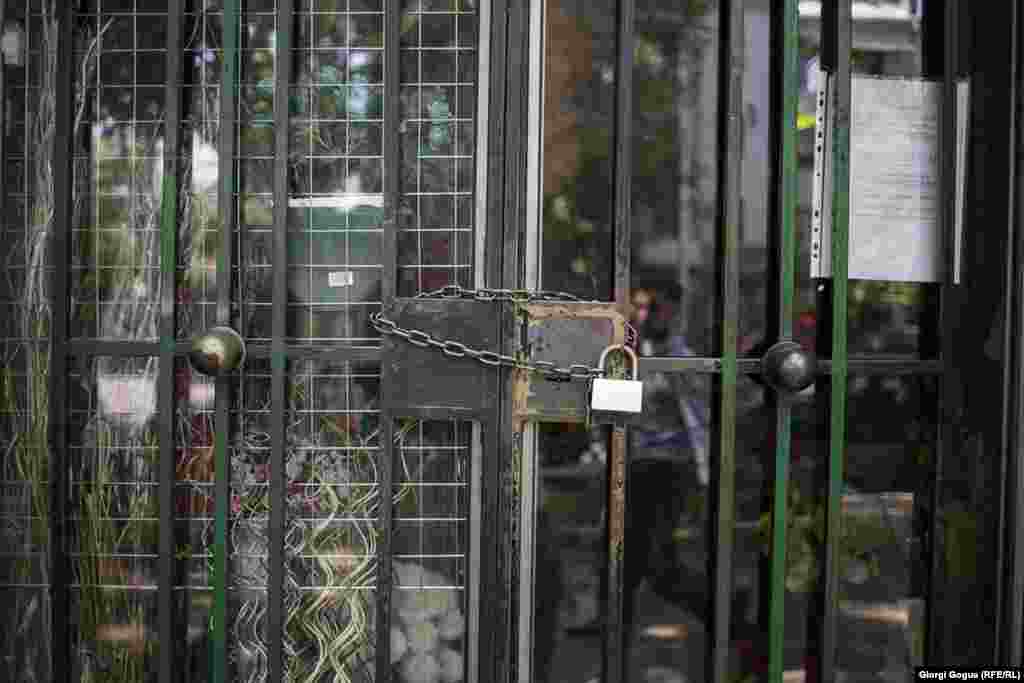
12/13Several shops in Yerevan locked their doors during the May 2 general strike.
Normal life in the Armenian capital, Yerevan, ground to halt after thousands of supporters of protest leader Nikol Pashinian joined mass protests and a general strike on May 2. Pashinian had called for a day of nonviolent, civil disobedience after the Armenian parliament rejected his bid to become interim prime minister. (Photos by RFE/RL's Giorgi Gogua)
Show moreShow less
13/13Both young and old joined the demonstrations.
Normal life in the Armenian capital, Yerevan, ground to halt after thousands of supporters of protest leader Nikol Pashinian joined mass protests and a general strike on May 2. Pashinian had called for a day of nonviolent, civil disobedience after the Armenian parliament rejected his bid to become interim prime minister. (Photos by RFE/RL's Giorgi Gogua)
Show moreShow less
Previous slide
Next slide
Under Armenia’s constitution, if a prime minister is not elected in the second vote on May 8, parliament will be dissolved and early general elections would be held with the HHK-led acting government in charge of the electoral process.
Yelk's Mirzoian told RFE/RL on May 3 that Pashinian has also received the backing of representatives of the Tsarukyan Alliance, which has 31 seats, and the Armenian Revolutionary Federation (Dashnaktsutyun), which has seven seats.
Pashinian’s Yelk faction has nine seats.
President Armen Sarkisian, who is not related to Serzh Sarkisian, called for talks to be held to resolve the crisis before the second vote.
"I deeply regret that the political crisis continues despite the fact that everyone is talking about how dangerous it is for the future of the country," Armen Sarkisian said in a statement.
His calls were echoed by acting Prime Minister Karen Karapetian.
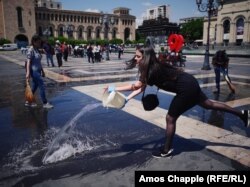
Sona Ghazarian, 20, cleans Republic Square along with her university classmates. The linguistics student says her group headed to the square, which was the scene of a huge protest rally on May 2, and will spend three hours scrubbing it clean. “We have come here because we love our country, and we want to show our support for what is happening on the streets. I want everything in my country to be fair. We all love Armenia and we want the best for her.”
The May 3 pause in the wave of protests came after a dramatic previous day during which crowds Pashinian had called into action blocked nearly every major road in the country, paralyzing traffic and business activity on May 2.
Main highways blocked included the one connecting Yerevan with the country's main airport and those leading to the Georgian and Iranian borders.
However, passage was allowed for all emergency vehicles and the two strategic highways connecting Armenia with Nagorno-Karabakh were kept open.
Nagorno-Karabakh, the ethnic Armenian-populated breakaway region of Azerbaijan, was the cause of a deadly war between Armenia and Azerbaijan that started in 1988 and ended in a 1994 cease-fire.
A four-day flare in the fighting in 2016 resulted in nearly 100 being killed.
RFE/RL’s Armenian Service, operating out of a bureau in Yerevan, is a leading source of trusted reporting and technical innovation, reaching outsized audiences when developments demand authoritative, up-to-the-minute news most.