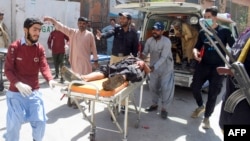
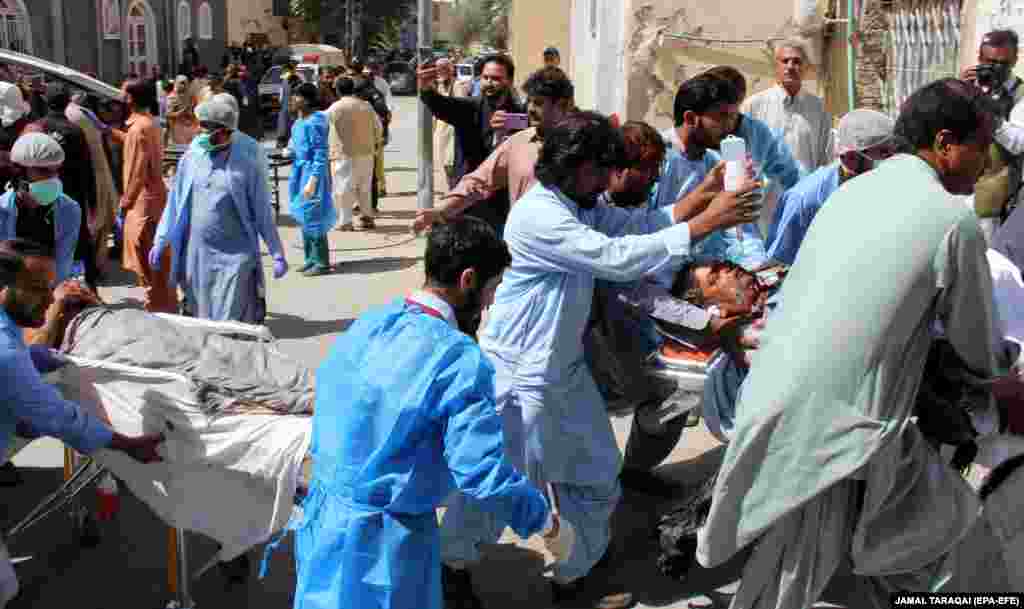
Volunteers carry a blast victim on a stretcher at a hospital in Quetta on September 29.
An explosion at a religious gathering in Pakistan's southwestern province of Balochistan on September 29 killed at least 52 people and dozens more wounded, police and hospital officials told RFE/RL.
Separately, at least four people were killed in explosions that targeted a mosque and a police station in the restive northwestern Khyber Pakhtuknkhwa Province bordering Afghanistan, according to police and media reports.
The first blast, in Balochistan's Mastung district, some 60 kilometers from the provincial capital, Quetta, targeted a procession celebrating the birth of Prophet Muhammad, Jan Muhammad Achakzai, Information Minister in Balochistan's caretaker government, told RFE/RL on the phone.
Rashid Mohammad Shahi, head of the Mastung Health Department, told RFE/RL that 55 people were injured in the incident.
Some 500 people had gathered in Mastung for the celebration, known as Mawlid an-Nabi, during which Muslims usually hold gatherings and distribute free meals to the poor.
No group has claimed responsibility so far for the blast, which prompted authorities to declare a state of emergency in the hospitals in Quetta.
Dozens Killed During Two Attacks On Worshippers in Pakistan
1/9Paramedics and volunteers transport a wounded man to hospital in the city of Quetta after a blast ripped through a religious procession on September 29 in the Mastung district of Pakistan's southwestern Balochistan Province.
The deadly attack, a suspected suicide bombing, is said to have killed dozens during a birthday celebration for Islam's Prophet Muhammad.
A suicide bombing and separate blast ripped through two religious ceremonies in Pakistan on September 29, killing at least 56 people and injuring more than 60 amid events marking the birthday of the Prophet Muhammad, police and health officials said.
Show moreShow less
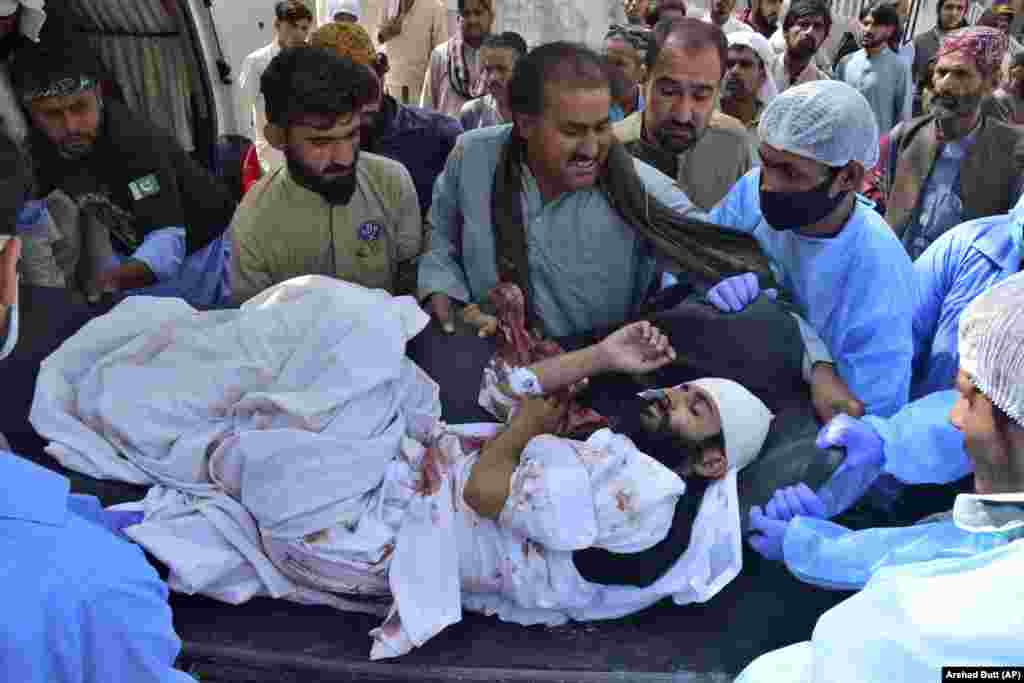
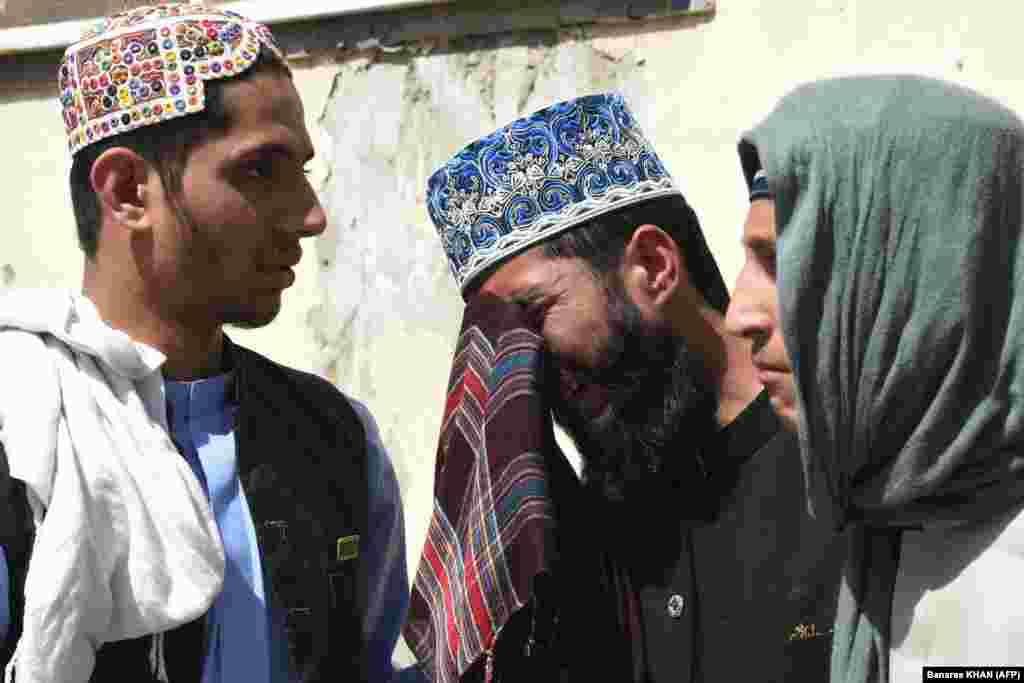
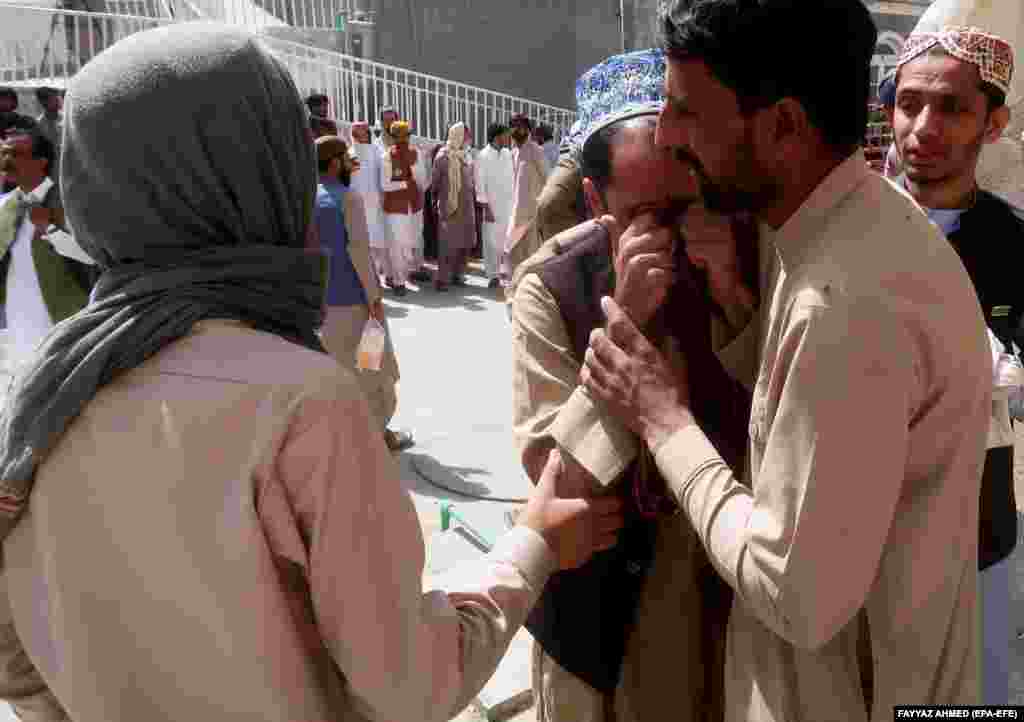
2/9A relative mourns the death of a blast victim at a hospital in Quetta. The attack is said to have killed more than 50 people.
A separate blast at a mosque in the northwestern Khyber Pakhtunkhwa Province killed at least four people.
No group has yet taken responsibility for the attacks.
A suicide bombing and separate blast ripped through two religious ceremonies in Pakistan on September 29, killing at least 56 people and injuring more than 60 amid events marking the birthday of the Prophet Muhammad, police and health officials said.
Show moreShow less
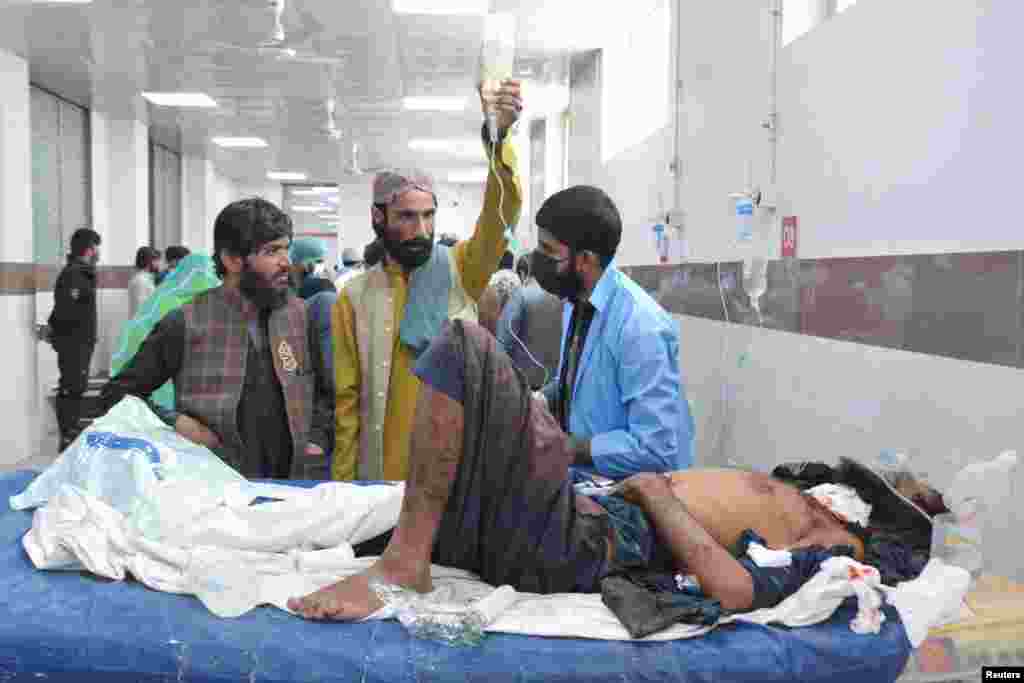
3/9An injured man receives treatment at a hospital in Quetta.
Both Balochistan and Khyber Pakhtunkhwa provinces border Afghanistan and have suffered attacks by Islamist militants in recent years.
A suicide bombing and separate blast ripped through two religious ceremonies in Pakistan on September 29, killing at least 56 people and injuring more than 60 amid events marking the birthday of the Prophet Muhammad, police and health officials said.
Show moreShow less
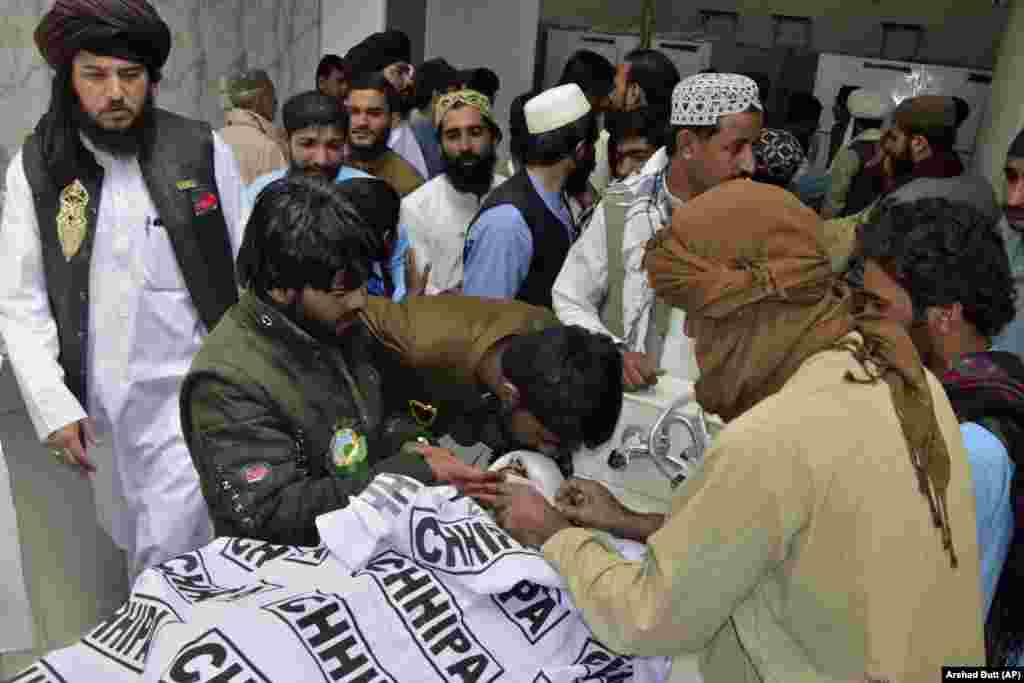
4/9People mourn as they gather around the body of a relative who was killed in the attack during a religious celebration in Balochistan Province.
Balochistan, Pakistan's largest province, borders both Afghanistan and Iran. The region is regularly targeted by Islamist militants, sectarian groups, and nationalist separatists.
A suicide bombing and separate blast ripped through two religious ceremonies in Pakistan on September 29, killing at least 56 people and injuring more than 60 amid events marking the birthday of the Prophet Muhammad, police and health officials said.
Show moreShow less
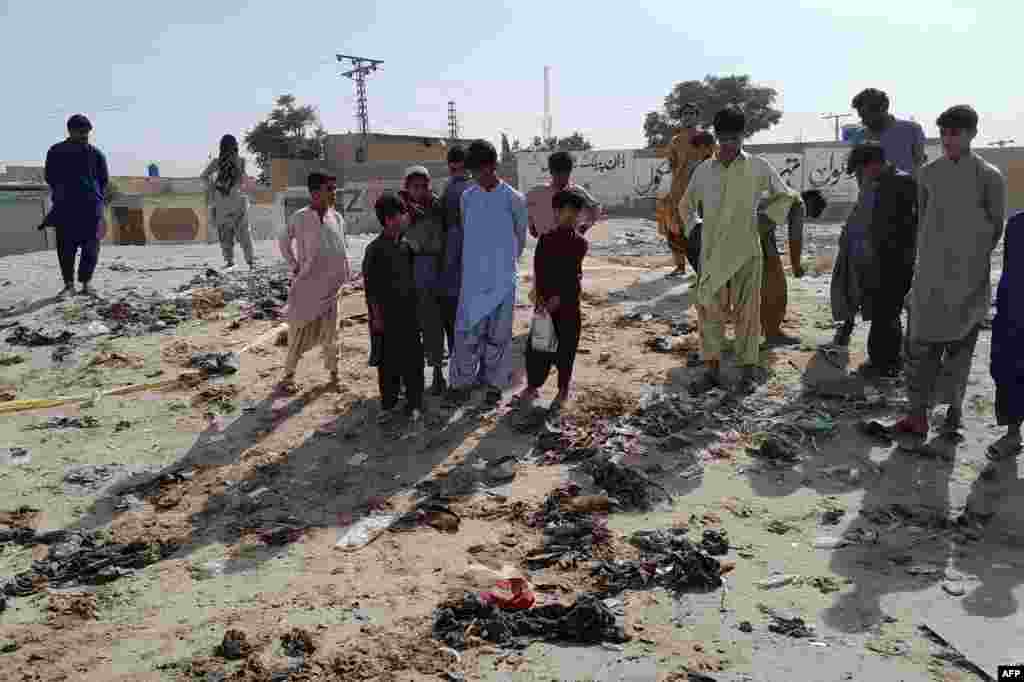
5/9Local residents stand at the site of the suspected suicide attack where some 500 people had gathered to celebrate the Prophet Muhammad's birthday. The day is known as Mawlid al-Nabi, and is often celebrated by distributing free meals to the poor.
A suicide bombing and separate blast ripped through two religious ceremonies in Pakistan on September 29, killing at least 56 people and injuring more than 60 amid events marking the birthday of the Prophet Muhammad, police and health officials said.
Show moreShow less
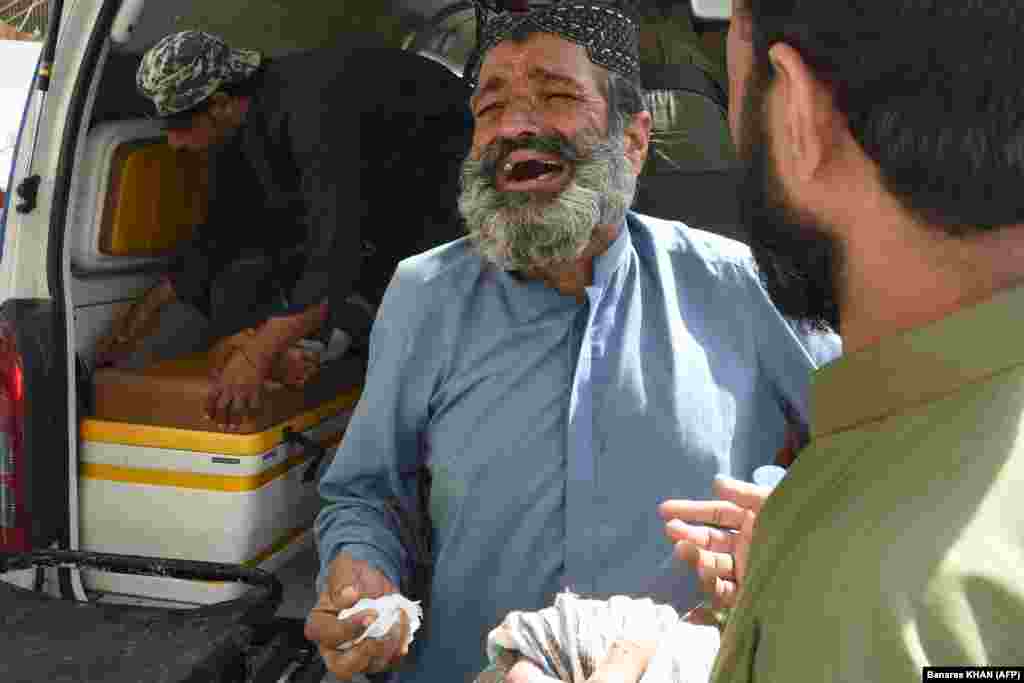
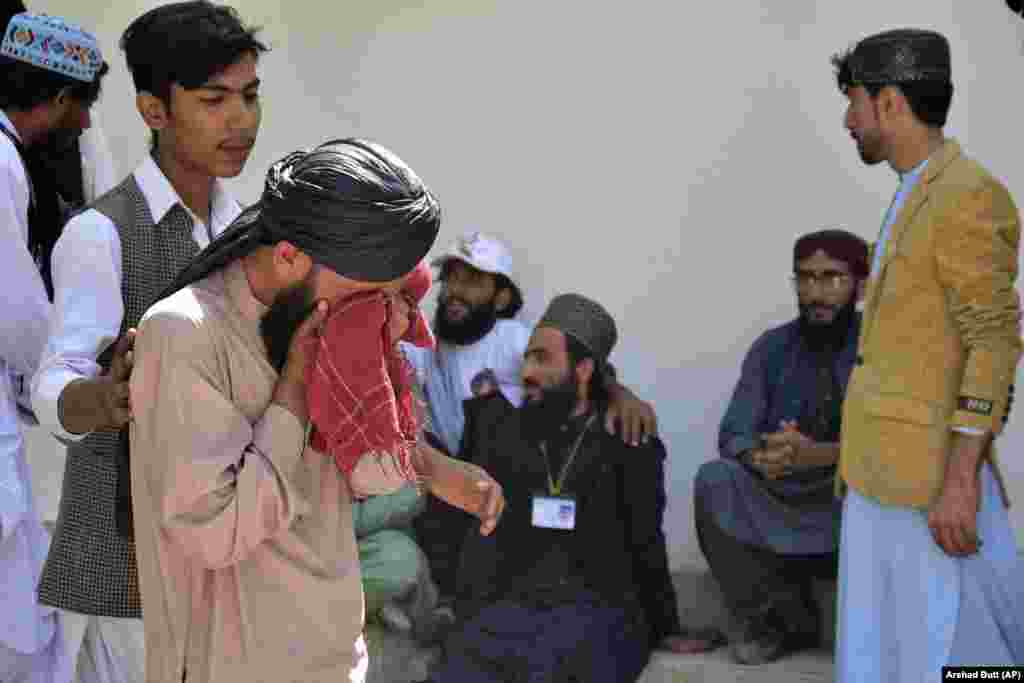
6/9Relatives mourn the death of a loved one at a hospital in Quetta on September 29.
A suicide bombing and separate blast ripped through two religious ceremonies in Pakistan on September 29, killing at least 56 people and injuring more than 60 amid events marking the birthday of the Prophet Muhammad, police and health officials said.
Show moreShow less
7/9A relative mourns the loss of a family member who died in the Balochistan explosion.
No group has claimed responsibility so far for the blast, which prompted authorities to declare a state of emergency in hospitals in Quetta, the provincial capital of Balochistan Province.
A suicide bombing and separate blast ripped through two religious ceremonies in Pakistan on September 29, killing at least 56 people and injuring more than 60 amid events marking the birthday of the Prophet Muhammad, police and health officials said.
Show moreShow less
8/9Hundreds of people were on hand to help the injured as they were transported to the hospital in Quetta.
A suicide bombing and separate blast ripped through two religious ceremonies in Pakistan on September 29, killing at least 56 people and injuring more than 60 amid events marking the birthday of the Prophet Muhammad, police and health officials said.
Show moreShow less
9/9People mourn the deaths of their relatives and friends.
The violence comes amid a recent surge in militant attacks, raising the stakes for security forces ahead of general elections in Pakistan, which have been scheduled for January.
A suicide bombing and separate blast ripped through two religious ceremonies in Pakistan on September 29, killing at least 56 people and injuring more than 60 amid events marking the birthday of the Prophet Muhammad, police and health officials said.
Show moreShow less
Previous slide
Next slide
Balochistan, Pakistan's largest province that borders both Afghanistan and Iran, is regularly targeted by Islamist militants, sectarian groups, and nationalist separatists.
Balochistan is sparsely populated but rich in natural resources such as copper, gold, and gas and has been marred by instability and violence.
The most prominent militant group in the region, the outlawed Balochistan Liberation Army, or BLA, routinely takes credit for attacks on Pakistani security forces.
The BLC claims that ethnic Baluchis face extortion and discrimination by Pakistani authorities.
Islamabad rejects the charges. Ethnic Baluchis account for just under 4 percent of Pakistan’s population of 231 million.
In the second incident, at least four people were killed, including a police officer, and 12 others were wounded in blasts that targeted a police station and a mosque in the Doaba area of Khyber Pakhtuknkhwa.
The roof of the mosque, located on the premises of the police station, caved in under the force of the second explosion, which happened as the mosque was full of people attending Friday Prayers.
RFE/RL's Radio Mashaal is a public-service broadcaster providing a powerful alternative to extremist propaganda in Pakistan's remote tribal regions along the border with Afghanistan.