




Afghanistan's Taliban rulers said they are preparing "an appropriate and calculated response" to Pakistani air strikes that killed at least 18 people in Nangarhar and Paktika provinces.
Afghan officials said "dozens of people" were injured in the overnight attacks on February 22, "including women and children."
Pakistan said it had launched strikes on seven militant sites inside Afghanistan in a "retributive response" to recent suicide attacks it said were carried out by Afghan-based extremists. Pakistan claimed the strikes killed as many as 80 militants. Taliban-run Afghan security structures rejected the claim as "false."
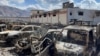
As tensions escalated between the two South Asian neighbors, Islamabad said it had "conclusive evidence" that recent attacks inside Pakistan were carried out by Afghan-based extremists from the Tehrik-e Taliban (TTP) who were allegedly acting on instructions from "their Afghanistan-based leadership and handlers."
The Pakistani ministry said it targeted the Islamic State (IS) extremist group, along with the TTP, also known as the Pakistani Taliban, in the strikes. It did not immediately provide details of the attacks or describe the evidence it said its intelligence agencies had gathered.
The claims from either side could not immediately be verified.
The renewed violence comes after hopes had been raised for an easing of tensions days earlier when Kabul released three Pakistani soldiers in a Saudi-mediated move following months of border clashes in the remote regions.
A Village Mourns
In the district of Bihsud in Nangarhar Province, 18 members of one family were killed in the strikes, according to authorities and local residents.
Nezakat, a 35-year-old farmer in Bihsud, who only gave one name, told RFE/RL's Radio Azadi that bodies of 13 members of his family were recovered following the attack, while five more were missing.
"It was midnight when the attack happened. I was in my room, and my wife was with me. When I came out, I carried my aunt out and heard my son calling for me to carry him as well. He was injured," he said.
As residents joined rescue workers to search for bodies under the rubble, they told Radio Azadi that the youngest of the dead was 1 year old and the oldest was 80.
"We came and pulled out four people from the rubble who were unfortunately dead. Later, we called a squatter to pull out the other bodies," said Raz Wali, an eyewitness to the incident.
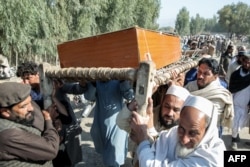
"People here are ordinary people. The residents of this village are our relatives. When the bombing happened, one person who survived was shouting for help," said Nezakat's neighbor Amin Gul Amin, 37.
Local police said that the bombing started around midnight and hit three districts in the region.
Suicide Attacks Inside Pakistan
A least four suicide attacks have been carried out in recent weeks. Three were in Pakistan's northwestern Khyber Pakhtunkhwa Province, and one was in the capital, Islamabad, killing dozens of civilians and security personnel.
Islamabad alleged the extremist Taliban leaders of Afghanistan had failed to take "substantive action" against TTP militants despite repeated requests.
It urged Kabul to prevent the use of its territory for attacks against Pakistan by terror groups.
Afghanistan denies Pakistan's accusations that it is sheltering the Pakistani Taliban, which is an offshoot of the Afghan Taliban but appears to operate separately.
Tensions have escalated between the two countries since Pakistan conducted air strikes on Kabul in October 2025 and followed up with additional attacks on Afghan territory.
Dozens of soldiers from both sides were killed in artillery clashes and heavy gunfire last year before a cease-fire was agreed through Qatari mediation.
Lack Of Long-Term Solution
However, several rounds of talks mediated by Qatar and Turkey aimed at easing the tensions along the border have failed to bring about a long-term breakthrough.
Among the most serious attacks was a February 6 suicide bombing at a Shi'ite mosque in Islamabad that killed at least 32 people as they observed Friday Prayer.
The Islamic State claimed responsibility for that attack, which was the deadliest terror strike since 2008 in the Pakistani capital.
Fighting along the 2,600-kilometer frontier has forced the closing of several key border crossings and disrupted trade and movement.
Afghan's Taliban rulers have not been recognized by most of the world community as the legitimate government in the country and have been accused of extensive human rights abuses, especially against women and girls.