



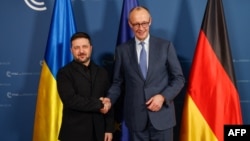
MUNICH -- German Chancellor Friedrich Merz opened the Munich Security Conference by describing a geopolitical landscape bereft of its former signposts, saying the old world order "no longer exists," warning of threats posed by Russia and China, and suggesting US-Europe ties must be fixed to address the challenges.
"As imperfect as it was even in its best days," the global order that "rested on rights and rules" is gone, Merz said in his keynote speech on February 13. "We have crossed the threshold into an era that is once again openly characterized by power and great power politics."
Pointing to Russia's all-out war on Ukraine as the clearest example of a harsh new reality, he also said China "systematically exploits the dependencies of others."
Merz called for a "new transatlantic partnership," switching to English and warning that in the "era of great power rivalry, even the United States will not be powerful enough to go it alone."
"We need to realize on both sides of the Atlantic that we are stronger together.... So let's repair and revive transatlantic trust together," he said, adding that Europe is doing its part.

The three-day annual event -- which features hundreds of prominent European leaders, lawmakers, military officials, academics, and others -- comes a year after Vice President JD Vance stunned the conference with a tongue-lashing, accusing Europe of dangerous policies toward immigration and far-right political parties.
"A rift has opened up between Europe and the United States," Merz said in his speech. "Vice President JD Vance said this very openly here in Munich a year ago."
Underscoring Europe's trepidation, a report written by the organizers and published ahead of the conference spoke of the advent of "wrecking-ball politics" and declared, "The most powerful of those who take the axe to existing rules and institutions is US President Donald Trump."
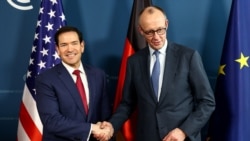
The US delegation is led this year by Secretary of State Marco Rubio, who spoke of a "defining moment" in a world that is "changing very fast right in front of us."
"The old world is gone -- frankly, the world that I grew up in -- and we live in a new era in geopolitics, and it's going to require all of us to sort of reexamine what that looks like and what our role is going to be," Rubio said before he left for Munich, where he is set to deliver a speech on February 14.
Rubio met with Chinese Foreign Minister Wang Yi for bilateral talks a few hours after arriving in Munich. He said before departure that he would likely meet Ukrainian President Volodymyr Zelenskyy, although he was not "100 percent" certain.
Asked about ongoing Russian attacks on Ukrainian energy infrastructure, which have plunged hundreds of thousands into cold and darkness in winter, Rubio said this is why Washington is continuing peace efforts.
"People are suffering. It's the coldest time of year. It's unimaginable suffering," he added.
Ukrainian Foreign Minister Andriy Sybiha said he expects to speak with Rubio as well.
"We will be interested [in continuing] our regular contacts at the highest levels," said Sybiha, who welcomed visitors including German Foreign Minister Johann Wadephul to a drone exhibition at Ukraine House in Munich.
"Only Trump could end the war, only the American side," Sybiha told RFE/RL.

Trump has made ending Russia's war a priority since he returned to the presidency in January 2025. Moscow, however, has shown little readiness for compromise, and two recent rounds of US-Russia-Ukraine talks have left the sides at odds over key issues including control over territory in Ukraine's Donbas region.
Russian and Ukrainian officials said a new round of trilateral talks would be held in Geneva on February 17-18. There was no official US comment, but Reuters quoted sources as saying a fresh round of talks were scheduled for Geneva starting on February 17.
The source said the US delegation will include envoys Steve Witkoff and Jared Kushner, who would meet with Ukrainian and Russian representatives after holding indirect talks with Iran under Omani mediation earlier in the day.
"The most significant thing we can achieve together is ending the war with a dignified peace and creating reliable security guarantees for Ukraine and for all of Europe -- so that no one in Europe is afraid of being left without protection," Zelenskyy wrote in an X post.
The conference opened hours after Russia's latest strikes on Ukraine left at least seven people dead, according to officials.
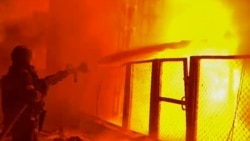
The Ukrainian Air Force said Russia fired more than 150 drones and one ballistic missile in the overnight hours of February 12-13. Several buildings in the southern city of Odesa were hit and caught fire, including warehouses in the port district. There were also several casualties from shelling in the eastern city of Kramatorsk, according to the city's mayor.
The war "has implications far beyond Ukraine," Norwegian Prime Minister Jonas Gahr Store told RFE/RL. "It is about standing up to forces that will use military might to push their interests, which is important for the security for all of Europe and also actually far beyond Europe."
Store added that "we have to put every pressure on Russia to stop this war. It could have been stopped every day by Russia. Russia is the aggressor. And we will do what we can to support Ukraine to reach a cease-fire and a fair peace."
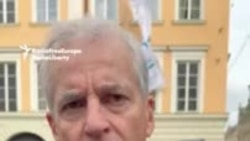
Conference organizers said this year's event is the largest ever, with more than 1,000 delegates including some 50 heads of government and leading diplomats. It comes at a time of global turmoil, with the possibility of US air strikes on Iran, Russia's invasion approaching the four-year mark, and tensions over the future of NATO and the transatlantic alliance more broadly amid fears of US disengagement.
Asked what she expects from Rubio's address and from US engagement with the Europeans, Romanian Foreign Minister Oana Toiu told reporters, "I hope the US delegation...is going to reiterate [a] strong message of support.
She said that "beyond words, beyond conversations, I think what we need now is common action," and that "building or rebuilding trust in the transatlantic partnership is also very important for the future steps in the peace process in Ukraine."
Sybiha delivered a different message as he opened Ukraine House.
"The time when Europe relied on external powers is over...." he said. "We have enough of our own strength. We only need to admit it. And Ukraine is a key source of that real European strength."
European Central Bank President Christine Lagarde told RFE/RL, "I very much hope that the 90 billion euro ($107 billion) loan that has been decided by the Europeans will come to reality and issuance as soon as possible," but said she didn't have details.
In recent speeches, Merz has doubled down on the message that Europe needs to strengthen its military power in the face of Russian aggression and uncertainty over Washington’s commitment to NATO.
Europe would only be heard "when we learn the language of power politics, when we become ourselves a European power," he said in January.
In his conference address, he said he begun confidential talks with French President Emmanuel Macron on "European nuclear deterrence."
En route to Munich, Rubio voiced confidence that his message to angsty Europeans would be "well received." He is accompanied by a large bipartisan group of US senators who have announced meetings with Zelenskyy, NATO chief Mark Rutte, and others.
In a statement, Senator Jeanne Shaheen, the leading Democratic member of the Senate Foreign Relations Committee, said she would use the trip to "strengthen support for Ukraine and urge her Congressional colleagues to pass bipartisan sanctions legislation to hold Russia and its enablers accountable."