





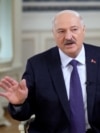
Aleksandr Lukashenko is walking a fine line aimed at making sure that Belarus does not get dragged into Russia's war in Ukraine following an ultimatum by Ukrainian President Volodymyr Zelenskyy that hinted at Ukrainian military or covert action.
Lukashenko, who has ruled Belarus with an iron fist in the decades since he was first elected president in 1994, allowed his country to be used as a launchpad for Russian forces when they began their full-scale invasion of Ukraine in 2022.
But while he has made strongly pro-Russian statements in the years since, he has also sought to maintain neutral, noncombatant status for Belarus. Zelenskyy's ultimatum puts pressure on that position.
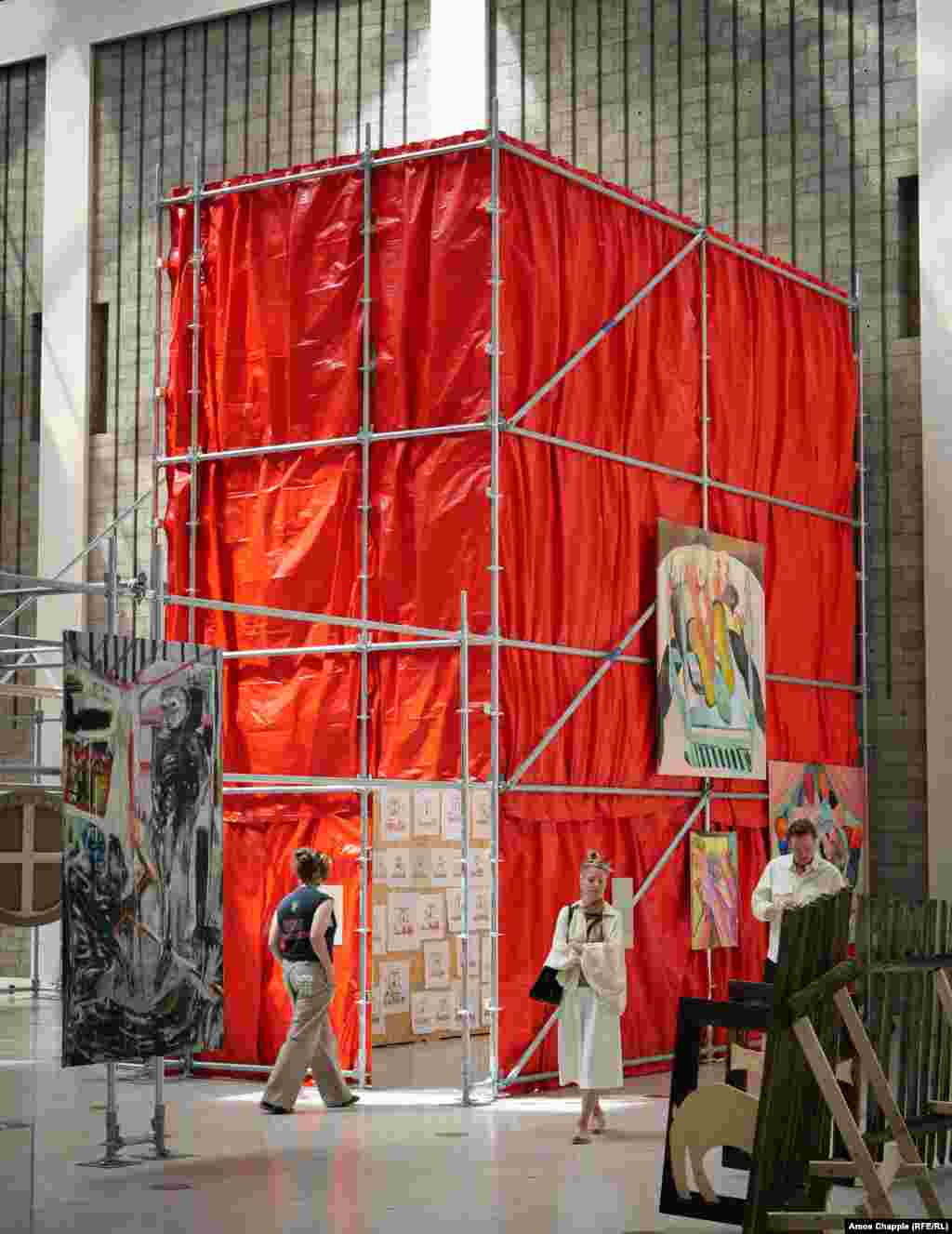
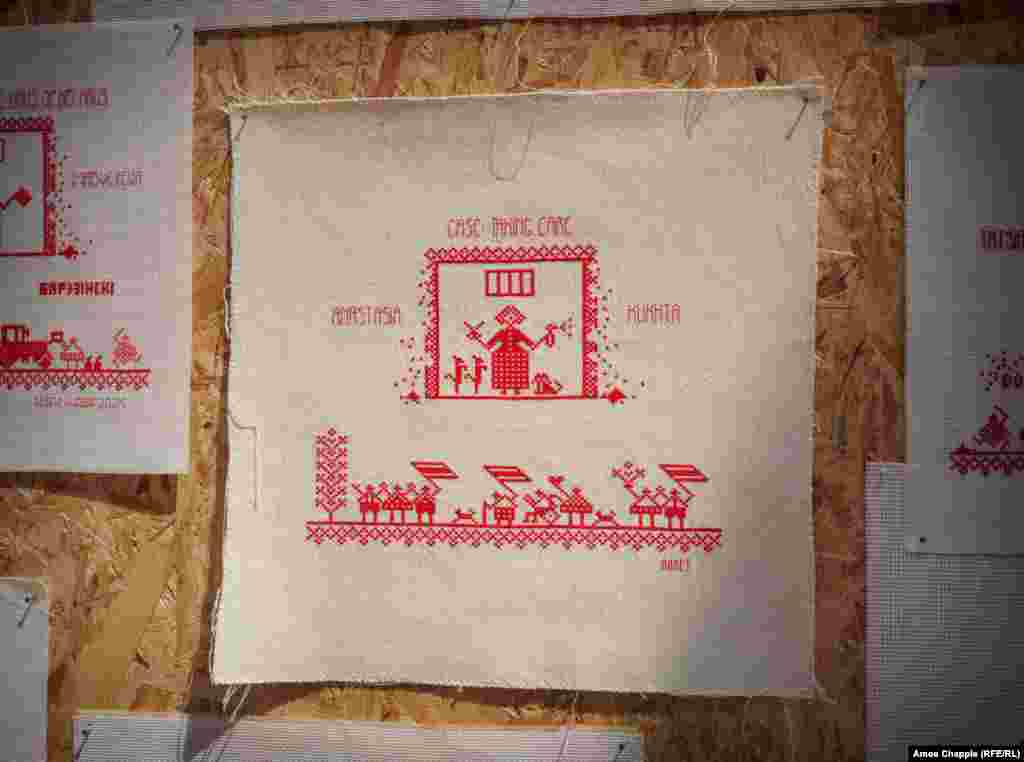
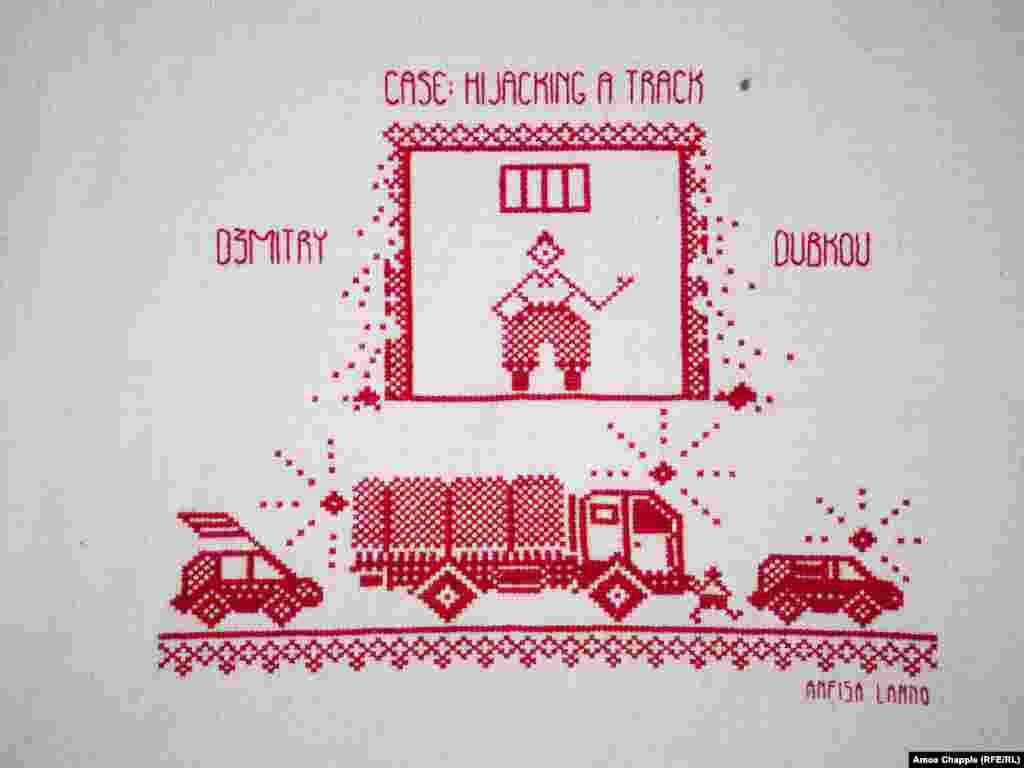
Stitched Up: Belarusian Political Prisoners Highlighted Through Traditional Embroidery




"Lukashenko understands that he is vulnerable. And Ukraine speaks from a position of strength," said Vadim Mozheiko, director of the Krakow-based Kosciuszko Institute, a think tank.
"Ukraine has found the language with which one should speak to such dictators as Lukashenko," he told Current Time on June 22.
What Did Zelenskyy Say?
Speaking at a news conference on June 19, Zelenskyy claimed Russia was using signal relay stations in Belarus to help steer their missiles at targets in Ukraine.
"What's the point of [Lukashenko] saying he doesn't want to be in the war? Let him remove this equipment, let him switch it off. I think a week will be enough for him to do that," he said, adding: "If he doesn't do it, we'll do it."
Zelenskyy repeated the call for action -- and a veiled threat of consequences if it were not taken -- in a subsequent social media post and TV interview.
In the same interview, on June 21, he said he had received no response to his message from Lukashenko, who also refrained from making any public statements on the matter.
Valery Kavaleuski, a former Belarusian diplomat who heads the Euro-Atlantic Affairs Agency, told RFE/RL's Belarus Service that this silence reflected Lukashenko's long-term policy.
"This is one of the few objectives that unites both the Belarusian government and the democratic opposition in exile: avoiding military confrontation and preventing Belarus from becoming a direct participant in the conflict," he said.

"The Belarusian regime has pursued a relatively consistent approach not only in recent days but over the past several months. Escalatory and confrontational statements from Kyiv directed at Minsk have largely gone unanswered, which has helped prevent the situation from spiraling further," he added.
Mozheiko agreed that Lukashenko "does not want war," adding that this was due to internal political pressures.
"The reason is not the lack of will (for war) on the part of Putin or Lukashenko, but the fact that entering the war would be extremely unpopular in Belarusian society. This is the key factor: Belarusian society, not the dictator," he said.
"Lukashenko understands that in many respects this would be a suicidal scenario for him."
Lukashenko's Shaky Ground
Lukashenko has survived many waves of popular discontent over his decades of authoritarian rule, but perhaps none more so than in the 2020 presidential elections.
When he was declared winner, it sparked unprecedented mass nationwide protests that were only suppressed with Putin's help. Not only did the Kremlin offer financial support to Lukashenko's regime, it also indicated that Russian military forces could be available and even sent TV presenters to staff Belarusian state channels after some local employees joined the protests.
This assistance came as Lukashenko crushed the protests with a brutal crackdown that saw mass beatings, thousands of arrests, and torture of political opponents. And it made Lukashenko perhaps more reliant than ever on Putin to maintain his grip on power.
As noted, Lukashenko returned the favor when Russian tanks rolled into Ukraine in February 2022 -- although he resisted calls to send Belarusian troops into action.
It was in some ways a continuation of a pattern in which, for decades, Lukashenko has walked a tightrope between opening up his country to the West and ceding to pressure from Moscow to integrate more closely.
The emerging drone war represented a new challenge. With Russian drones buzzing through its airspace, Minsk had to decide whether to shoot them down, jam them, warn its neighbors, or all of the above -- all without vexing Moscow.
Zelensky's ultimatum regarding the relay stations makes the balancing act even more difficult.
"For Lukashenko, the situation is very awkward," said Mozheiko, arguing it is difficult to satisfy Ukraine's demands without offending Moscow but also difficult to avoid escalating the situation and risk getting embroiled in the conflict.
"You cannot envy him. He has no easy solutions. That is why he has been silent all this time," Mozheiko added.
That silence is also being tested in Moscow. Kremlin spokesman Dmitry Peskov said on June 22 that Putin and Lukashenko would speak "in the foreseeable future" and that "this is a good opportunity to discuss this and other issues."
Avoiding Escalation
Moscow might welcome the prospect of Ukrainian action against Belarus, seeing it as an opportunity to drag Minsk further into the conflict.
It would certainly be a major escalation in what is already the largest armed conflict in Europe since World War II and would not be seen as desirable in Washington or European capitals.
The Trump administration has sought to improve relations with Lukashenko, seeing him as a back channel to Putin. It has also cut military aid to Ukraine and sought to pressure Kyiv to make compromises in exchange for a peace deal with Russia. Any Ukrainian action against Belarus might be condemned by Washington as reckless and possibly aggressive.
European countries have remained staunch supporters of Ukraine, providing political, financial, and military backing. They would also likely be appalled by a unilateral Ukrainian strike.
"This requires de-escalation on all sides, including avoiding Ukrainian strikes on Belarusian territory. At the same time, the Lukashenko regime may also need to make certain concessions and take a closer look at the concerns surrounding the alleged drone relay infrastructure," Kavaleuski said.
"The European Union and the United States are also likely to be involved in informal consultations aimed at preventing the conflict from expanding into a broader regional confrontation," he added.





