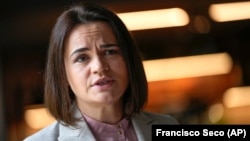
Belarusian opposition leader Svyatlana Tsikhanouskaya speaks to AP in Brussels on June 22
Belarusian opposition leader Svyatlana Tsikhanouskaya says Belarus’s forced diversion of a passenger flight to Minsk last month was “a mistake” that has galvanized the West against authoritarian ruler Alyaksandr Lukashenka.
Tsikhanouskaya told AP in an interview published on June 23 that “this hijacking touched all the European leaders because their citizens were on this flight.”
Lukashenka’s regime “never crossed this red line before, of interfering in a European area,” she said.
Crisis In Belarus
Read our coverage as Belarusian strongman Alyaksandr Lukashenka continues his brutal crackdown on NGOs, activists, and independent media following the August 2020 presidential election.
“The regime is so frightened by the unity of Belarusians, by the unity of the European Union, the U.S.A., about this situation in Belarus that they stopped to think strategically. They started to think emotionally,” she added.
Lukashenka's regime has been under international pressure since it launched a brutal crackdown on the political opposition and the independent media in the wake of a disputed election in August 2020.
The protesters have said that election was rigged, insisting that Tsikhanouskaya won the poll.
The crisis hit a new level on May 23 when Belarusian authorities scrambled a military jet to escort an Athens-Vilnius Ryanair flight to land in Minsk in what many countries regarded as a "state hijacking." After the plane, which was diverted just before it left Belarusian airspace, landed, law enforcement immediately arrested opposition blogger Raman Pratasevich and his Russian girlfriend.
In response, the European Union, the United States, Britain, and Canada have slapped sanctions on Belarus that included asset freezes and visa bans imposed against dozens of officials, lawmakers, and ministers from Lukashenka's administration and his family members, as well as Belarusian entities.
EU foreign ministers also agreed to sanction key sectors of the Belarusian economy and major revenue sources for the regime, including potash fertilizer exports, the tobacco industry, petroleum, and petrochemical products.
Lukashenka told a June 22 commemoration event marking the 80th anniversary of the Nazi invasion of the U.S.S.R. that the latest sanctions, announced on June 21, were part of an ongoing "hybrid war" against his country.
Operation Barbarossa: The Nazi Invasion Of The U.S.S.R. 80 Years Ago
1/20This photo -- of German soldiers hauling a cannon past a Soviet border marker -- is one of the first images taken of Operation Barbarossa, the attack on the Soviet Union that was launched at dawn on June 22, 1941.
Nazi Germany led the largest-ever ground invasion force in an attack on the Soviet Union in 1941 that unleashed a brutal conflict that cost the lives of millions of people.
Show moreShow less
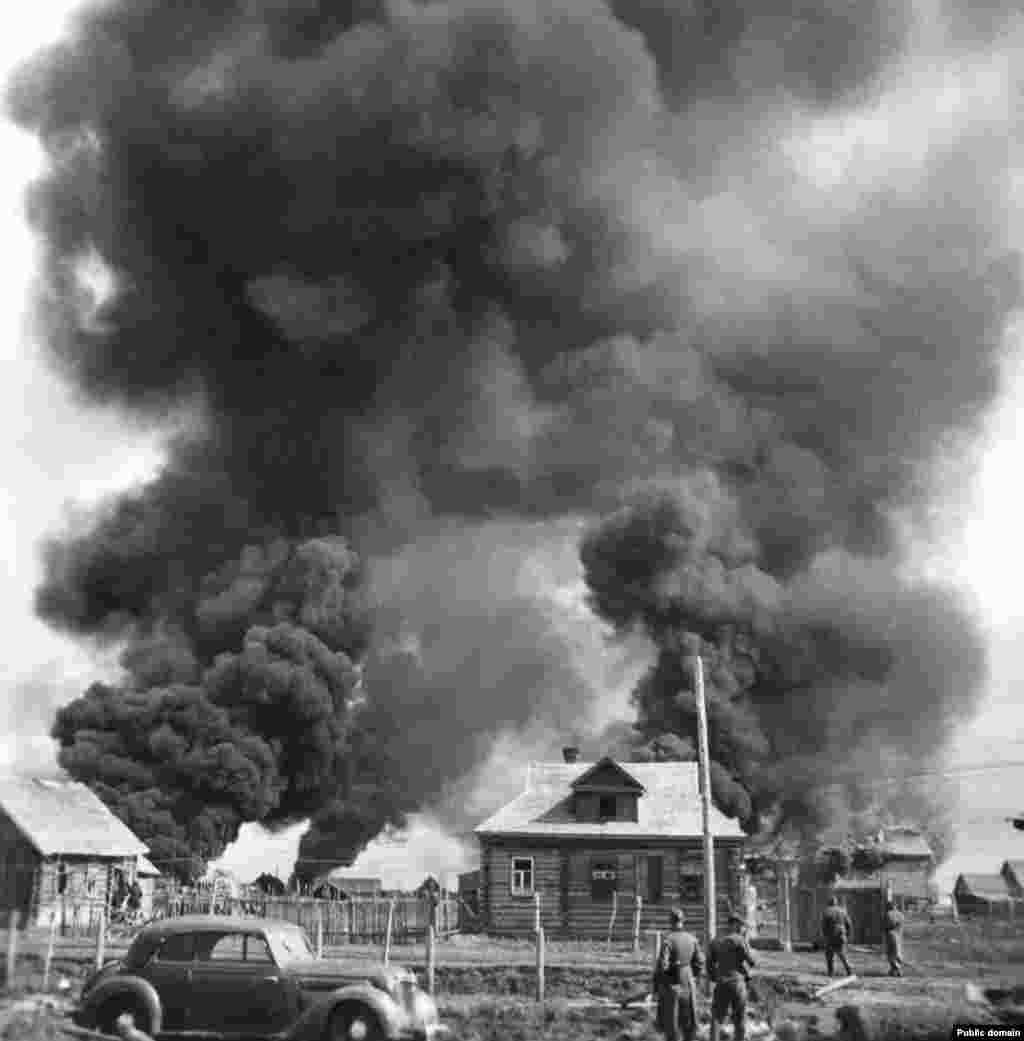
2/20German soldiers watch a Soviet village burn in June 1941.
Barbarossa was the largest military ground invasion in history, with some 3.8 million troops, thousands of tanks and aircraft, and more than half a million horses advancing across the entirety of Eastern Europe, from the Gulf of Finland to the Black Sea.
Nazi Germany led the largest-ever ground invasion force in an attack on the Soviet Union in 1941 that unleashed a brutal conflict that cost the lives of millions of people.
Show moreShow less
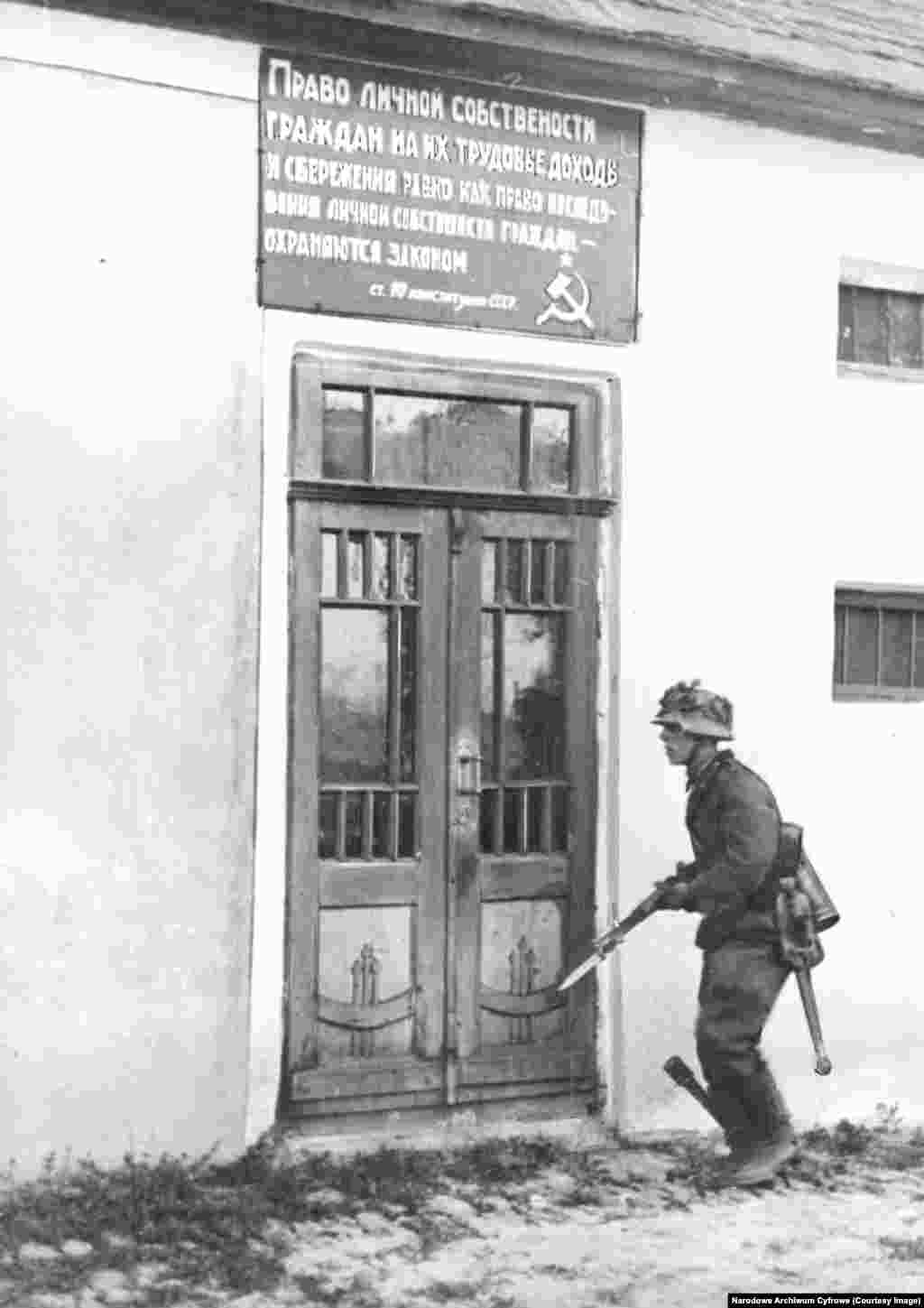
3/20A Nazi soldier with a grenade tucked in his boot moves through a Soviet village in June 1941.
Barbarossa was motivated in part by racial hatred for what Nazi leadership deemed "subhuman" Slavic people. In the Nazi "master plan for the East," most Slavs were to be killed or enslaved and the vast territories of the Soviet Union would be resettled with ethnic Germans.
Nazi Germany led the largest-ever ground invasion force in an attack on the Soviet Union in 1941 that unleashed a brutal conflict that cost the lives of millions of people.
Show moreShow less
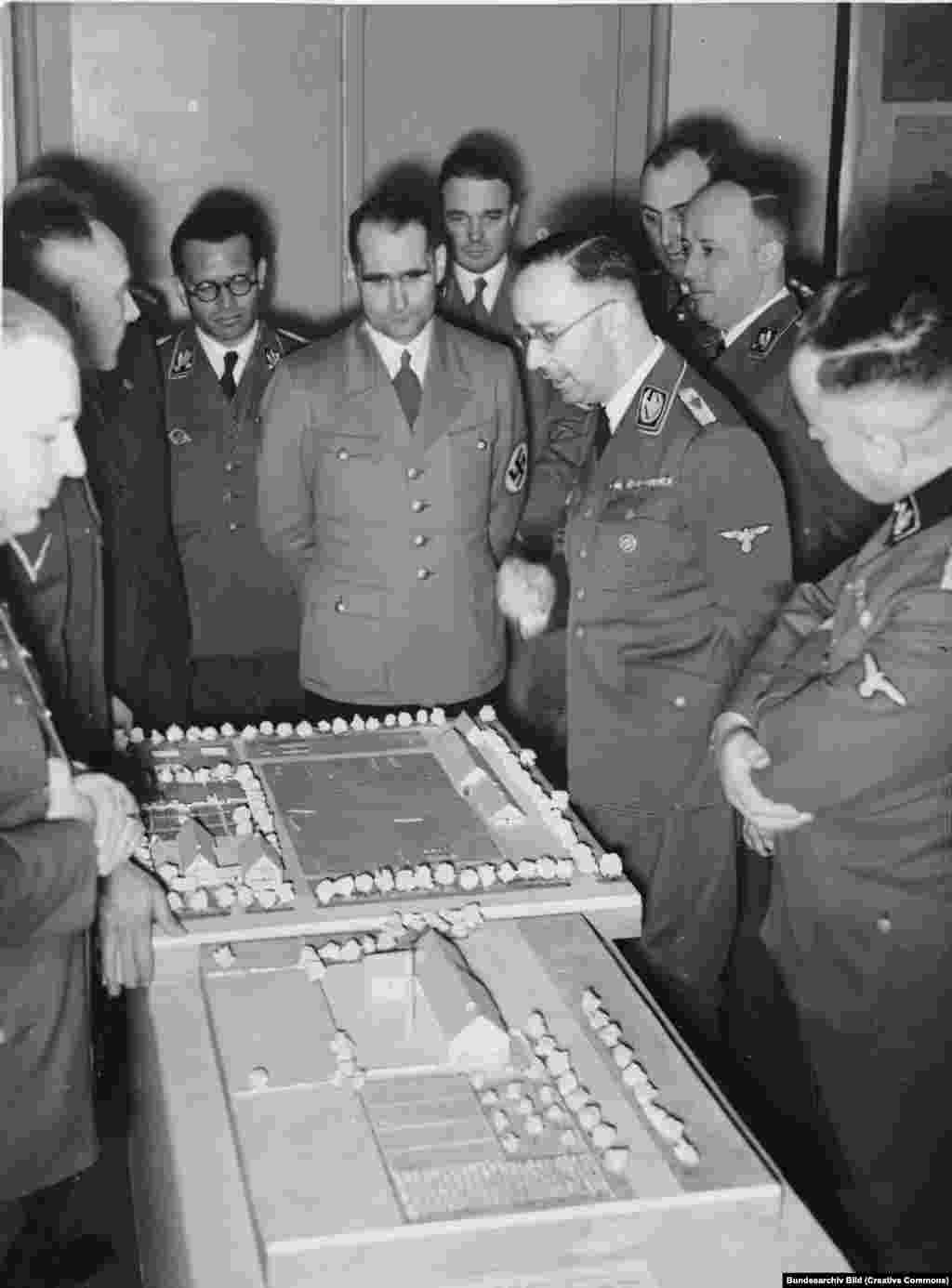
4/20Heinrich Himmler and other senior Nazis look at a plan for ethnic German rural settlements on Soviet territory in March 1941.
The invasion had been years in the making, and was hinted at in Nazi leader Adolf Hitler’s 1925 manifesto Mein Kampf when he wrote, "If we talk about new soil and territory in Europe today, we can think primarily only of Russia and its vassal border states."
Nazi Germany led the largest-ever ground invasion force in an attack on the Soviet Union in 1941 that unleashed a brutal conflict that cost the lives of millions of people.
Show moreShow less
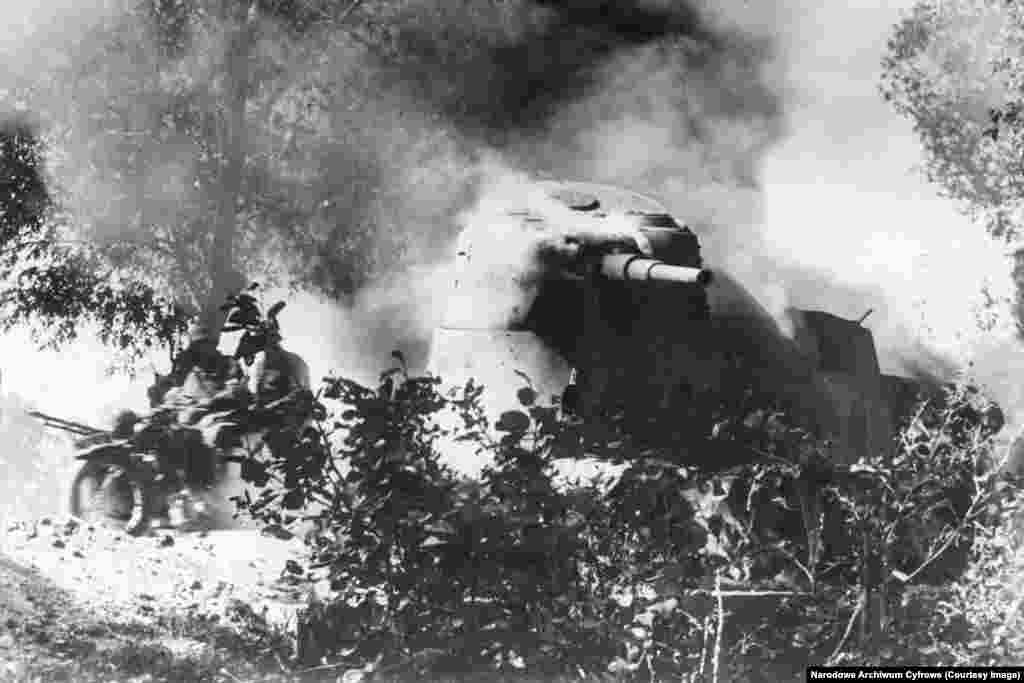
5/20Nazis on motorcycles ride past a burning Soviet tank in June 1941.
Despite receiving dozens of warnings of an impending attack, the June 22 invasion stunned Soviet leader Josef Stalin, who reportedly disappeared to his country house for two days after the invasion.
Nazi Germany led the largest-ever ground invasion force in an attack on the Soviet Union in 1941 that unleashed a brutal conflict that cost the lives of millions of people.
Show moreShow less
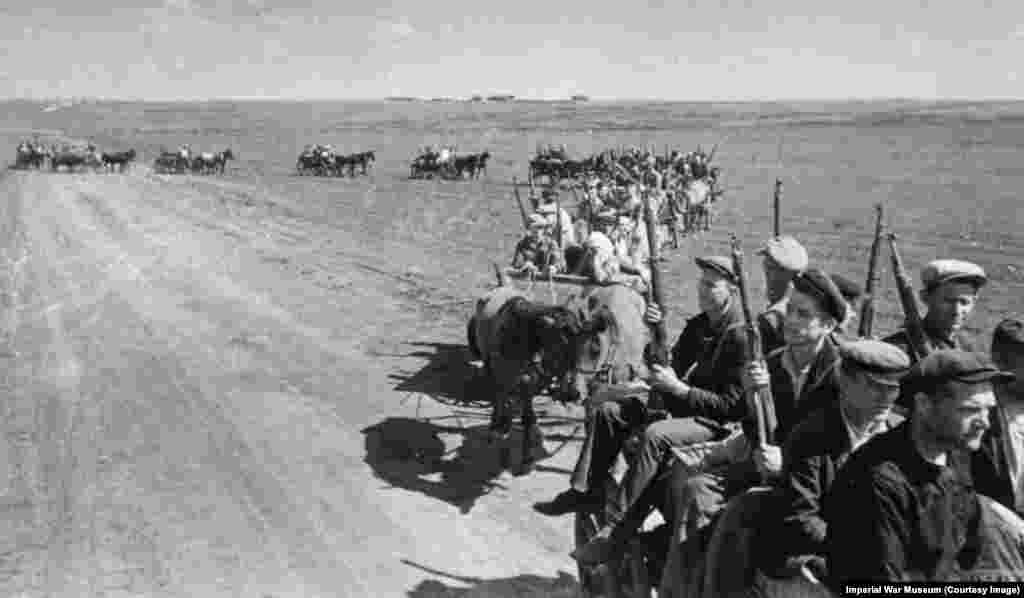
6/20Soviet citizens head to the front lines armed with tsarist-era Mosin-Nagant rifles.
On announcing the invasion to its citizens, the Soviet leadership astutely appealed to people's patriotism by calling for the defense of "our beloved country" rather than the usual appeals to international socialism or to Stalin.
Nazi Germany led the largest-ever ground invasion force in an attack on the Soviet Union in 1941 that unleashed a brutal conflict that cost the lives of millions of people.
Show moreShow less
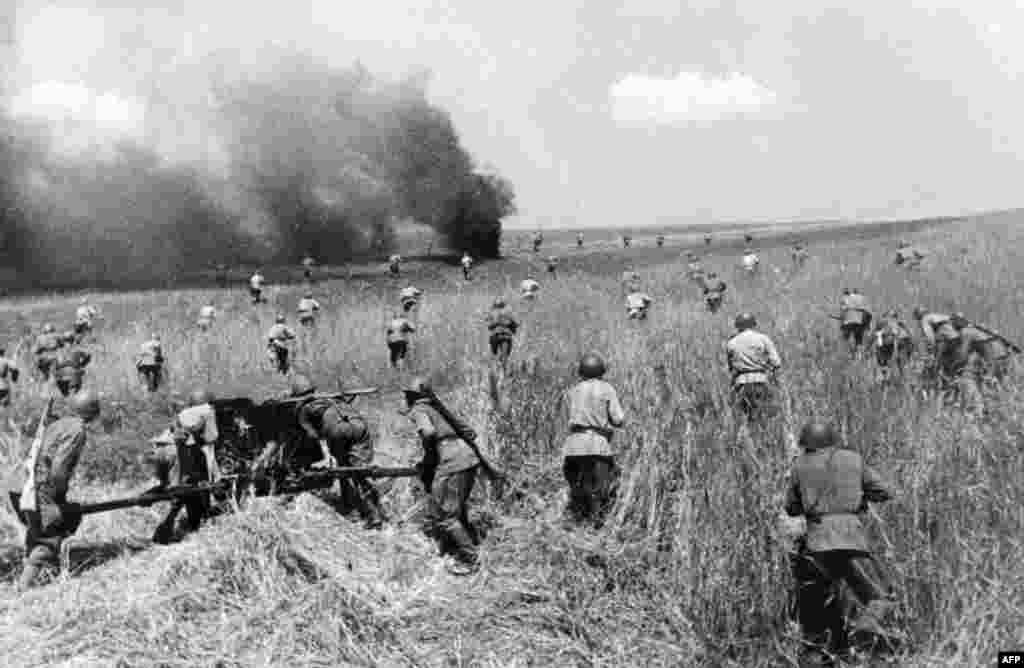
7/20Red Army units advance against the Nazi-led invasion force in an undated photo.
Once Stalin had snapped out of his apparent shock and taken leadership, Red Army fighters were faced with the Nazi war machine in front and political commissars in the rear who were authorized to execute deserters on the spot and arrest their families.
Nazi Germany led the largest-ever ground invasion force in an attack on the Soviet Union in 1941 that unleashed a brutal conflict that cost the lives of millions of people.
Show moreShow less
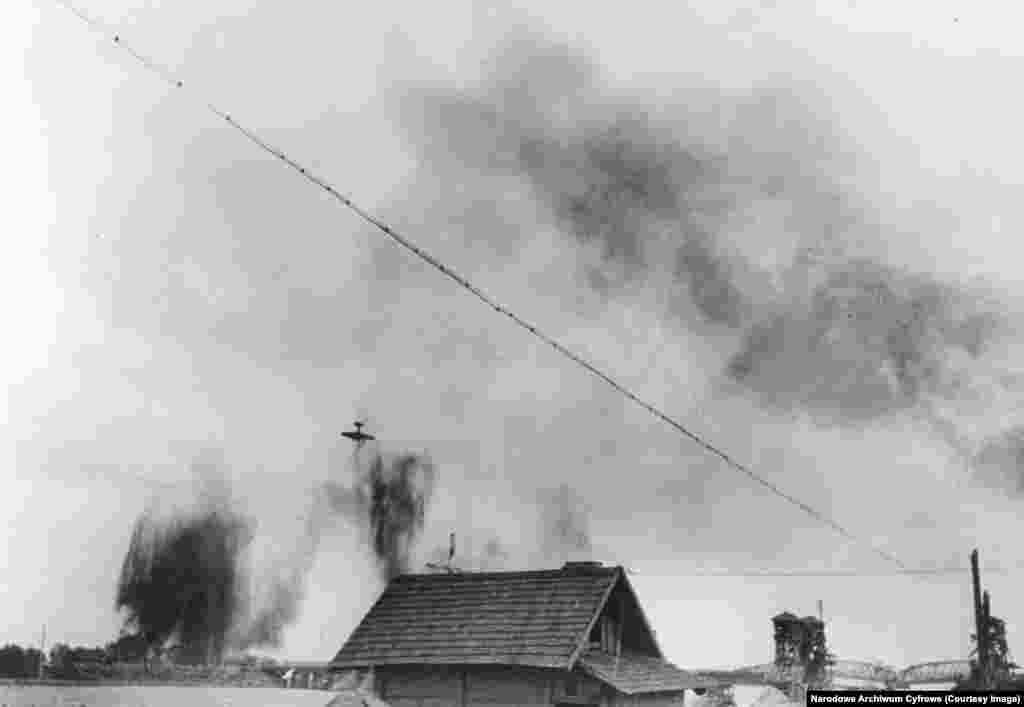
8/20A Soviet Tupolev bomber plunges to earth after being shot down during fighting in Berezina in July 1941 in what today is Belarus.
Nazi Germany led the largest-ever ground invasion force in an attack on the Soviet Union in 1941 that unleashed a brutal conflict that cost the lives of millions of people.
Show moreShow less
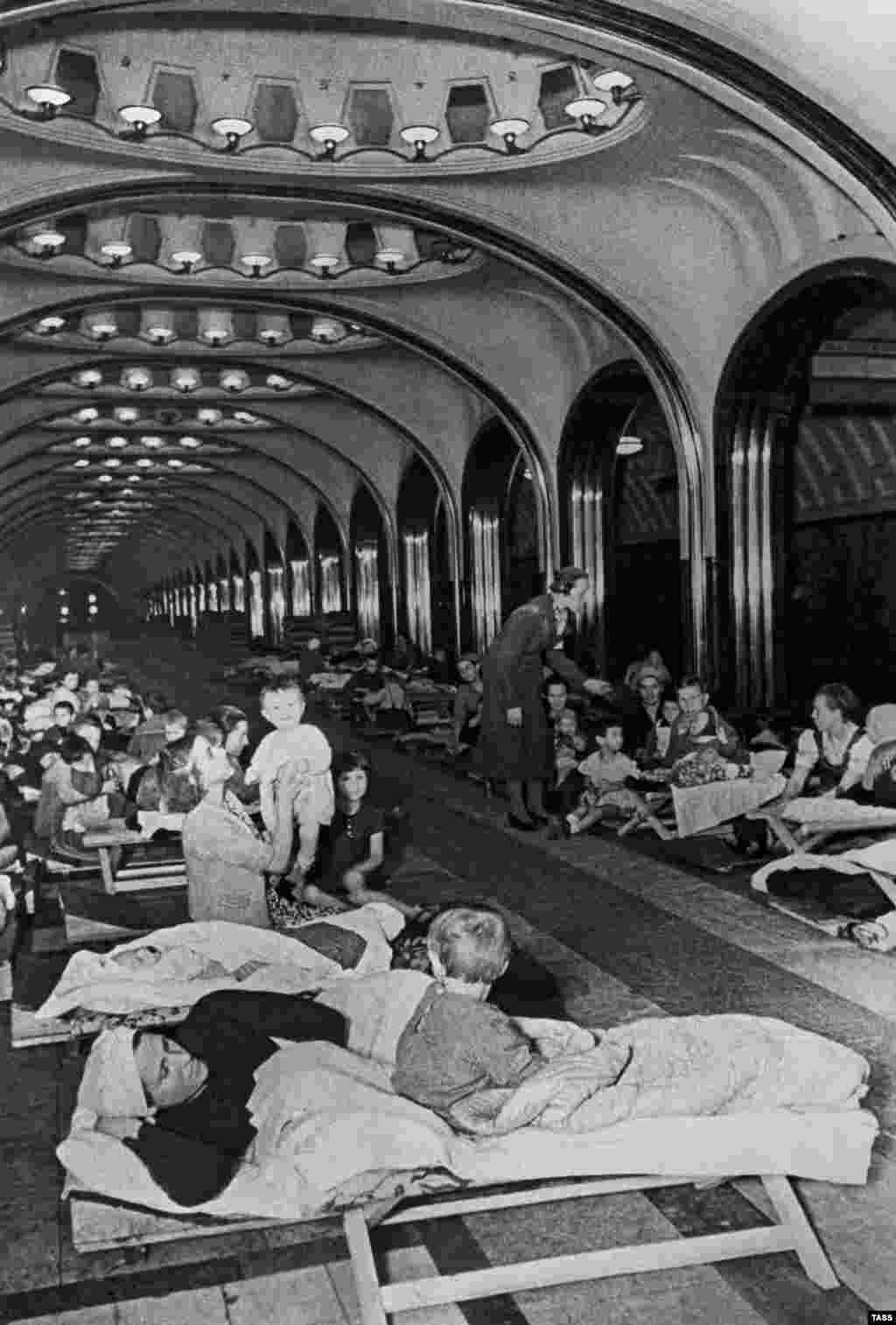
9/20Civilians shelter from aerial bombardment in the Mayakovskaya subway station as the Nazis close in on Moscow in August 1941.
Nazi Germany led the largest-ever ground invasion force in an attack on the Soviet Union in 1941 that unleashed a brutal conflict that cost the lives of millions of people.
Show moreShow less
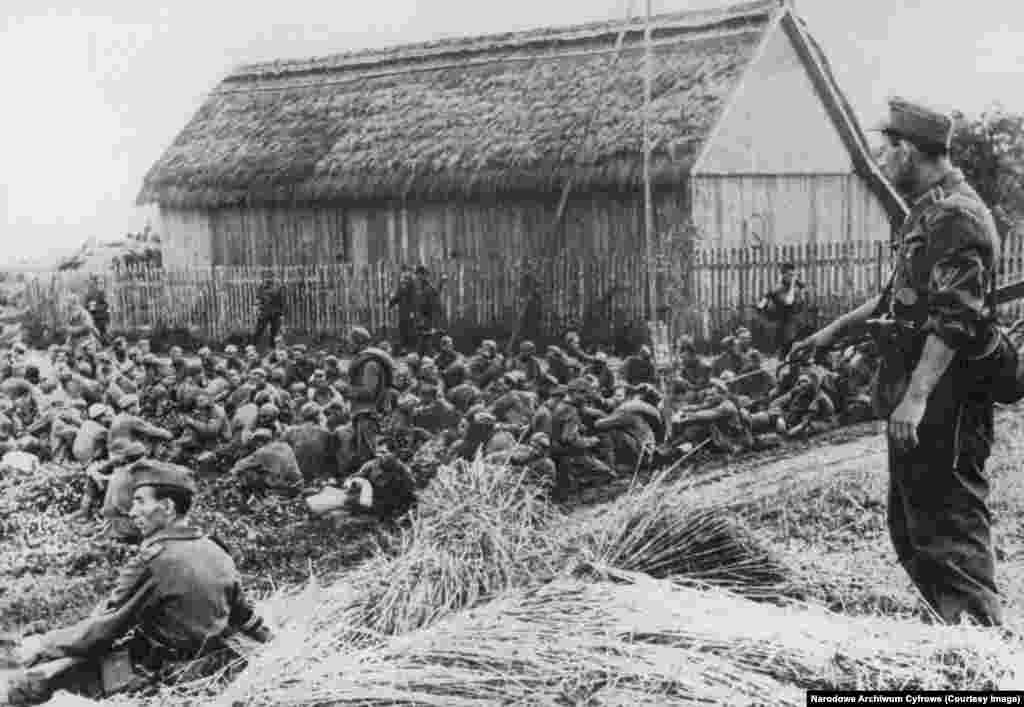
10/20A group of Soviet prisoners captured by Nazi forces. Around half of the Soviet POWs held by Germany died in captivity, compared to a less than 4 percent fatality rate for U.S. and British prisoners.
Nazi Germany led the largest-ever ground invasion force in an attack on the Soviet Union in 1941 that unleashed a brutal conflict that cost the lives of millions of people.
Show moreShow less
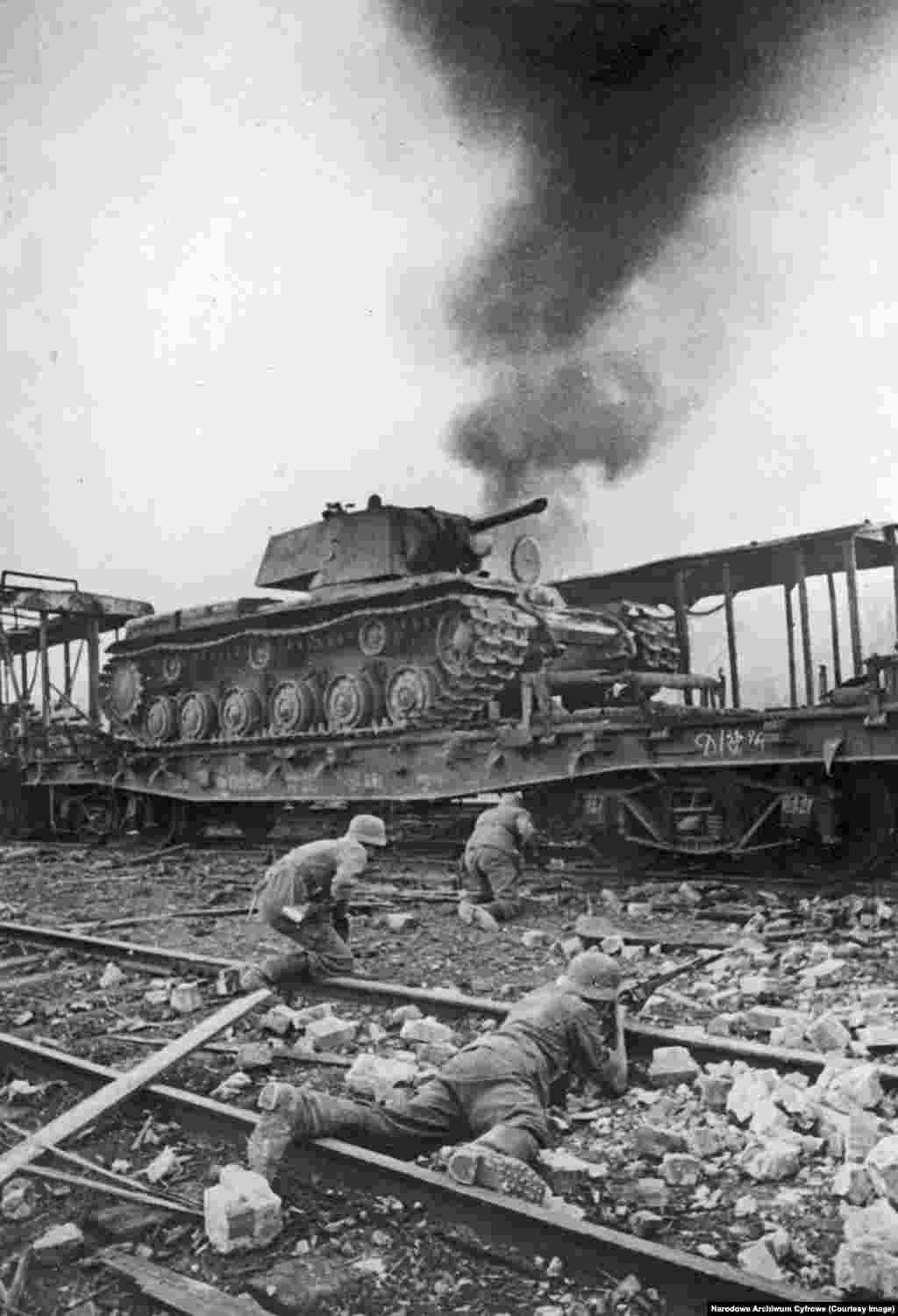
11/20Nazi troops engage in a firefight on the Moscow-Smolensk railway in August 1941. A Soviet KV-1 tank is caught in the middle of the shoot-out.
Despite Hitler's prediction of a swift capture of Moscow and Leningrad (now St. Petersburg), Nazi troops soon faced ferocious resistance and were unable to capture either city.
Nazi Germany led the largest-ever ground invasion force in an attack on the Soviet Union in 1941 that unleashed a brutal conflict that cost the lives of millions of people.
Show moreShow less
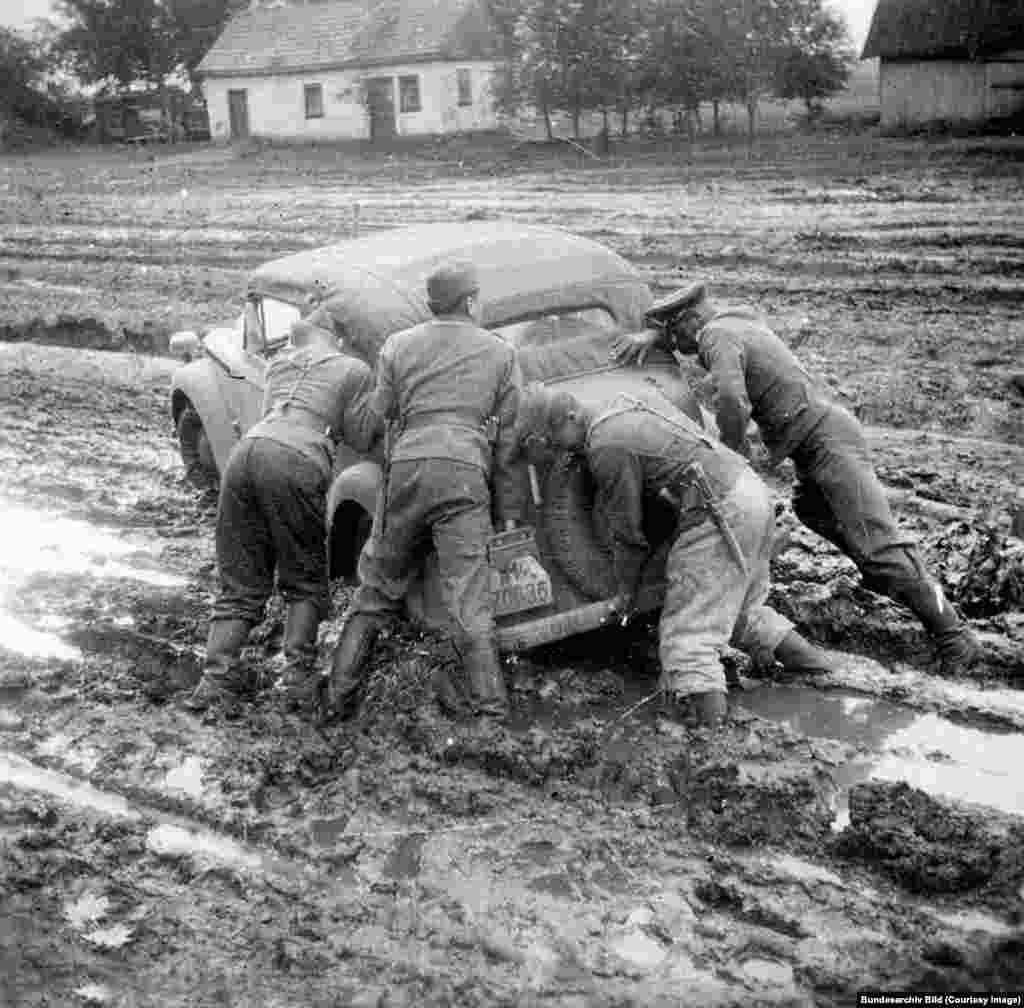
12/20German officers try to extract a vehicle from the mud in late 1941.
As autumn rains began to fall, Nazi commanders were forced to prepare for a drawn-out conflict as "General Mud" and vengeful Soviet fighters bogged down the German advance.
Nazi Germany led the largest-ever ground invasion force in an attack on the Soviet Union in 1941 that unleashed a brutal conflict that cost the lives of millions of people.
Show moreShow less
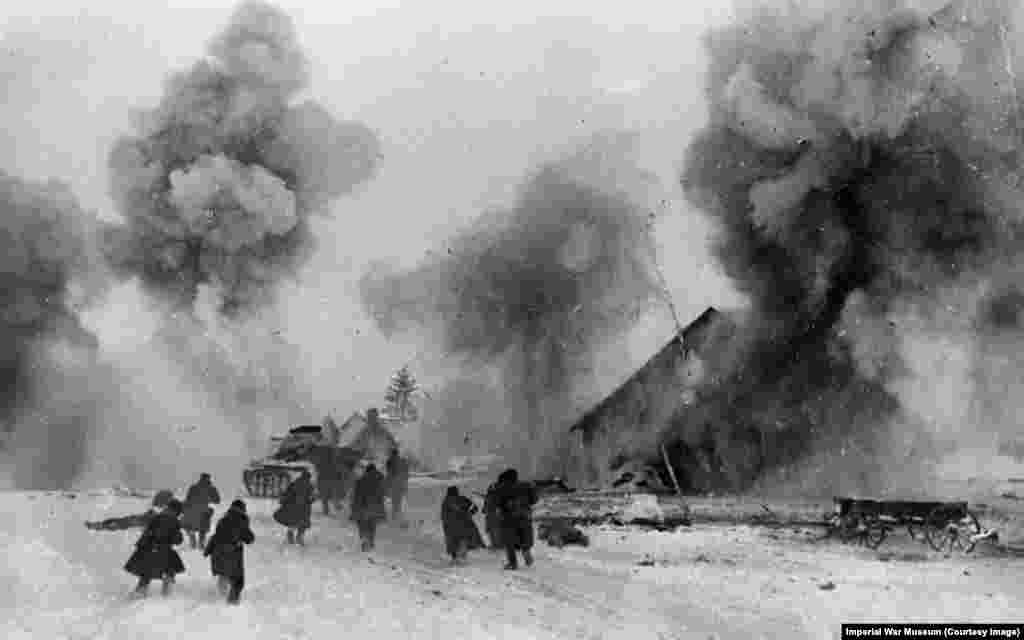
13/20Red Army soldiers supported by a T-34 tank advance through a village in a major counterattack against Nazi invaders.
Although many historians see the autumn and winter of 1941-42 as the beginning of the end for Hitler's invasion of the Soviet Union, the human suffering was only beginning.
Nazi Germany led the largest-ever ground invasion force in an attack on the Soviet Union in 1941 that unleashed a brutal conflict that cost the lives of millions of people.
Show moreShow less
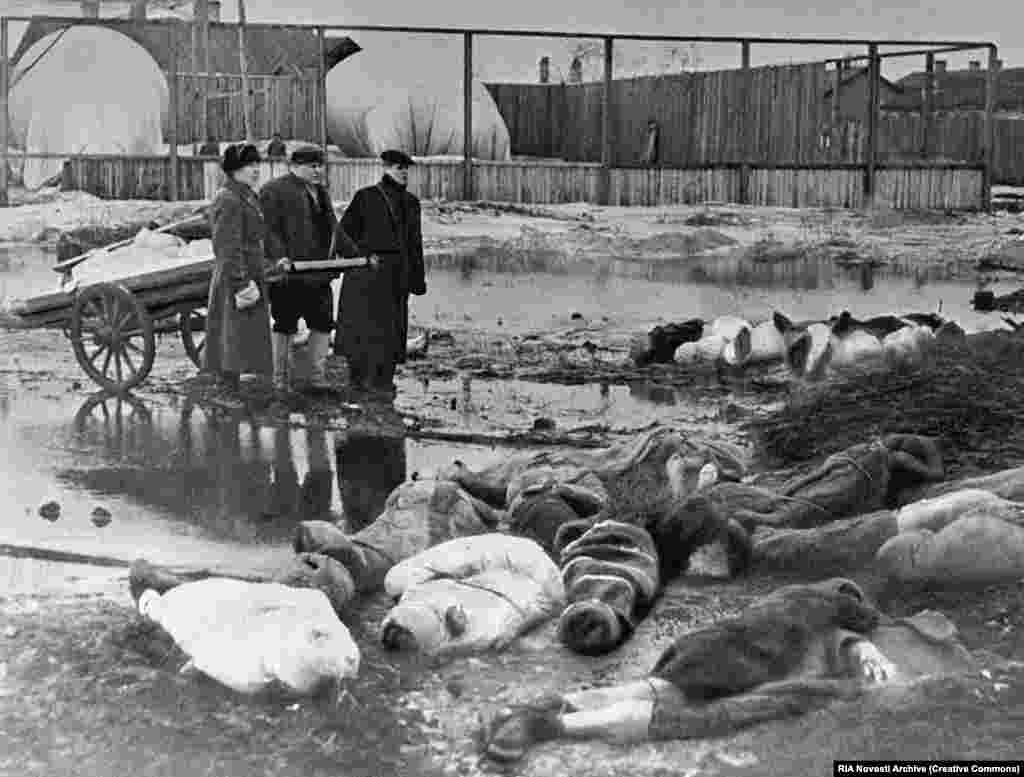
14/20Men arrive to collect the bodies of victims of the siege of Leningrad in October 1942.
Having failed to capture Leningrad, Nazi-led forces surrounded the northern city with the aim of starving the populace.
Nazi Germany led the largest-ever ground invasion force in an attack on the Soviet Union in 1941 that unleashed a brutal conflict that cost the lives of millions of people.
Show moreShow less
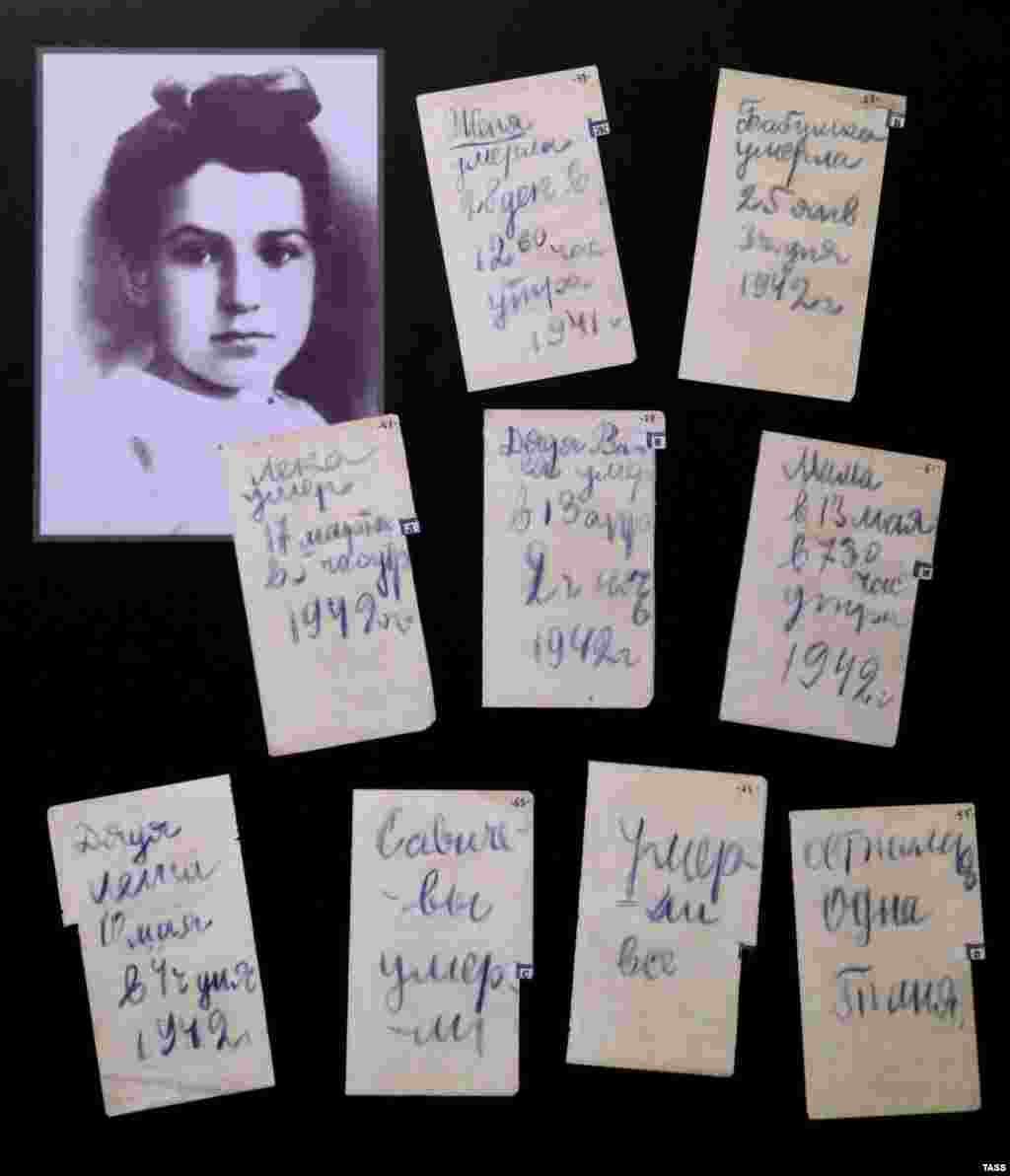
15/20These pages are from the diary of Tanya Savicheva, a girl who chronicled the passing -- one by one -- of her six family members as they died during the Leningrad siege. The first entry (top left) marks her sister Zhenya's death on "December 28 at noon, 1941." The last two pages at bottom right say, "everyone is dead.... Only Tanya is left." She died soon afterward from intestinal tuberculosis.
Nazi Germany led the largest-ever ground invasion force in an attack on the Soviet Union in 1941 that unleashed a brutal conflict that cost the lives of millions of people.
Show moreShow less
16/20German officers and soldiers prepare to execute Maria Bruskina and Vladimir Shcherbatsevich, members of the anti-Nazi resistance in Minsk in October 1941.
Shortly after Bruskina's arrest, the Jewish teenager wrote to her mother: "I swear to you that you will have no further unpleasantness because of me. If you can, please send me my dress, my green blouse, and white socks. I want to be dressed decently when I leave here."
Nazi Germany led the largest-ever ground invasion force in an attack on the Soviet Union in 1941 that unleashed a brutal conflict that cost the lives of millions of people.
Show moreShow less
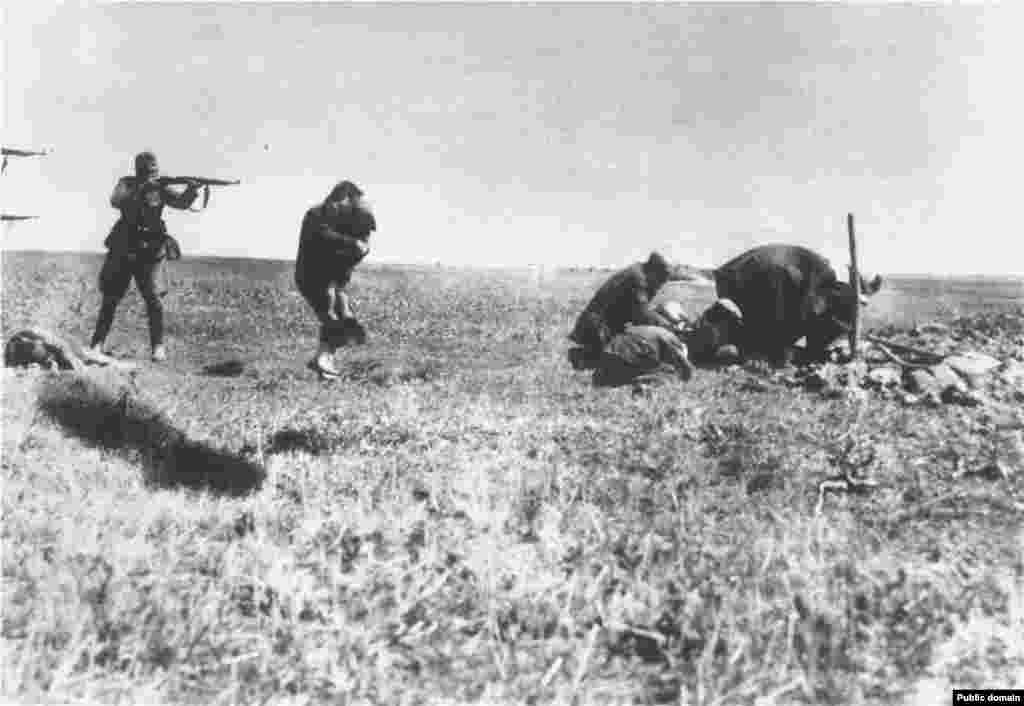
17/20A mother attempts to shield her child from Nazi bullets moments before being killed in a field near Ivangorod, Ukraine. At left is the body of another woman, and at right a group of people apparently digging a grave.
Nazi death squads -- in some cases supported by local populations -- executed millions of people, especially targeting Jews and "Asiatics" in the years following the Barbarossa invasion.
Nazi Germany led the largest-ever ground invasion force in an attack on the Soviet Union in 1941 that unleashed a brutal conflict that cost the lives of millions of people.
Show moreShow less
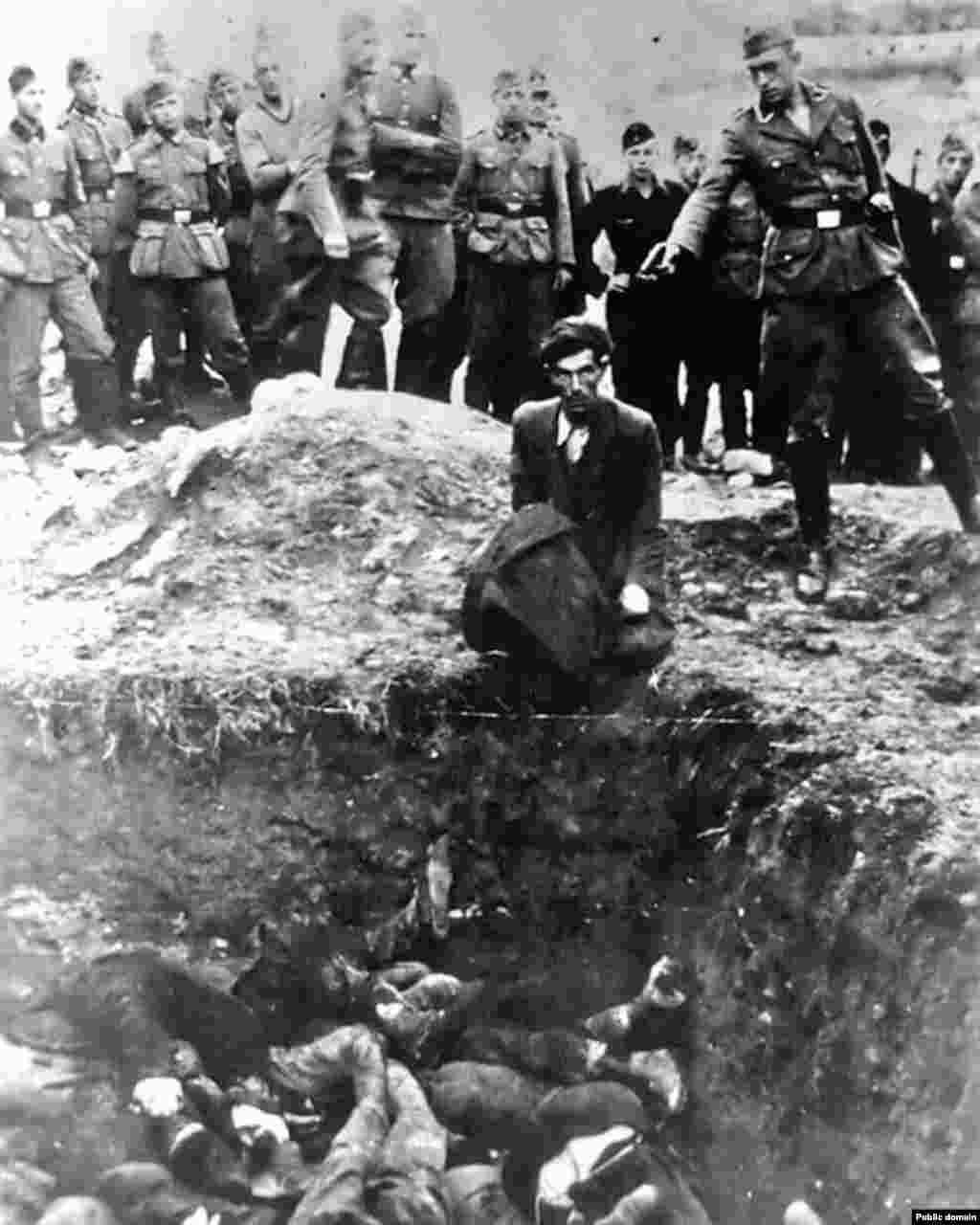
18/20A Jewish man about to be executed in Vinnytsia, Ukraine
British historian and author Jonathan Dimbleby says the atrocities carried out by the Nazis -- and to a lesser-extent the vengeful Red Army that he researched -- are "hardly bearable to talk about."
Nazi Germany led the largest-ever ground invasion force in an attack on the Soviet Union in 1941 that unleashed a brutal conflict that cost the lives of millions of people.
Show moreShow less
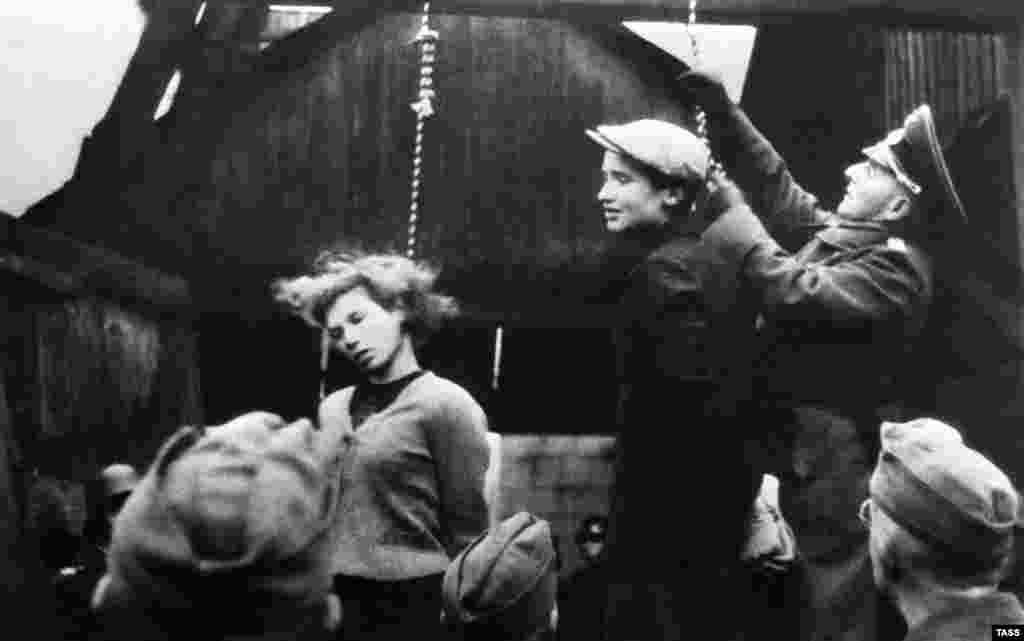
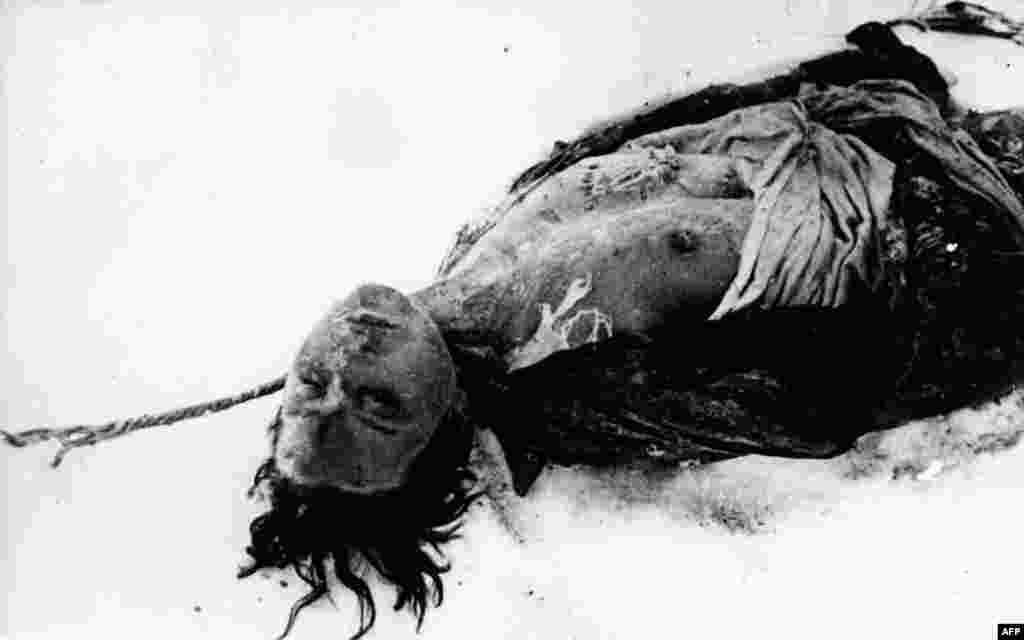
19/20A Russian girl partisan after being tortured and hanged by the Nazis.
Dimbleby notes that members of the Nazi death squads "were not drunks hauled off the street or drug addicts who had no mental capacity that would allow us to judge them. These were educated people, they were people who had been doctors who had been through university, were civil servants, who volunteered for this task."
Nazi Germany led the largest-ever ground invasion force in an attack on the Soviet Union in 1941 that unleashed a brutal conflict that cost the lives of millions of people.
Show moreShow less
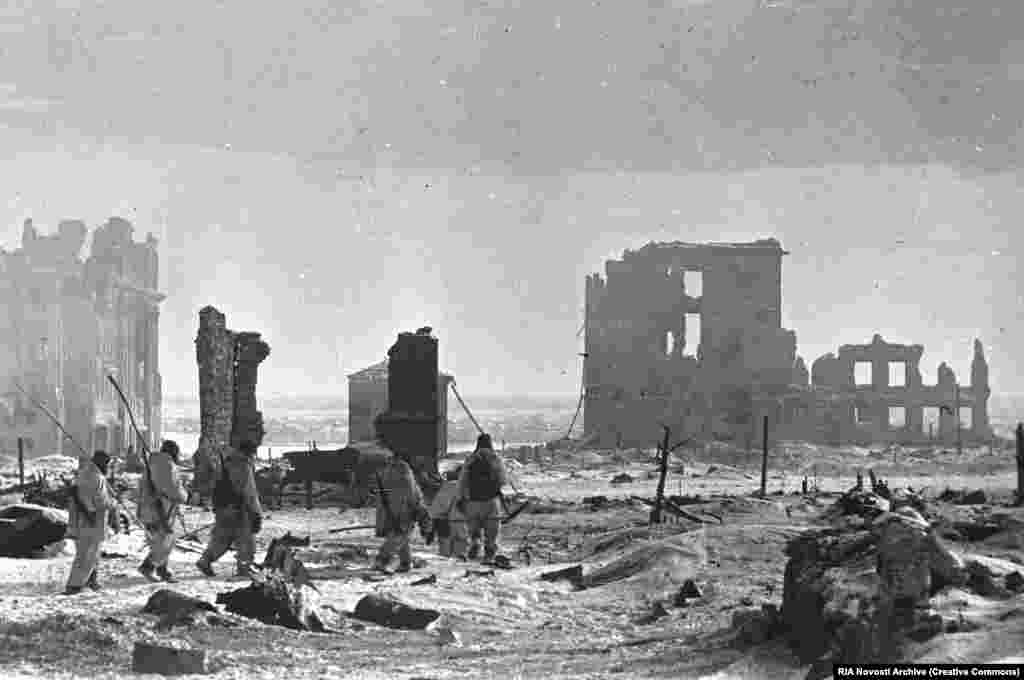
20/20Red Army soldiers in winter camouflage patrol the center of Stalingrad in 1943.
The battle for Stalingrad, won by the Red Army, was the high-water mark of the Nazi advance into the Soviet Union. From the spring of 1943 onward, German led-forces were in retreat and the Soviet military would eventually push them all the way back to Berlin.
Nazi Germany led the largest-ever ground invasion force in an attack on the Soviet Union in 1941 that unleashed a brutal conflict that cost the lives of millions of people.
Show moreShow less
Previous slide
Next slide
The Belarusian Foreign Ministry said the sanctions would negatively impact the interests of citizens and warned that it would be forced to take reciprocal measures. It did not specify what measures could be taken.
The EU, the United States, and other countries have refused to recognize the official results of the election and do not consider Lukashenka to be the country's legitimate leader.
Before the diversion of the Ryanair flight, they had already imposed sanctions against the 66-year-old autocrat, whom some describe as Europe's last dictator.
Tsikhanouskaya ran in last year’s election in place of her husband, video blogger Syarhey Tsikhanouski, who was arrested in May 2020 after expressing his willingness to challenge Lukashenka.
After the vote, the 38-year-old political novice was forced to flee Belarus over safety concerns. She currently lives in neighboring Lithuania with her children, working to rally Western countries against Lukashenka.
The trial of Tsikhanouski and other opposition figures and political prisoners is set to begin in the southeastern city of Homel on June 24 on charges widely considered to be trumped-up.
If found guilty, Tsikhanouski faces up to 15 years in prison.
The others accused in the case include popular blogger and RFE/RL consultant Ihar Losik, as well as Mikalay Statkevich, Uladzimer Tsyhanovich, Artsyom Sakau, and Dzmitry Papou.
“The trial will be closed. The trial will not be in court, it will be right in the prison. Lawyers will not have an opportunity to tell us what is going on,” Tsikhanouskaya told AP.
“We understand that the trial will not be lawful, will not be honest, will not be fair. In reality, judges can write any number of years in prison.”
The opposition leader said she expected the trial to last a month or two.
According to Tsikhanouskaya, if the authorities really cared about people “they would start a dialogue with Belarusians, they would release political prisoners, and solve this crisis in a civilized way."
"I imagine new elections this fall. This is our aim.”
RFE/RL journalists report the news in 24 languages in 18 countries where a free press is banned by the government or not fully established. We provide what many people cannot get locally: uncensored news, responsible discussion, and open debate.