


Accessibility links

Breaking News

Deadly Border Conflict Promises To Change How Kyrgyz, Tajiks See One Another And Their Leaders

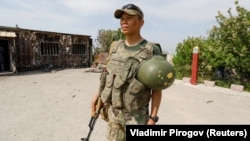
A Kyrgyz soldier stands guard near a burned border post in the village of Maksat in Batken Province on May 4.

The latest deadly clashes on the long-restive Kyrgyz-Tajik border drastically alter the situation there and change how the two countries see themselves and each other -- with consequences for the leaders in Kyrgyzstan and Tajikistan.

Previous violence along the border stretching back some 15 years was always localized, involving several villages on opposite sides of the poorly marked or unmarked sections of the frontier. The hostilities usually centered around work near water sources or the construction or alteration of roads, fences, and walls.

The latest conflict on April 28 began much like previous conflicts did.

A group of Tajiks were installing a camera at a water-intake station on Kyrgyz territory that distributes water to Kyrgyzstan, Tajikistan, and Uzbekistan.

Reports from Kyrgyzstan said the Tajiks were on Kyrgyz territory.

But Bahoviddin Bahodurzoda, the mayor of the Tajik city of Isfara, said he was at the site and the Tajik group was installing a camera on a post on the Tajik side of the border.

In a sign of the distrust that exists along the border, Bahodurzoda pointed out both countries have cameras at the water station.
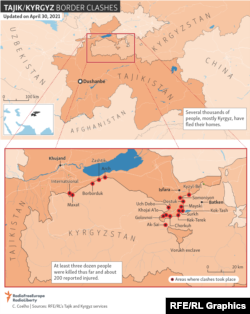
The events followed a familiar script: Harsh words were exchanged, people gathered from villages on both sides of the border, stones were thrown, border guards arrived, and gunfire broke out.

Gunfire has become increasingly common in these disputes in recent years, but usually local officials from the two countries quickly arrive, calm the feuding villagers, and the groups go back to their sides of the border.

But what began on April 28 went in a different direction.

There was an exchange of gunfire early on April 29 in the area of the intake station. Each side blames the other for starting the shooting.

Tajik forces then launched a coordinated attack along several sections of the border, many kilometers apart, and entered Kyrgyzstan.

More than a dozen villages in Kyrgyzstan came under fire from a mix of machine guns, mortars, and even rockets.
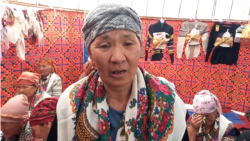
After Deadly Border Clashes, Kyrgyz, Tajiks Return Home And Mourn
please wait

No media source currently available

0:00 0:02:58 0:00

Tajik military helicopters were in the air near some of these villages, with Tajik authorities saying they were used to evacuate Tajik citizens from areas cut off from Tajikistan by the fighting. But photos from the Kyrgyz village of Ortoboz show rockets on the ground that could only come from attack helicopters.

Kyrgyz forces counterattacked and some villages in Tajikistan came under heavy fire as well, with reports of some Kyrgyz troops also temporarily operating on Tajik territory.

With the exception of isolated gunshots along the border, the fighting finally ended on April 30.

But the casualties and the damage from the violence were unprecedented, with at least 36 Kyrgyz and 18 Tajik citizens killed, along with more than 200 injured. Additionally, dozens of homes, shops, and other structures were destroyed or damaged and tens of thousands of people were displaced.

And accusations were flying from both sides about the wanton destruction carried out by the other country’s forces.

Reports from the area indicate that the majority of the material losses were on the Kyrgyz side of the border.

Homes, Schools Destroyed After Worst Violence In Decades On Kyrgyz-Tajik Border
A burned-out house in the Tajik village of Somoniyon in the Isfara district on May 2. The violence along the Tajik-Kyrgyz border followed a dispute over the installation of surveillance cameras at a water distribution point near Tajikistan's Vorukh exclave, drawing in security forces from both countries. 
1/14 A burned-out house in the Tajik village of Somoniyon in the Isfara district on May 2. The violence along the Tajik-Kyrgyz border followed a dispute over the installation of surveillance cameras at a water distribution point near Tajikistan's Vorukh exclave, drawing in security forces from both countries. 
People inspected the charred remains of their homes, schools, and other buildings in villages on both sides of the Tajik-Kyrgyz border after deadly armed clashes along the frontier on April 28-29. Kyrgyzstan and Tajikistan completed the withdrawal of their military units from the border on May 3 as a cease-fire appeared to be holding.
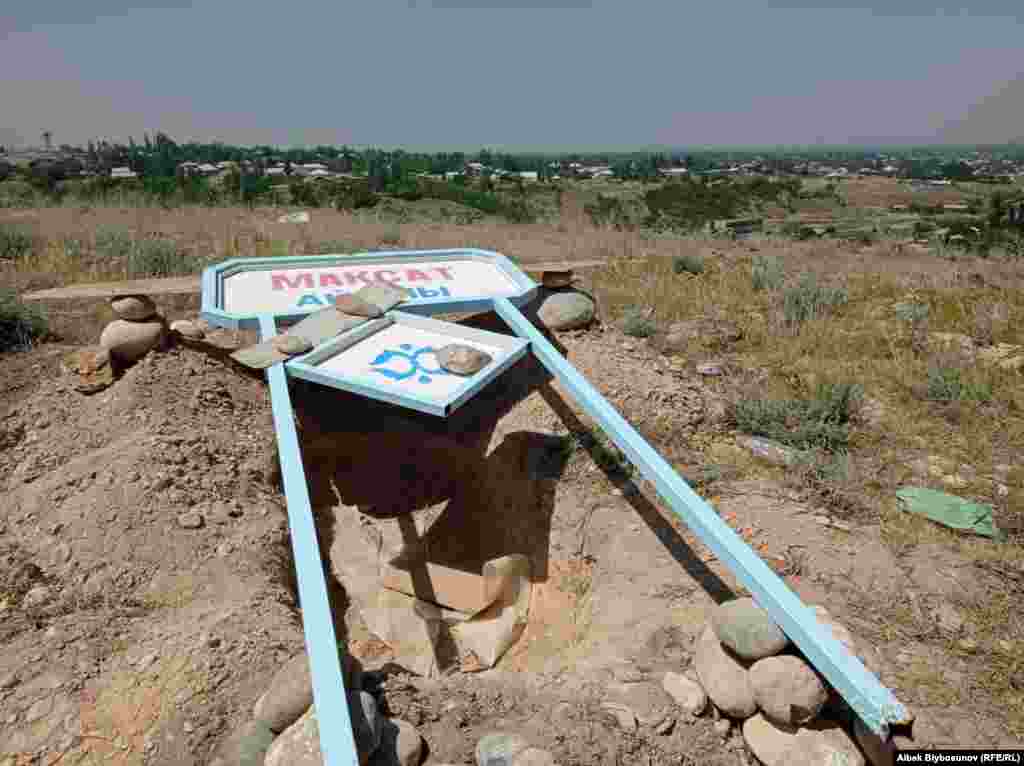
A sign on the outskirts of the village of Maksat in the Leilek region of Kyrgyzstan on May 2. Kyrgyzstan is observing two days of official mourning for 34 people who died in Batken Province. Kyrgyz officials reported that another 178 were injured and 50,000 people were evacuated from the area.
2/14 A sign on the outskirts of the village of Maksat in the Leilek region of Kyrgyzstan on May 2. Kyrgyzstan is observing two days of official mourning for 34 people who died in Batken Province. Kyrgyz officials reported that another 178 were injured and 50,000 people were evacuated from the area.
People inspected the charred remains of their homes, schools, and other buildings in villages on both sides of the Tajik-Kyrgyz border after deadly armed clashes along the frontier on April 28-29. Kyrgyzstan and Tajikistan completed the withdrawal of their military units from the border on May 3 as a cease-fire appeared to be holding.
The village of Somoniyon in the Isfara district of Tajikistan. Correspondents of RFE/RL's Tajik Service in the area reported that at least 16 Tajik nationals were killed and at least 90 were injured. Tajik authorities have yet to give an official casualty toll.
3/14 The village of Somoniyon in the Isfara district of Tajikistan. Correspondents of RFE/RL's Tajik Service in the area reported that at least 16 Tajik nationals were killed and at least 90 were injured. Tajik authorities have yet to give an official casualty toll.
People inspected the charred remains of their homes, schools, and other buildings in villages on both sides of the Tajik-Kyrgyz border after deadly armed clashes along the frontier on April 28-29. Kyrgyzstan and Tajikistan completed the withdrawal of their military units from the border on May 3 as a cease-fire appeared to be holding.
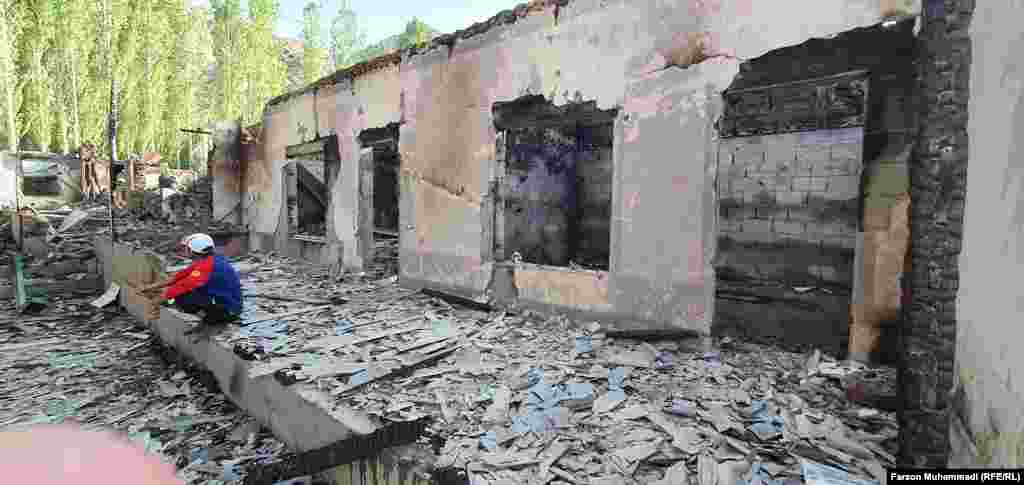
A fire-damaged school in the village of Maksat in the Leilek district of Kyrgyzstan. In addition to the destruction of homes, Kyrgyz officials said two schools, one medical clinic, two border checkpoints, a kindergarten, 10 gasoline stations, a police building, and eight shops were destroyed in Kyrgyzstan's southwestern region of Batken.
4/14 A fire-damaged school in the village of Maksat in the Leilek district of Kyrgyzstan. In addition to the destruction of homes, Kyrgyz officials said two schools, one medical clinic, two border checkpoints, a kindergarten, 10 gasoline stations, a police building, and eight shops were destroyed in Kyrgyzstan's southwestern region of Batken.
People inspected the charred remains of their homes, schools, and other buildings in villages on both sides of the Tajik-Kyrgyz border after deadly armed clashes along the frontier on April 28-29. Kyrgyzstan and Tajikistan completed the withdrawal of their military units from the border on May 3 as a cease-fire appeared to be holding.
5/14
People inspected the charred remains of their homes, schools, and other buildings in villages on both sides of the Tajik-Kyrgyz border after deadly armed clashes along the frontier on April 28-29. Kyrgyzstan and Tajikistan completed the withdrawal of their military units from the border on May 3 as a cease-fire appeared to be holding.
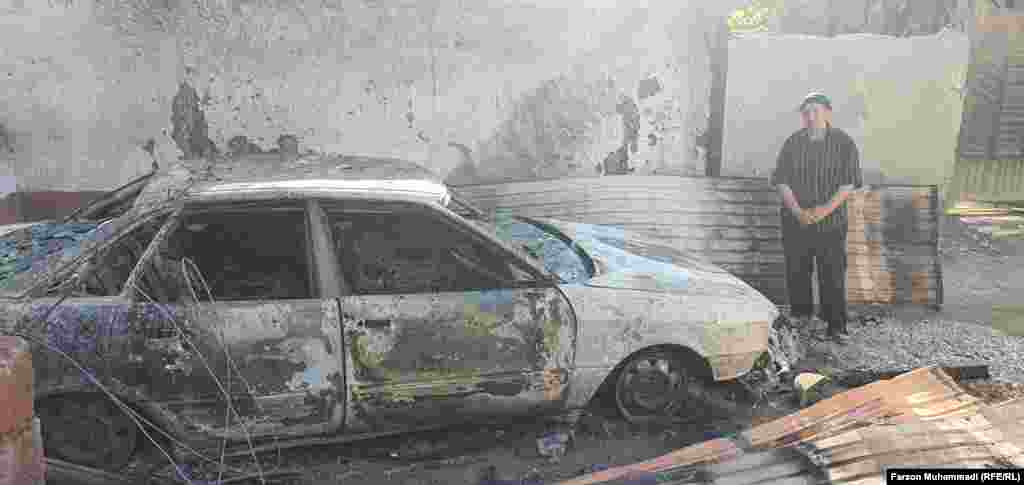
A local resident stands behind a burned car in Somoniyon, Tajikistan.
6/14 A local resident stands behind a burned car in Somoniyon, Tajikistan.
People inspected the charred remains of their homes, schools, and other buildings in villages on both sides of the Tajik-Kyrgyz border after deadly armed clashes along the frontier on April 28-29. Kyrgyzstan and Tajikistan completed the withdrawal of their military units from the border on May 3 as a cease-fire appeared to be holding.
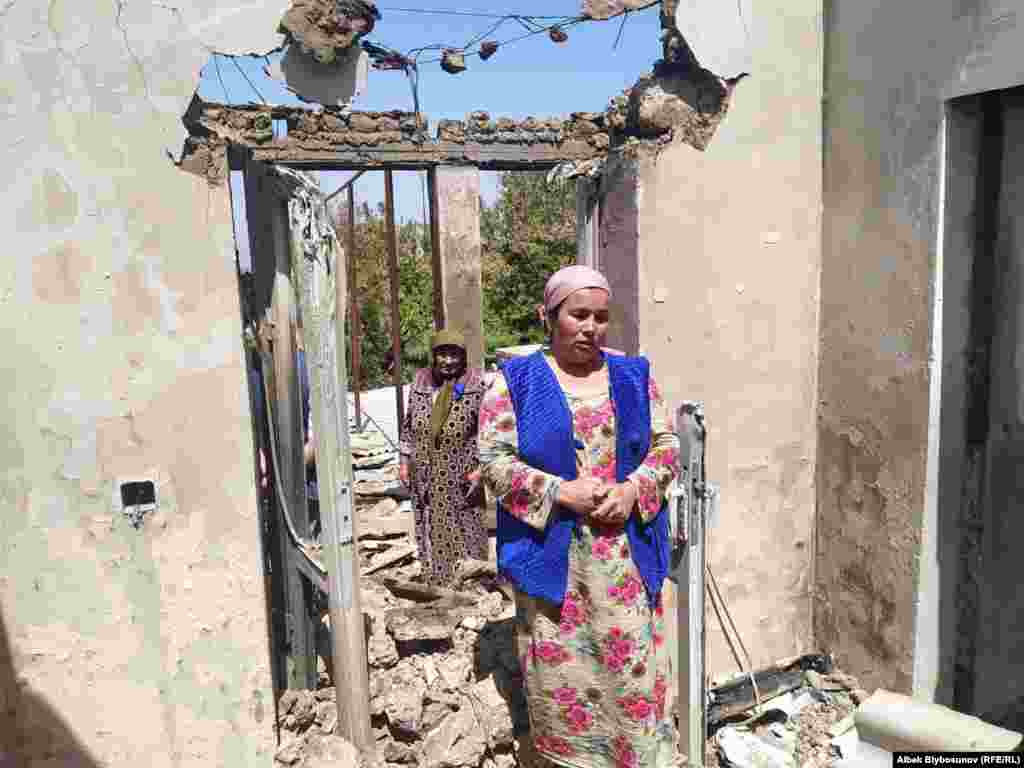
A woman stands in front of her destroyed home in the Kyrgyz village of Maksat. According to Bishkek, 78 private homes were destroyed in Kyrgyzstan's southwestern region of Batken.
7/14 A woman stands in front of her destroyed home in the Kyrgyz village of Maksat. According to Bishkek, 78 private homes were destroyed in Kyrgyzstan's southwestern region of Batken.
People inspected the charred remains of their homes, schools, and other buildings in villages on both sides of the Tajik-Kyrgyz border after deadly armed clashes along the frontier on April 28-29. Kyrgyzstan and Tajikistan completed the withdrawal of their military units from the border on May 3 as a cease-fire appeared to be holding.
A gutted building in Somoniyon, Tajikistan.
8/14 A gutted building in Somoniyon, Tajikistan.
People inspected the charred remains of their homes, schools, and other buildings in villages on both sides of the Tajik-Kyrgyz border after deadly armed clashes along the frontier on April 28-29. Kyrgyzstan and Tajikistan completed the withdrawal of their military units from the border on May 3 as a cease-fire appeared to be holding.
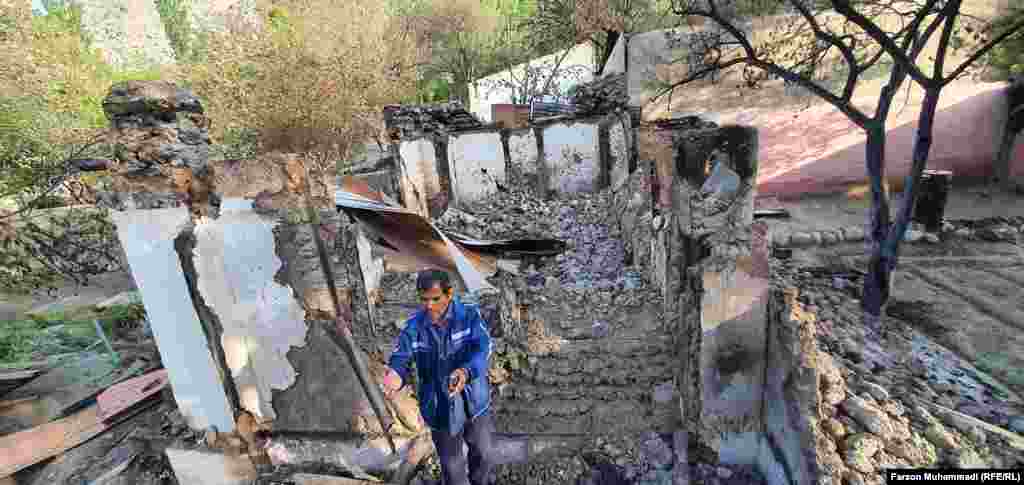
A man among the ruins of a building in Somoniyon, Tajikistan.
9/14 A man among the ruins of a building in Somoniyon, Tajikistan.
People inspected the charred remains of their homes, schools, and other buildings in villages on both sides of the Tajik-Kyrgyz border after deadly armed clashes along the frontier on April 28-29. Kyrgyzstan and Tajikistan completed the withdrawal of their military units from the border on May 3 as a cease-fire appeared to be holding.
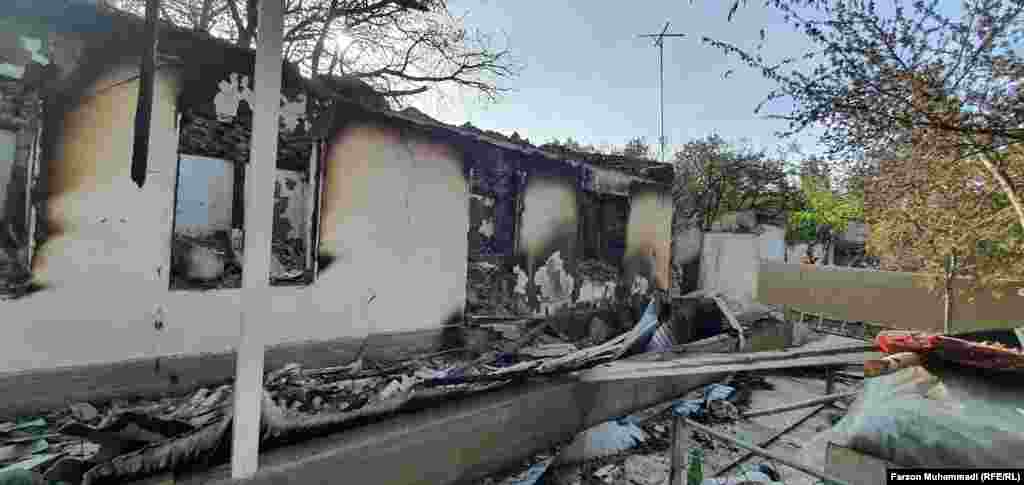
A burned-out building in Somoniyon, Tajikistan.
10/14 A burned-out building in Somoniyon, Tajikistan.
People inspected the charred remains of their homes, schools, and other buildings in villages on both sides of the Tajik-Kyrgyz border after deadly armed clashes along the frontier on April 28-29. Kyrgyzstan and Tajikistan completed the withdrawal of their military units from the border on May 3 as a cease-fire appeared to be holding.
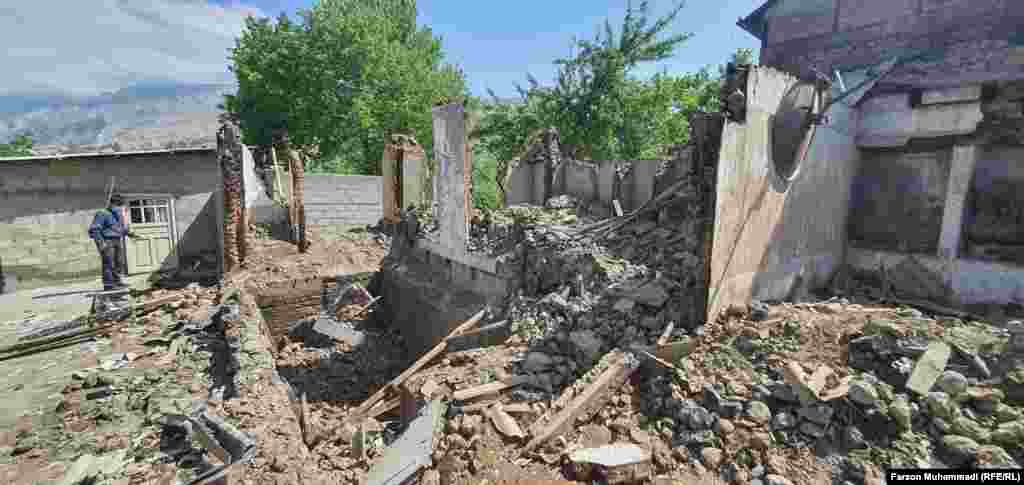
Destruction in the village of Khojai A'lo, Tajikistan, on May 2
11/14 Destruction in the village of Khojai A'lo, Tajikistan, on May 2
People inspected the charred remains of their homes, schools, and other buildings in villages on both sides of the Tajik-Kyrgyz border after deadly armed clashes along the frontier on April 28-29. Kyrgyzstan and Tajikistan completed the withdrawal of their military units from the border on May 3 as a cease-fire appeared to be holding.
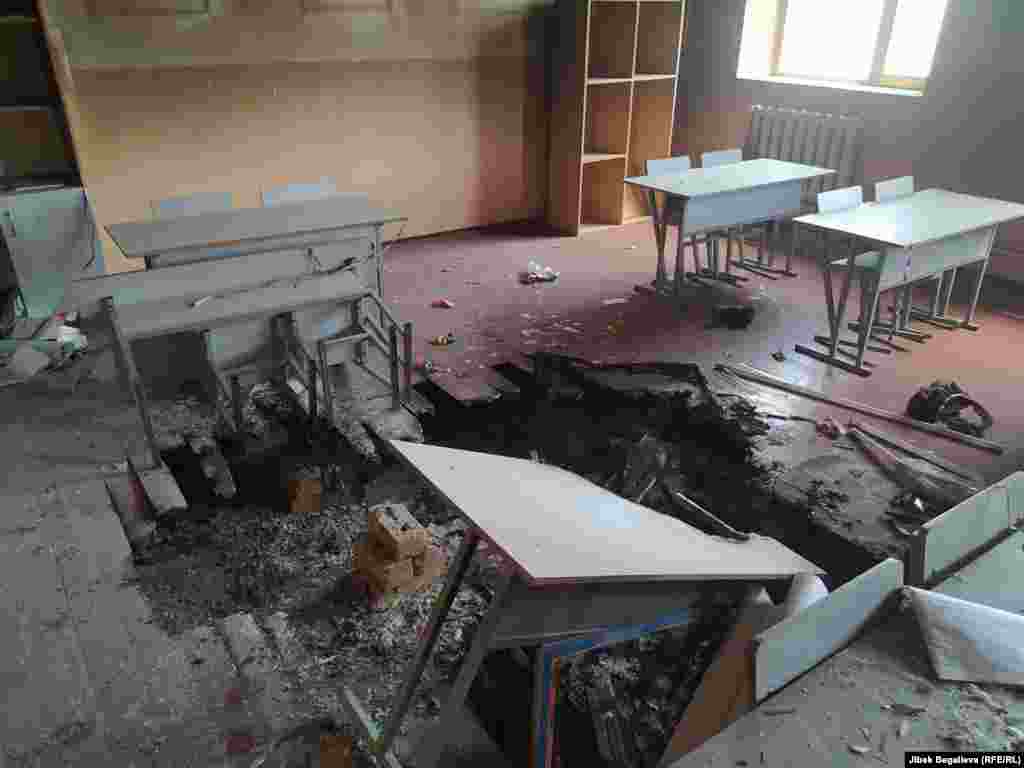
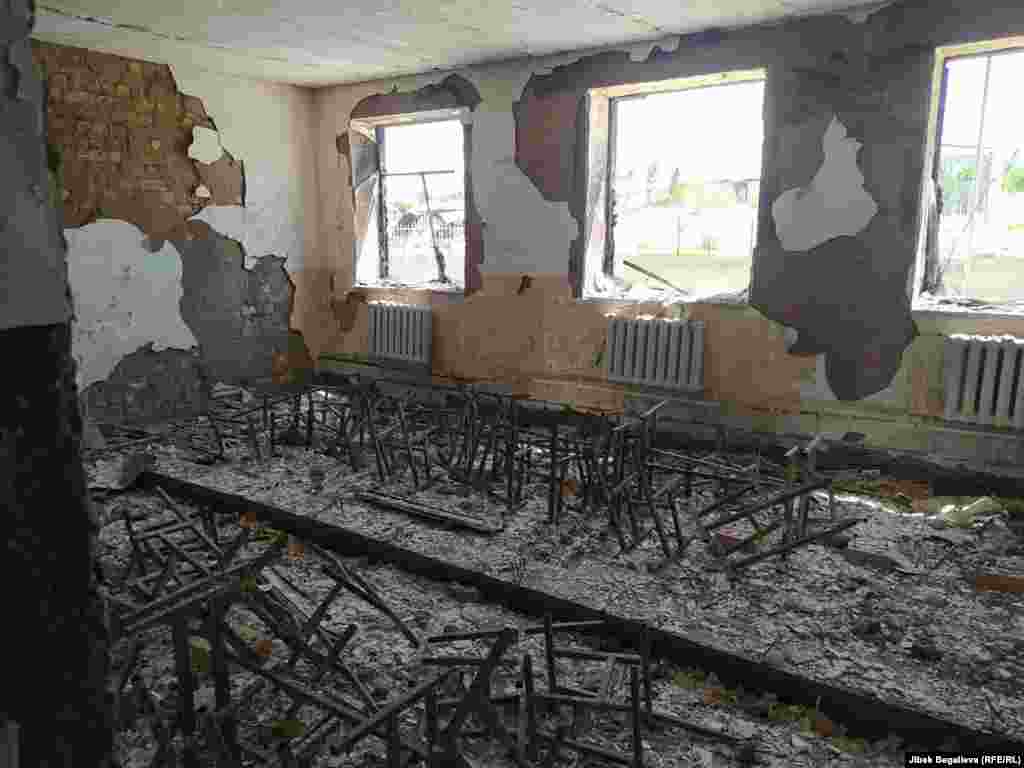
The charred remains of a classroom in a school in the Kyrgyz village of Maksat.
12/14 The charred remains of a classroom in a school in the Kyrgyz village of Maksat.
People inspected the charred remains of their homes, schools, and other buildings in villages on both sides of the Tajik-Kyrgyz border after deadly armed clashes along the frontier on April 28-29. Kyrgyzstan and Tajikistan completed the withdrawal of their military units from the border on May 3 as a cease-fire appeared to be holding.
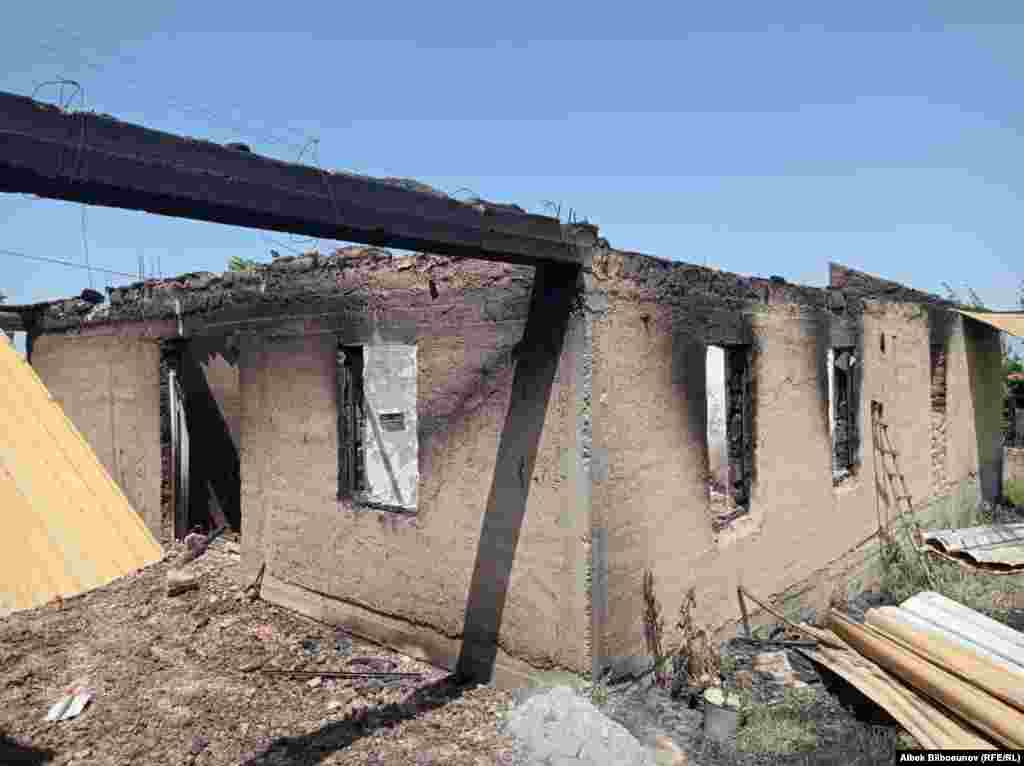
More destruction in the village of Maksat in Kyrgyzstan's Batken region. 
13/14 More destruction in the village of Maksat in Kyrgyzstan's Batken region. 
People inspected the charred remains of their homes, schools, and other buildings in villages on both sides of the Tajik-Kyrgyz border after deadly armed clashes along the frontier on April 28-29. Kyrgyzstan and Tajikistan completed the withdrawal of their military units from the border on May 3 as a cease-fire appeared to be holding.
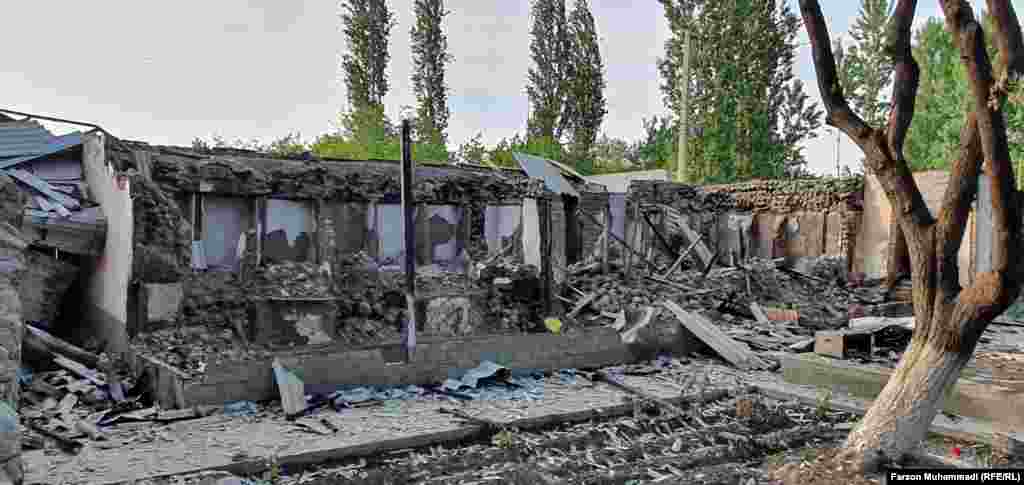
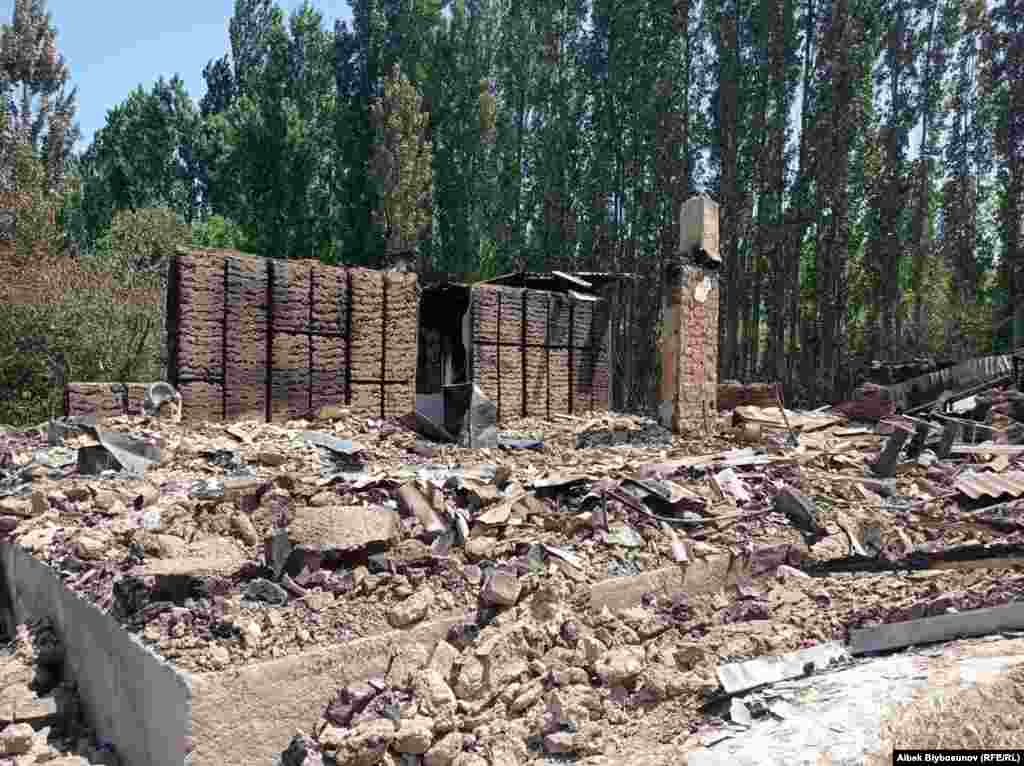
The rubble from a burned house in the Kyrgyz village of Maksat.
14/14 The rubble from a burned house in the Kyrgyz village of Maksat.
People inspected the charred remains of their homes, schools, and other buildings in villages on both sides of the Tajik-Kyrgyz border after deadly armed clashes along the frontier on April 28-29. Kyrgyzstan and Tajikistan completed the withdrawal of their military units from the border on May 3 as a cease-fire appeared to be holding.
Previous slide
Next slide

Both countries are preparing legal cases against the other over the violence, but little is likely to result from that.

Despite their known problems, Kyrgyzstan and Tajikistan are similar in some ways.

Both are poor, mountainous countries that have roughly the same territory with comparable populations. There are about 6.5 million people in Kyrgyzstan and some 9.5 million in Tajikistan.

Tajikistan also borders Afghanistan, Uzbekistan, and China, while Kyrgyzstan also shares borders with Kazakhstan, Uzbekistan, and China -- all countries that are much larger, more populous, and far better armed than the small militaries in Kyrgyzstan and Tajikistan.

These similarities give the countries reasons to work together and have good relations.

But after this latest round of fighting, any kinship that existed has been lost as there are feelings among the Kyrgyz that Tajikistan has attacked Kyrgyzstan, inflicted losses, and that Kyrgyzstan did little to stop it.

And that has angered many Kyrgyz citizens.

Most messages of condolence from other countries have been directed toward Kyrgyzstan, though Bishkek cannot count on more than that, as questions are being raised about how the situation turned out so badly and who among government officials is to blame.
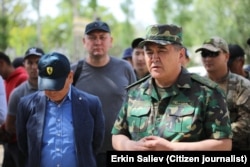
Kamchybek Tashiev, the head of Kyrgyzstan’s State Committee for National Security, on the Kyrgyz-Tajik border on May 2

On May 1, the head of Kyrgyzstan’s State Committee for National Security (UKMK), Kamchybek Tashiev, and his Tajik counterpart, Saymumin Yatimov, met in Kyrgyzstan’s border province of Batken and signed a deal cementing a cease-fire and withdrawing all forces back to their home bases.

Tashiev is a longtime friend of new Kyrgyz President Sadyr Japarov; his appointment as head of the UKMK owes much to this relationship.

Tashiev said on May 2 that Kyrgyzstan would not make any claims for compensation from Tajikistan for damage done to property in Kyrgyzstan. He added that an agreement on demarcating another 112 kilometers of the border would be ready by May 9.

That would be welcome news, as the root of these violent conflicts are almost always related to a dispute over the shared border, with some 450 kilometers of the 970-kilometer Kyrgyz-Tajik frontier still not demarcated.

But Tashiev has a recent history of prematurely declaring progress on border issues.

After a visit to Uzbekistan in late March, he said the border issue with Uzbekistan was resolved “100 percent.” But that quickly fell apart when villagers on the Kyrgyz side of the border refused to accept proposed land swaps included in the agreement.

Tashiev has also said there was information prior to the April 28-30 fighting that the border situation was worsening, suggesting he knew what could happen but did nothing to prevent it.

Tashiev also failed to explain exactly why he left Kyrgyzstan on April 28. The trip was reportedly to seek medical treatment abroad, though some social-media comments suggested that he traveled to Spain, where his son celebrated a birthday.

There could also be disappointment among Kyrgyz in the country's new president.

Japarov came to power with populist messages about a Kyrgyzstan that was going to be stronger, something that appealed to his many nationalist supporters.

He has already appeared on state television appealing for calm and a return to good ties with Tajikistan, an indication that Kyrgyzstan is going to just have to accept what happened along the border and move on.
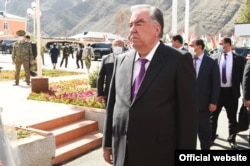
Tajik President Emomali Rahmon visited the Vorukh exclave near the Kyrgyz border in early April.

It will not help that another rumor going around Kyrgyzstan and Tajikistan is that Tajik President Emomali Rahmon initially refused to take Japarov’s phone calls after the fighting started.

Japarov and other officials have also pledged to fund reconstruction in the region and to restore communities devastated by the violence. Already deeply in debt, it will be tricky for Japarov to keep this promise and still attend to the country’s arrears.

It is difficult to see where Kyrgyz authorities will find funding to completely rebuild homes, gas stations, stores, schools, and other structures damaged or destroyed in the fighting. They also must compensate people for the loss of their livestock, something that has not yet been discussed.

All of this comes as a host of other problems besets Kyrgyzstan, from growing unemployment and rising inflation to a drought and economic issues related to the coronavirus pandemic.

Meanwhile, in Tajikistan, the unpopular autocratic president seems ready to gain from the latest outcome of the border battles in which his military appeared to act strongly.

Rahmon has worked for years to crush independent media and opposition groups. In the process, his family has amassed a fortune in a country where the average monthly salary is less than $100.

Furthermore, the nearly 70-year-old Rahmon has been grooming his oldest son, Rustam, to take over the presidency, hoping the succession will be accepted by Tajiks.

The recent events along the border provided an unexpected moment of approval that could both ease and accelerate his move toward creating a dynasty in Tajikistan.

  • 16x9 Image

    Bruce Pannier

    Bruce Pannier is a Central Asia analyst and appears regularly on the Majlis podcast for RFE/RL.

This item is part of
XS
SM
MD
LG