




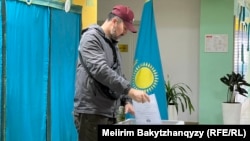
Kazakh voters appear to have approved a controversial new constitution in a March 15 referendum that critics say could further concentrate power in the presidency.
According to preliminary results released on March 16, 87.15 percent of voters supported the new constitution, which proposes sweeping political changes including restructuring the legislature and expanding presidential authority.
The referendum was held amid reports of media restrictions and brief detentions of journalists covering the vote, which asked citizens whether they approved a draft constitution published in the media on February 12.
According to Kazakhstan's Central Referendum Commission, about 12.5 million of the country's population of around 20 million were registered to vote. By 6 p.m. local time on March 15, nationwide turnout had exceeded 70 percent -- surpassing the threshold required for the referendum to be considered valid.
Turnout varied widely across the country. The highest participation was recorded in the Kyzylorda region at 93.04 percent, while Almaty city reported the lowest turnout at 33.43 percent. Other regions, including Zhambyl, Karaganda, Kostanay, and Turkistan, recorded participation above 80 percent.

The new constitution introduces major political changes, including replacing the bicameral parliament with a unicameral Kurultay of 145 deputies, eliminating self-nomination for deputies, and creating a new advisory body -- the People’s Council -- with legislative initiative powers.
Elections for the new legislature are scheduled for late August, while President Qasym-Dzhomart Toqaev confirmed the next presidential election will remain scheduled for 2029, preserving the current single seven-year term limit.
Reducing Legislative Oversight?
The constitution also grants the president authority to appoint key officials without parliamentary approval, a shift critics say would consolidate power in the executive branch while reducing legislative oversight.
It also establishes the People's Council as a consultative body with the authority to initiate legislation and propose referendums. In addition, March 15 will now be marked annually as Constitution Day to commemorate the adoption of the new charter.
The vote was also marked by incidents involving journalists.
At Astana's Palace of Students, where Toqaev was scheduled to vote on March 15, plainclothes officers briefly detained several journalists, including RFE/RL reporter Zholdas Orisbayev and former RFE/RL journalist Saniya Toiken.
Witnesses said the detentions occurred shortly before Toqaev arrived at the polling station. The journalists were released after roughly three hours, and the president cast his ballot shortly afterward.
Observers from the Mukalmas election monitoring organization were also denied entry to some polling stations, while a reporter from the independent outlet Informburo was briefly detained after asking about the earlier arrests.
OSCE Criticism
Legal experts warned that such actions could constitute interference with journalistic work.
"If a journalist has an editorial assignment and official accreditation, no one has the right to restrict their work," said Gulmira Birzhanova, head of the legal department at the press freedom group Legal Media Center. "The only circumstance under which a journalist could be accused of breaking the law is if they interfere with the secrecy of the vote."
Police in Almaty also detained at least three individuals on the city's Astana Square, though authorities have not commented on the arrests.
Observers from the Organization for Security and Co-operation in Europe (OSCE) criticized preparations for the vote, saying voters had limited time to access information about the proposed constitutional changes.
The OSCE sent a limited assessment team rather than a full observation mission, citing concerns about transparency.
Former President Nursultan Nazarbaev, who led Kazakhstan for nearly three decades before stepping down in 2019, voted at the Astana Opera and publicly endorsed the referendum, calling it a step toward strengthening Kazakhstan's independence.
After the January 2022 protests, Toqaev's government stripped Nazarbaev of his special constitutional privileges, marking a shift in the country's political balance.
When journalists asked Nazarbaev about the rewriting of what some critics call "his constitution," he smiled but declined to comment.

