




US Secretary of State Marco Rubio has said "good news" on the Iran negotiations could come sometime on May 24, telling reporters during a trip to India there’s had been "significant progress” in the talks.
Iranian officials, meanwhile, pushed back on claims that reopening the crucial Strait of Hormuz was part of an agreement to end the 3-month old war that US President Donald Trump said was "largely negotiated."
The back-and-forth came a day after Trump listed off key aspects of the framework deal he said was near conclusion.
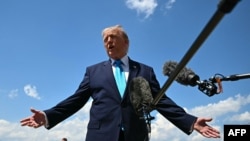
In the past, Trump has suggested that a deal was imminent, only to later reject Iranian counterproposals and threaten new attacks.
"The negotiations are proceeding in an orderly and constructive manner, and I have informed my representatives not to rush into a deal in that time is on our side," Trump said in a social media post on May 24.
A cease-fire declared in early April has mostly held, though Iran has launched small-scale attacks on some Gulf states.

Tehran has all but closed shipping traffic through the Strait of Hormuz, sending global prices for energy and agricultural goods skyrocketing, and rattling the global economy.
Speaking to reporters during a trip to India, Rubio hinted at possible “good news at least in regard to the” Strait of Hormuz.
He said Iran does not own the waterway.
"If we allow that to become normal, we would be normalizing an unacceptable status quo and setting a dangerous precedent that could be replicated here in this region and in multiple places around the world,” Rubio said on May 24.
A day earlier, Trump declared that the deal under discussion would re-open the strait.
Iranian officials pushed back on reports that Tehran intended to relinquish its effective control of the waters.
“Hormuz will stay fully under Iranian control. We decide who passes, when, and how,” Ebrahim Zolfaghari, a spokesman for Iran's military command, wrote on X.

The Fars news agency, which is linked to the Islamic Revolutionary Guards Corps, also said reopening the strait as part of any peace deal was "incomplete and inconsistent with reality."
Unconfirmed media reports in the United States and Iran said the memorandum includes lifting a US blockade on Iranian shipping and reopening the strait.
The fate of Iran’s highly enriched uranium -- one of several justifications Trump has cited in going to war -- would be negotiated within 30 to 60 days, according to the reports. The White House has called for Tehran to give the enriched uranium, which can be used to build a weapon.
The New York Times, citing unnamed US officials, said Iran had agreed to give up its enriched uranium as part of the proposal.
In an interview on May 24 with the Times, Rubio cautioned that a nuclear deal would take time to achieve.
"We're not kicking it till later. Nuclear talks are highly technical matters. You can't do a nuclear thing in 72 hours on the back of a napkin," Rubio told the Times.
Pakistan, which has played a key role as a go-between for Washington Tehran, sent its army chief, Field Marshal Asim Munir, to Tehran to further the peace efforts.
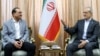
Iranian President Masud Pezeshkian and powerful parliament speaker Mohammad Qalibaf held talks in Tehran with Munir on May 23.
Following his meeting with Munir, Qalibaf, who has emerged as one of Tehran’s top negotiators, said that Iran would not compromise on its “national rights.” He also accused Washington of negotiating in bad faith.
Fate Of The Strait
Reopening the Strait of Hormuz is central priority for the Trump administration.
Soaring gasoline prices, and broader inflation, have fueled Americans’ disapproval of Trump’s decision to go to war.
Iran has proposed creating a Persian Gulf Strait Authority that would regulate shipping traffic and impose transit fees, according to multiple news reports.
But that has alarmed Gulf Arab states and Western governments, which fear Tehran is attempting to establish long-term control over the waterway.

