



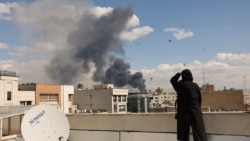
We are now closing the live blog for today, but we'll be back again tomorrow morning at 7:30 a.m. CET to follow all the latest developments in Iran.
Trump Says Khameini Should Be 'Very Worried'
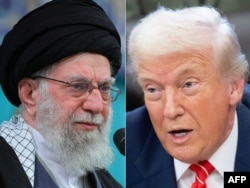
Amid the ongoing tensions in Iran, US President Donald Trump was asked today by NBC news about what he thought would be going through Iranian Supreme Leader Ayatollah Ali Khameini's mind right now.
"I would say he should be very worried," he said.
"As you know they are negotiating with us." he added, apparently referring to upcoming US-Iran talks on Tehran's nuclear program.
Trump also said that Iran had sought to build a new nuclear site after US attacks on the country's atomic facilities in June.
"They were thinking about starting a new site in a different part of the country," he said. "We found out about it." I said: "You do that... [then] we're going to do very bad things to you."
White House Officials Confirm Iran-US Talks Will Go Ahead
After being contacted by RFE/RL correspondent Kian Sharifi, White House officials have confirmed that the Iran-US talks will now go ahead in Oman on February 6.
In confirming the talks, the White House cited an X post by Axios correspondent Barak Ravid, in which he said that nuclear discussions "are back on track after several Arab and Muslim leaders applied urgent pressure on Wednesday afternoon on the Trump administration not to follow through on threats to withdraw from the talks."
Quoting a senior US official, Ravid said that Washington "told the Arabs that we will do the meeting if they insist. But we are very skeptical."
Ravid added that, according to the US officials, at least nine countries in the region conveyed messages to the White House at the highest levels, including a strong request that the US not cancel the meeting with the Iranians in Oman, and that the Trump administration agreed to participate in the discussions "to be respectful" of the request by US allies and "in order to continue pursuing the diplomatic track."
Iran, US Prepare To Resume Talks As New Activity Spotted At Iranian Nuclear Sites
With US warships heading toward Iran, diplomats from the two countries look set to resume high-stakes talks at a meeting on February 6. The officials will reopen discussions over Iran's nuclear program, which was disrupted by US strikes on key nuclear facilities last June. Recent satellite images suggest that Iran has begun restoring some of those sites, raising new questions about its nuclear ambitions.
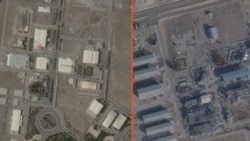

Amid reports that the upcoming US-Iran talks may be canceled, Iranian Foreign Minister Abbas Araqchi has just posted this on X:
Jailed Iranian Nobel Prize Winner Mohammadi Goes On Hunger Strike
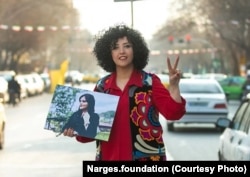
Nobel Peace Prize laureate Narges Mohammadi is on hunger strike while being detained by Iranian authorities, according to a statement from her family-run foundation.
In a statement shared with CNN on February 4, the Paris-based Narges Mohammadi Human Rights Foundation said it had received credible information that Mohammadi began her strike on February 2 “to protest her unlawful detention and the dire conditions in which she is being held, realities faced by numerous political prisoners currently held in Iran.”
Her son, Ali Rahmani, said he was “deeply worried” about his mother and others jailed by the regime.
“What is happening in our country is a crime against humanity,” he said. He added that before her arrest, his mother was “calling for solidarity, unity, and peace.”

The Narges Foundation warned that the continued detention of Mohammadi, who suffers from a number of medical issues, was “extremely dangerous and a violation of human rights laws.”
The 53-year-old, who was awarded the 2023 Nobel Peace Prize for more than two decades of fighting for women's rights in Iran, was detained in December by Iranian security forces during a memorial ceremony in Mashhad for Khosrow Alikordi, a lawyer and human rights activist whose death sparked controversy and allegations of foul play..

Iran Talks Must Include Missiles and Rights Abuse, Says Rubio
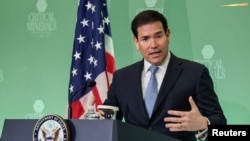
US Secretary of State Marco Rubio has said the United States is ready to meet Iran this week, but any discussions must address both its missile and nuclear programs as well as its support for regional militias.
“In order for talks to actually lead to something meaningful, they will have to include certain things, and that includes the range of their ballistic missiles, that includes their sponsorship of terrorist organizations across the region, that includes their nuclear program, and that includes the treatment of their own people,” Rubio told reporters on February 4.
Tehran has previously insisted that any negotiations should be confined to its nuclear program, and that it refuses to discuss its missile capabilities or support for regional allies.
Meanwhile, the US news site Axios is reporting that Washington has said it will not agree to Tehran's demands to change the location and format of talks planned for February 6, according to two US officials it spoke to.
Although the US and Iran were reportedly set to meet in Istanbul alongside regional observers, Tehran said it would rather relocate the talks to Oman and keep them bilateral, arguing this would ensure the agenda stays focused on nuclear issues alone.
The Key Sticking Points To A US-Iran Deal Aimed At Averting War
- By Kian Sharifi
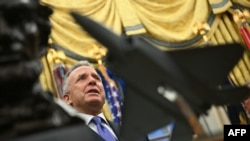
White House envoy Steve Witkoff and Iran's Foreign Minister Abbas Araqchi are set to meet on February 6 in a last-ditch bid to avert war. As a US naval armada nears, Tehran is facing a tough choice: Make a slew of concessions for an end to Washington's "maximum pressure" policy, or risk war.
Read the full article by Kian Sharifi and Hannah Kaviani here.
Iranian Students Turn Memorials Into Protests
Students at universities throughout Iran are gathering to honor classmates who were killed during nationwide protests in January. In Mashhad, Tabriz, and Shiraz, students have chanted, held sit-ins, and refused to take school exams. Iranian security forces launched a massive crackdown on protesters in January -- more than 6,800 people were killed, according to US-based human rights group HRANA, but the actual death toll is believed to be far higher.

Lawyer Details Harsh Conditions For Families Of Detainees
Several weeks after the crackdown on the January protests and the arrest of tens of thousands of demonstrators, reports show mounting psychological, financial, and legal pressures on the families of those detained.
In a article published by the semiofficial ILNA news agency on February 4, Hadi Sharifzadeh, a lawyer in Fars Province, described a "very heavy atmosphere" among families and stressed that many are anxiously and confusedly seeking details about the legal status of their teenage or young children.
Sharifzadeh said that while many families are reaching out to lawyers on behalf of their loved ones, independent attorneys cannot take on these cases, which is only worsening family anxieties.
For cases concerning national security, under Iran's criminal code, only judiciary-approved lawyers are allowed to participate in legal proceedings. Sharifzadeh said there is a limited number of such lawyers and this fundamentally conflicts with legal principles.
The lawyer also emphasized how rarely courts uphold objections to pretrial detention orders or bail amounts, noting that objections are rarely upheld in practice. He reported instances where families were asked to deposit money into a bank account to post bail, a practice he said was "without legal basis" and potentially an abuse of the families' desperate situation.
The US-based HRANA rights group reported on February 4 that at least 50,235 people have been arrested in connection with the recent protests.