


Iranian authorities have moved against the popular YouTube channel Azad, accusing it of publishing “falsehoods” and signaling what an Iranian political activist and commentator says could be a broader crackdown on independent Persian-language online channels.
The action came just two days after The New York Times published a profile of Azad, highlighting the Tehran-based platform’s growing audience and its role in hosting debates on issues rarely discussed in Iran’s state-controlled media. There is no indication that the Times report prompted the authorities’ action.
The move has prompted criticism from journalists and media figures, who have questioned why authorities targeted a platform that has hosted guests with views ranging from strongly critical of the Islamic republic to supportive of the clerical establishment.
Mehdi Ahmadi, the founder and director of Azad, said on August 17 that he had been summoned to a prosecutor’s office over allegations of spreading false information and was released on bail. He said the platform had been barred from publishing interviews until further notice.
Tehran prosecutors have also filed a complaint against those involved with the program. The judiciary’s Mizan news agency described Azad as an “illegal media outlet,” saying it lacked an official license from Iran’s Press and Media Supervisory Board and the Culture Ministry.
The prosecutors accused Azad of committing multiple media violations but did not provide details.
Hossein Razzagh, an Iranian political activist who has himself been detained over online media activity, said the crackdown was predictable.
“It was predicted for a long time that Azad would eventually become subject to the Islamic republic’s crackdown,” Razzagh told RFE/RL’s Radio Farda. He pointed to the earlier detention of activist Mehdi Mahmoudian, who had been involved with another YouTube program, Studio Pat.
Razzagh said Azad had initially tried to maintain a balance in its programming but became more openly critical following the deadly crackdown on protests in January and the subsequent US-Israeli war against Iran.
Thousands were killed as the authorities cracked down on nationwide protests in January. While foreign-based Iranian rights groups say they have verified around 7,000 deaths, they say the real death toll is likely higher.
Razzagh said the timing of the action against Azad was significant because Persian-language YouTube programs have been gaining audiences as Internet speeds have improved and viewers have increasingly turned to alternative sources of information.

Iran’s state broadcaster has been unable to attract the same audiences, Razzagh said, while YouTube channels established by security institutions or groups affiliated with the government have also struggled to build a following.
“Banning Azad can be a red light, a warning to the other media outlets and other online platforms that produce content critical of the government,” he said.
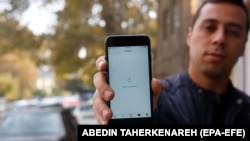
YouTube, like most other popular social media platforms, is banned in Iran and only accessible via proxy software.
Azad has operated since 2022, hosting political, economic, and social discussions with Iranian experts and commentators inside and outside the country. Its YouTube channel has nearly 160,000 subscribers, while its Instagram account has more than 30,000 followers.
The platform has hosted guests with sharply divergent views, including advocates of ending the Islamic republic through a constitutional referendum, supporters of restoring the monarchy, and individuals defending state policies.
Azad was also involved in arranging an interview between US conservative commentator Tucker Carlson and President Masud Pezeshkian, according to Ahmadi, who told The New York Times that he proposed the interview to Carlson and then recommended him to the Iranian president’s team.
Razzagh said the use of the “spreading falsehoods” charge allows authorities to portray the action as a conventional criminal case rather than an attempt to suppress dissent.
“They want to play a two-sided game: to say they are not shutting down critical voices while shutting them down,” he said.
He warned that the action could mark the beginning of a wider campaign against independent online media.
“If the other few media outlets that remain and produce independent content do not submit to the silence the Islamic republic wants to impose, they too will be targeted,” Razzagh said.

