Georgian Dream leader Bidzina Ivanishvili (file photo)
TBILISI – Georgia’s ruling party has announced electoral changes in line with demands of protesters who have taken to the streets of the capital Tbilisi in the past days.
The parliamentary elections in Georgia in 2020 should be held under a proportional system, the head of the ruling Georgian Dream party, Bidzina Ivanishvili, said on June 24.
Ivanishvili said that no threshold for parties should be applied during the elections.
Changing the electoral system from a mixed to a proportional system from 2020 was one of the demands of thousands of demonstrators who have rallied in the Georgian capital since June 20.
Protest leaders have said that the rallies would continue until their wider demands were met, including a call for the interior minister to step down, the release of those arrested on the first night of protests, and the punishing of law-enforcement officers who used violence against the crowd.
Thousands of demonstrators gathered for a fourth day in the Georgian capital, Tbilisi, on June 23 calling for the resignations of some top officials and early elections.
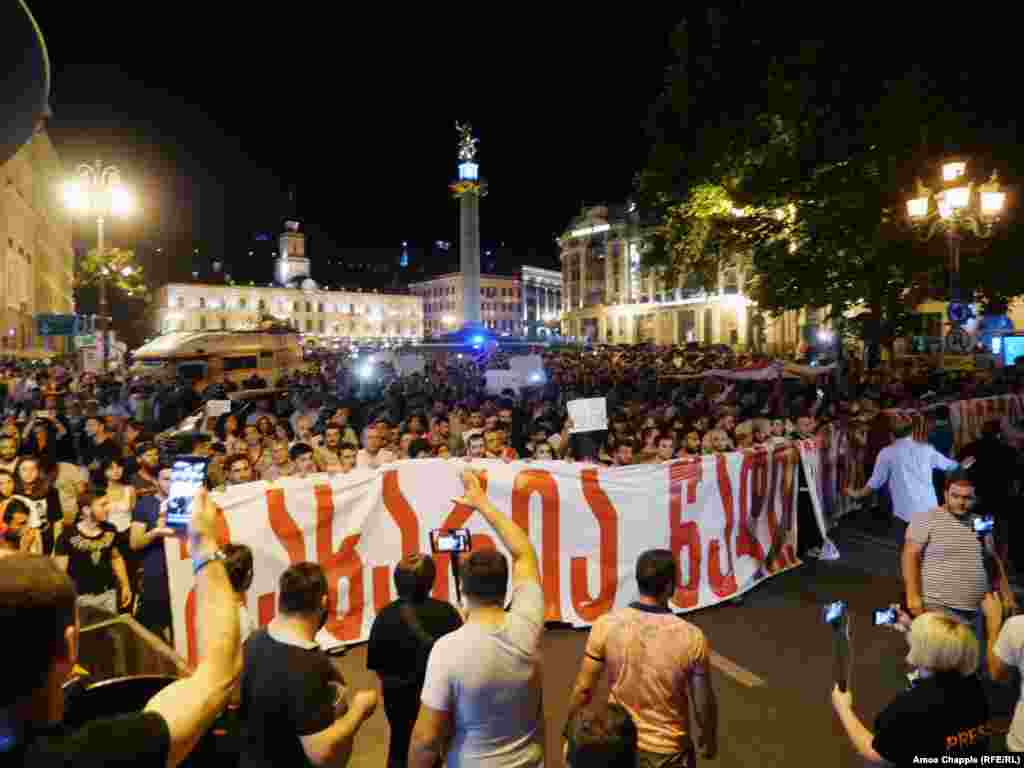
The protest on June 23 began at around 7 p.m. local time with people gathering in front of the parliament building on Rustaveli Avenue in central Tbilisi.
A Night Of Protests In Tbilisi
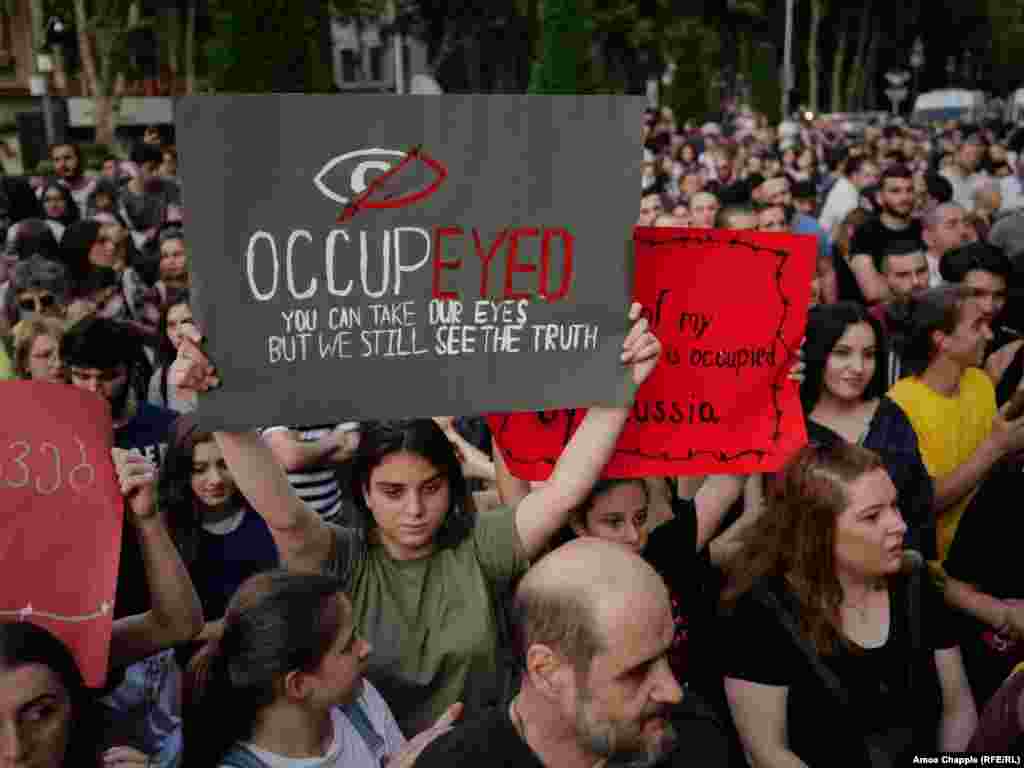
1/14A protester holds a sign in reference to demonstrators who lost their eyes in violence or were temporarily blinded by tear gas during clashes with police on June 20. Police used rubber bullets and tear gas against the crowd, with hundreds of people being injured, including many police.
Protesters gathered on June 22 for a third straight night of rallies in the Georgian capital, Tbilisi, demanding justice for activists who were injured or detained the previous two days. The protests erupted on June 20 in reaction to a Russian lawmaker sitting in the parliamentary speaker's chair during a religious assembly, which many Georgians saw as an unwelcome reminder of Russian military occupation of its breakaway regions of Abkhazia and South Ossetia.
Show moreShow less
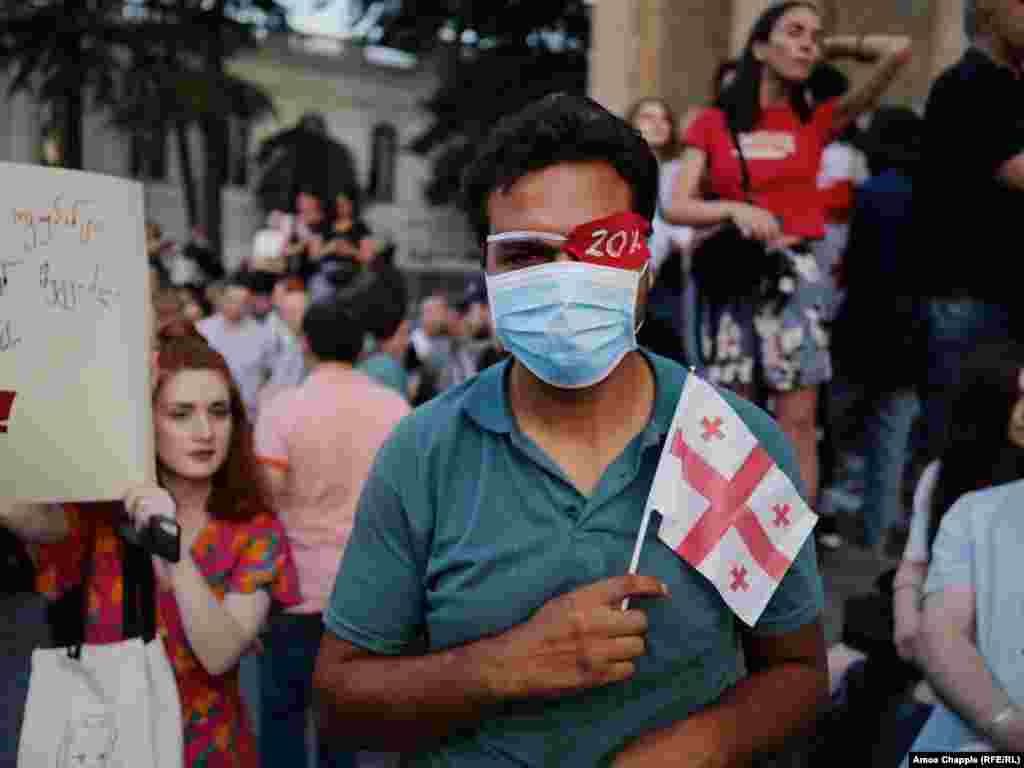
2/14This protester's eye patch reads "20 percent," referring to the amount of Georgian territory made up by South Ossetia and Abkhazia, the two breakaway regions under the control of the Russian military.
Protesters gathered on June 22 for a third straight night of rallies in the Georgian capital, Tbilisi, demanding justice for activists who were injured or detained the previous two days. The protests erupted on June 20 in reaction to a Russian lawmaker sitting in the parliamentary speaker's chair during a religious assembly, which many Georgians saw as an unwelcome reminder of Russian military occupation of its breakaway regions of Abkhazia and South Ossetia.
Show moreShow less
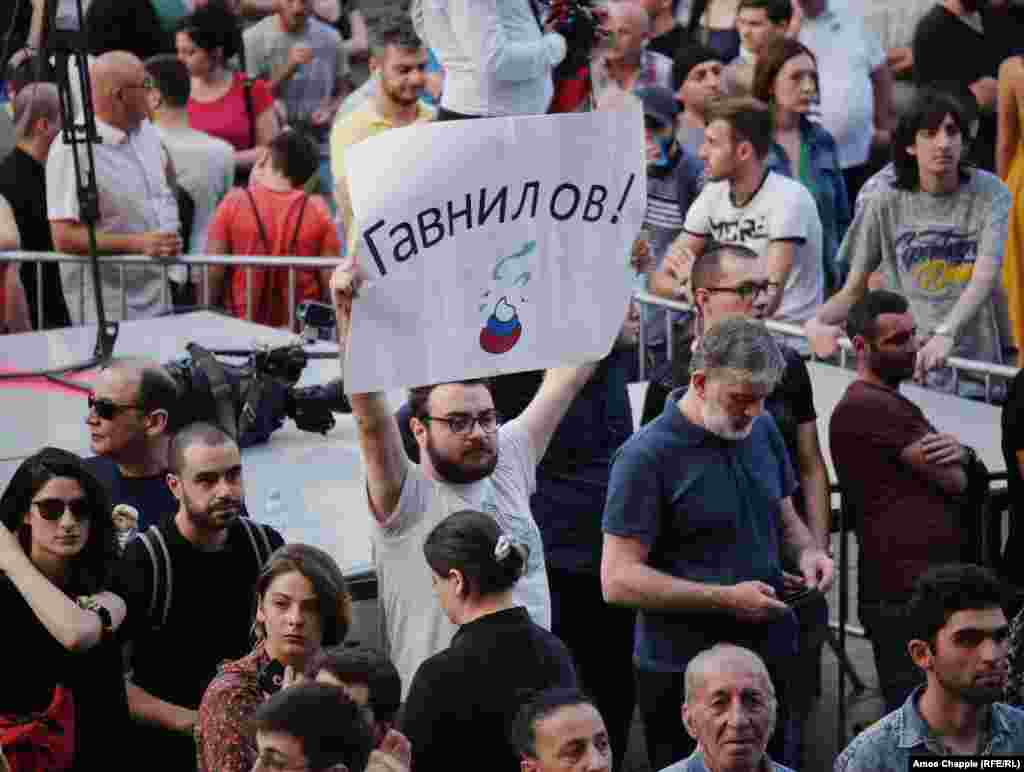
3/14A sign with the portmanteau Gavnilov that combines the last name of Russian State Duma Deputy Sergei Gavrilov -- who sat in the Georgian parliamentary speaker's chair during a meeting of international lawmakers on June 20, angering the protesters -- and the word "govno," which means crap. Demonstrators view Gavrilov as an ally of Putin and say he backs Russia's support for the breakaway regions of South Ossetia and Abkhazia.
Protesters gathered on June 22 for a third straight night of rallies in the Georgian capital, Tbilisi, demanding justice for activists who were injured or detained the previous two days. The protests erupted on June 20 in reaction to a Russian lawmaker sitting in the parliamentary speaker's chair during a religious assembly, which many Georgians saw as an unwelcome reminder of Russian military occupation of its breakaway regions of Abkhazia and South Ossetia.
Show moreShow less
4/14The number of protesters at the rally on June 22 appeared to be in the low thousands.
Protesters gathered on June 22 for a third straight night of rallies in the Georgian capital, Tbilisi, demanding justice for activists who were injured or detained the previous two days. The protests erupted on June 20 in reaction to a Russian lawmaker sitting in the parliamentary speaker's chair during a religious assembly, which many Georgians saw as an unwelcome reminder of Russian military occupation of its breakaway regions of Abkhazia and South Ossetia.
Show moreShow less
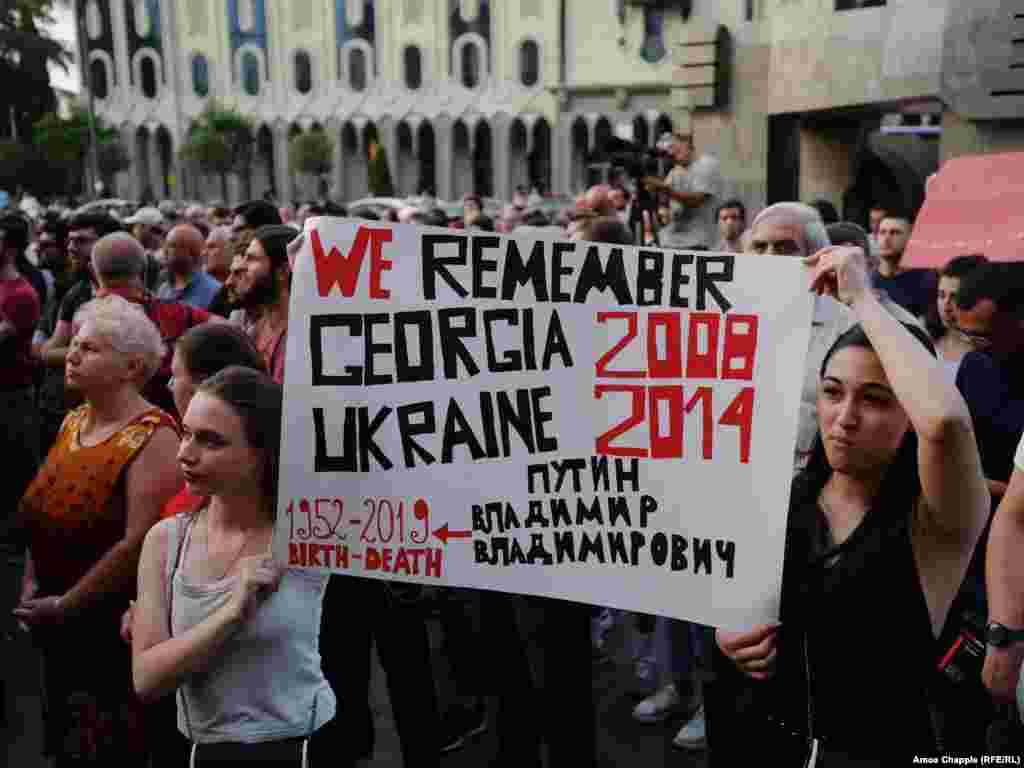
5/14Activists' signs are referring to Georgia's 2008 conflict with Russian forces over the breakaway regions of South Ossetia and Abkhazia, when Russian tanks drove near Tbilisi, as well as the ongoing conflict in eastern Ukraine. Among the protesters' demands is the resignation of the country's interior minister, Giorgi Gakharia.
Protesters gathered on June 22 for a third straight night of rallies in the Georgian capital, Tbilisi, demanding justice for activists who were injured or detained the previous two days. The protests erupted on June 20 in reaction to a Russian lawmaker sitting in the parliamentary speaker's chair during a religious assembly, which many Georgians saw as an unwelcome reminder of Russian military occupation of its breakaway regions of Abkhazia and South Ossetia.
Show moreShow less
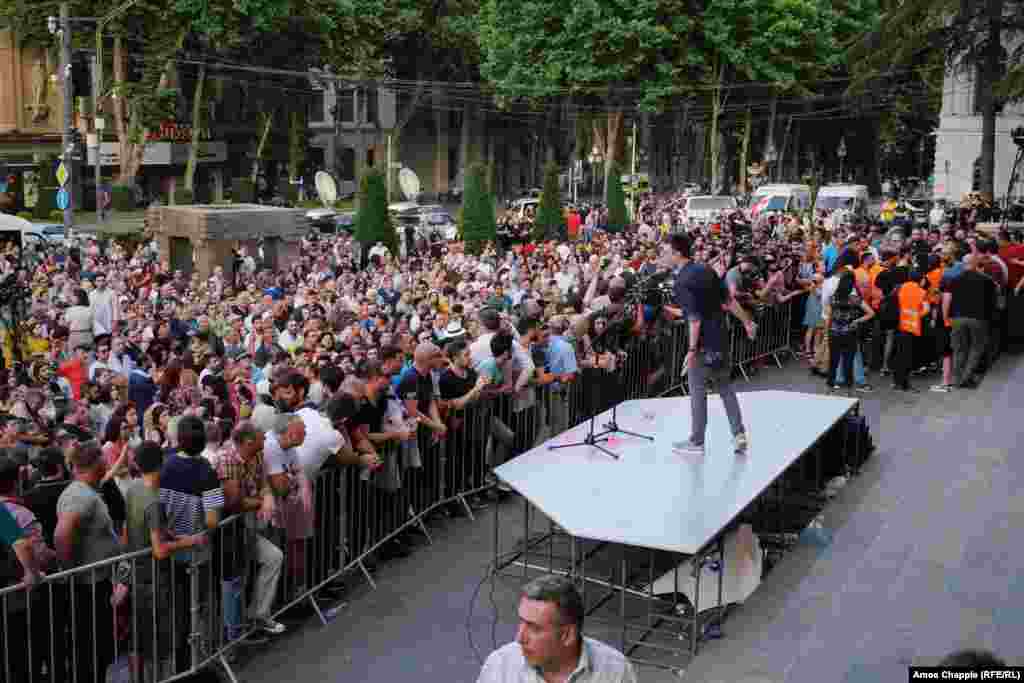
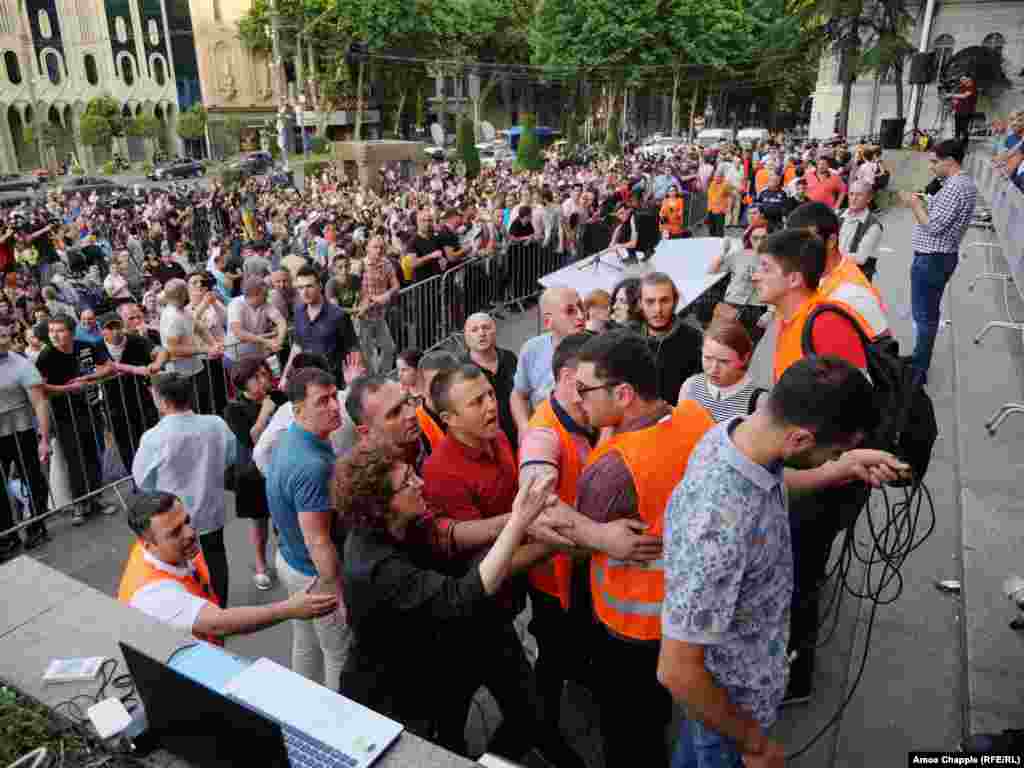
6/14Arguments broke out while opposition politicians apparently tried to gain access the stage and address the protesters. The appearance by Gavrilov in parliament on June 20 drew strong reactions from opposition members, student activists, and others as thousands turned out to demonstrate. Georgia's parliamentary speaker, Irakli Kobakhidze, resigned after the incident.
Protesters gathered on June 22 for a third straight night of rallies in the Georgian capital, Tbilisi, demanding justice for activists who were injured or detained the previous two days. The protests erupted on June 20 in reaction to a Russian lawmaker sitting in the parliamentary speaker's chair during a religious assembly, which many Georgians saw as an unwelcome reminder of Russian military occupation of its breakaway regions of Abkhazia and South Ossetia.
Show moreShow less
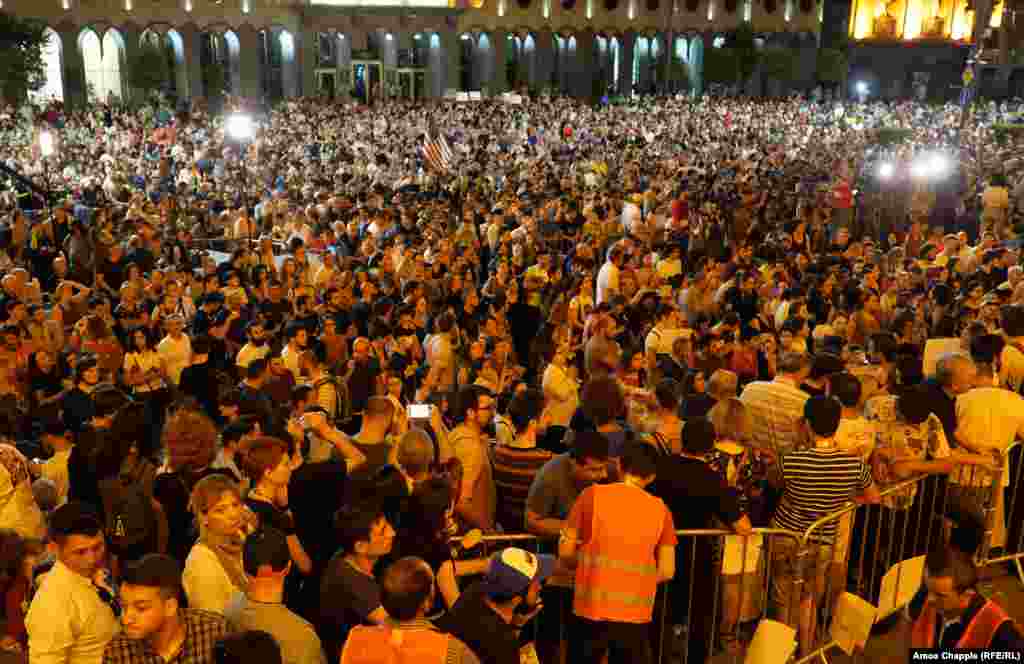
7/14As night fell, protesters gathered outside the parliament building...
Protesters gathered on June 22 for a third straight night of rallies in the Georgian capital, Tbilisi, demanding justice for activists who were injured or detained the previous two days. The protests erupted on June 20 in reaction to a Russian lawmaker sitting in the parliamentary speaker's chair during a religious assembly, which many Georgians saw as an unwelcome reminder of Russian military occupation of its breakaway regions of Abkhazia and South Ossetia.
Protesters gathered on June 22 for a third straight night of rallies in the Georgian capital, Tbilisi, demanding justice for activists who were injured or detained the previous two days. The protests erupted on June 20 in reaction to a Russian lawmaker sitting in the parliamentary speaker's chair during a religious assembly, which many Georgians saw as an unwelcome reminder of Russian military occupation of its breakaway regions of Abkhazia and South Ossetia.
Show moreShow less
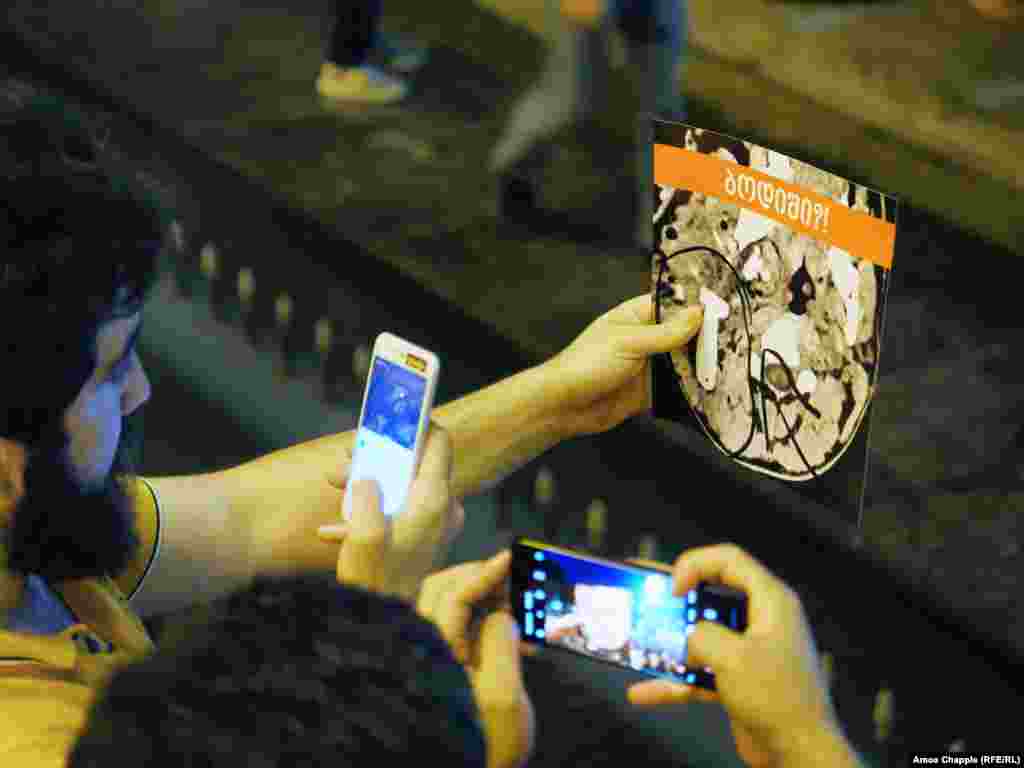
9/14Protesters hold up pictures of a medical scan, which they say is of an activist's skull in which a rubber bullet is embedded.
Protesters gathered on June 22 for a third straight night of rallies in the Georgian capital, Tbilisi, demanding justice for activists who were injured or detained the previous two days. The protests erupted on June 20 in reaction to a Russian lawmaker sitting in the parliamentary speaker's chair during a religious assembly, which many Georgians saw as an unwelcome reminder of Russian military occupation of its breakaway regions of Abkhazia and South Ossetia.
Show moreShow less
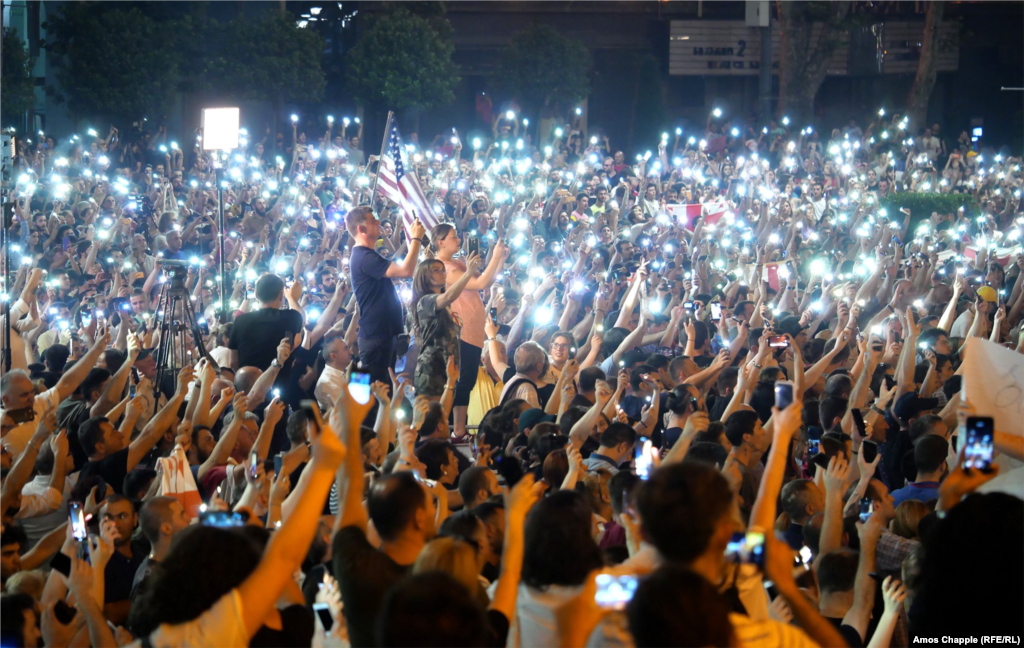
10/14Demonstrators hold their cellphones in the air as the Georgian national anthem is sung.
Protesters gathered on June 22 for a third straight night of rallies in the Georgian capital, Tbilisi, demanding justice for activists who were injured or detained the previous two days. The protests erupted on June 20 in reaction to a Russian lawmaker sitting in the parliamentary speaker's chair during a religious assembly, which many Georgians saw as an unwelcome reminder of Russian military occupation of its breakaway regions of Abkhazia and South Ossetia.
Show moreShow less
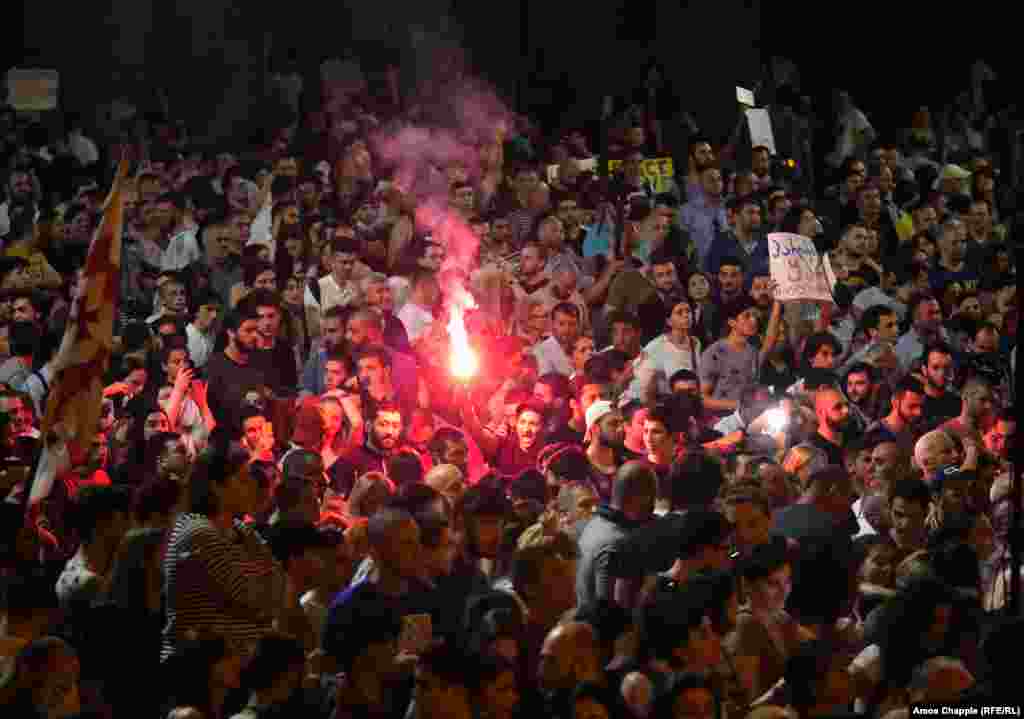
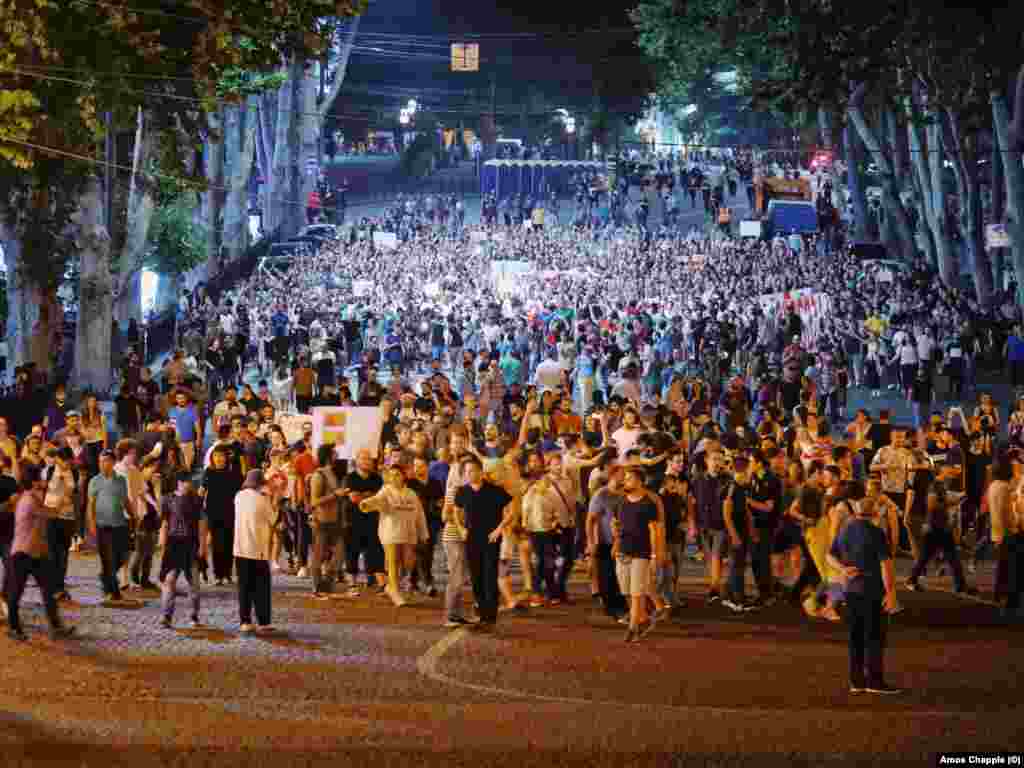
11/14After midnight, protesters left the parliament and marched towards Georgia’s ruling Georgia Dream party headquarters, next to Tbilisi's famous Bridge of Peace.
Protesters gathered on June 22 for a third straight night of rallies in the Georgian capital, Tbilisi, demanding justice for activists who were injured or detained the previous two days. The protests erupted on June 20 in reaction to a Russian lawmaker sitting in the parliamentary speaker's chair during a religious assembly, which many Georgians saw as an unwelcome reminder of Russian military occupation of its breakaway regions of Abkhazia and South Ossetia.
Show moreShow less
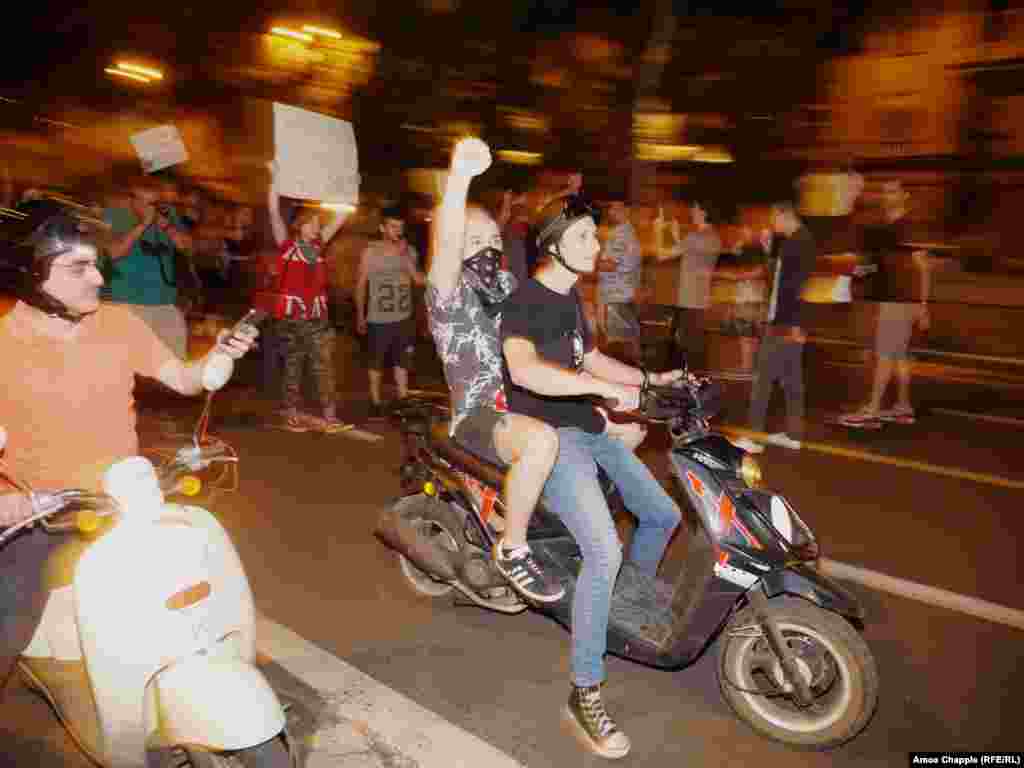
12/14A group of young protesters on scooters during the short march.
Protesters gathered on June 22 for a third straight night of rallies in the Georgian capital, Tbilisi, demanding justice for activists who were injured or detained the previous two days. The protests erupted on June 20 in reaction to a Russian lawmaker sitting in the parliamentary speaker's chair during a religious assembly, which many Georgians saw as an unwelcome reminder of Russian military occupation of its breakaway regions of Abkhazia and South Ossetia.
Protesters gathered on June 22 for a third straight night of rallies in the Georgian capital, Tbilisi, demanding justice for activists who were injured or detained the previous two days. The protests erupted on June 20 in reaction to a Russian lawmaker sitting in the parliamentary speaker's chair during a religious assembly, which many Georgians saw as an unwelcome reminder of Russian military occupation of its breakaway regions of Abkhazia and South Ossetia.
Show moreShow less
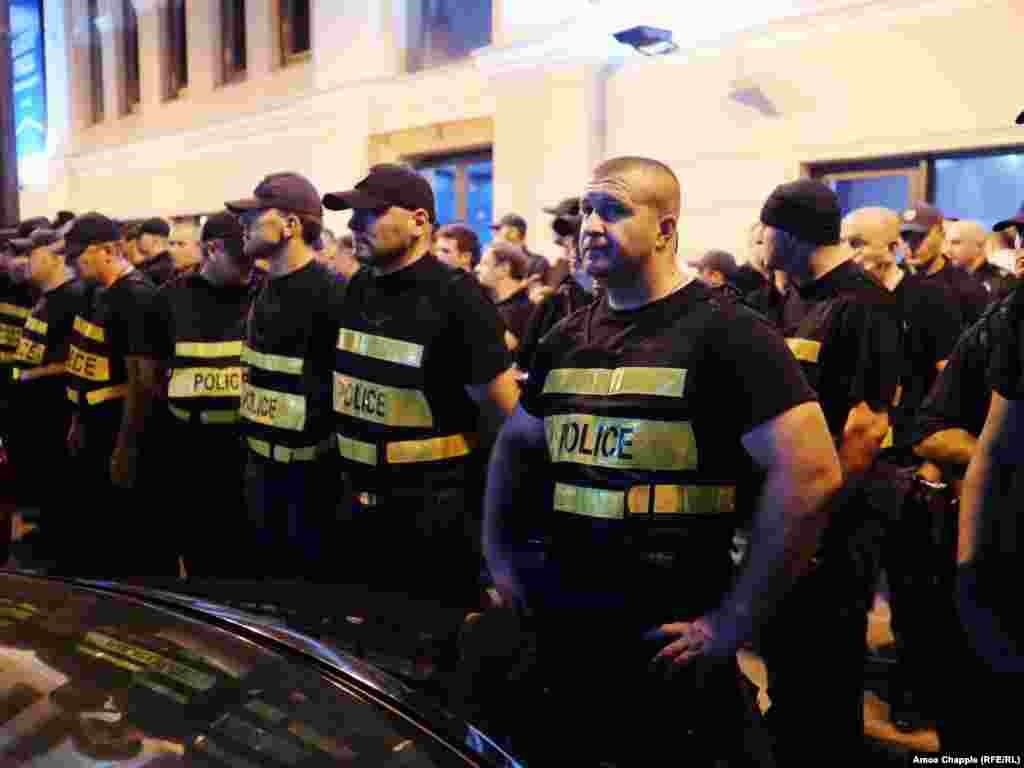
14/14The police presence outside the Georgia Dream headquarters was swiftly reinforced. After a standoff, the protesters dispersed. Another rally is planned for the evening of June 23.
Protesters gathered on June 22 for a third straight night of rallies in the Georgian capital, Tbilisi, demanding justice for activists who were injured or detained the previous two days. The protests erupted on June 20 in reaction to a Russian lawmaker sitting in the parliamentary speaker's chair during a religious assembly, which many Georgians saw as an unwelcome reminder of Russian military occupation of its breakaway regions of Abkhazia and South Ossetia.
Show moreShow less
Previous slide
Next slide
Some protesters were holding banners that denounced Russia and Russian President Vladimir Putin.
"Russia Is An Occupier" one banner read. Another protester wore a T-shirt with writing saying, "Georgian writers and publishers will never tolerate Russian occupation."
Some demonstrators condemned the Georgian authorities after violent clashes between protesters and police three days earlier resulted in hundreds of injuries and arrests.
The protest rally on June 23 was peaceful, with only a relatively small police presence.
Shortly after midnight, protesters left the parliament building and marched through central Tbilisi.
A small group of up to 200 demonstrators eventually made their way back to the parliament building where the mostly young men took up chants and waved Georgian flags.
Protester Giga Lemonjava then set up a small pup tent in front of the steps to parliament. He told RFE/RL he and three friends will sleep there for the night.
"We will sleep here until the interior minister steps down and all the prisoners [detained after the June 20 violence] are released," Lemonjava said.
On June 22, opposition figures announced that protests would continue even after the parliament speaker, Irakli Kobakhidze, resigned on June 21 -- meeting one of their demands.
Demonstrators initially gathered on June 20 to express their anger at Russian State Duma Deputy Sergei Gavrilov, who had sat in the Georgian parliamentary speaker's seat while addressing a council of lawmakers from predominantly Orthodox Christian countries -- the Interparliamentary Assembly on Orthodoxy (IAO).
The symbolism of a Russian lawmaker speaking in Russian from the parliamentary speaker's chair touched nerves in Tbilisi, sparking the ire of the public, opposition parties, Georgia's president, and members of the ruling Georgian Dream coalition.
While the protests were sparked by concerns about how Georgia handles relations with Russia, opposition parties have sought to seize the moment to press much wider and unrelated demands over economic and political woes that are plaguing the country.
There is "a feeling that [the government] is out of touch with society, that it's unaccountable, that it's quite arrogant," Thomas de Waal, a senior fellow at Carnegie Europespecializing in Eastern Europe and the Caucasus, told RFE/RL, adding that the opposition is "keen to play the Russia card and accuse Georgian Dream of being soft on Russia."
Russia-Georgian relations have been strained for more than a decade.
Russian troops crossed into Georgia in August 2008 and temporarily occupied several Georgian cities in a brief war in which Moscow backed separatists in Georgia's breakaway regions of South Ossetia and Abkhazia.
Georgian President Salome Zurabishvili called Russia "an enemy and occupier" and suggested Moscow had helped trigger the initial protests.
"The fifth column that it manages may be more dangerous than open aggression," Zurabishvili posted on her Facebook page.
Russian Deputy Foreign Minister Grigory Karasin on June 21 expressed what he called "indignation at the actions taken by representatives of the radical political forces of Georgia."
Karasin said the demonstrators in Tbilisi "used an important international forum uniting the Orthodox states of the world to spew their anti-Russian sentiments."
On June 21, Russian President Vladimir Putin ordered a temporary ban on Russian airlines from flying to Georgia as of July 8, and recommended that travel agencies suspend tours to the former Soviet republic.
The Georgian government said 240 people were treated in hospitals with injuries sustained in the violent clashes with security officials after they tried to break through riot police lines to storm parliament. More than 100 people remained hospitalized on the afternoon of June 21, some with wounds from rubber bullets police fired at the protesters.
Georgian media said that dozens of people were detained during the first night of the protest, with some reporting many had since been released.
RFE/RL's Georgian Service is a trusted source of politically and financially independent journalism in a country where much of the media is aligned with the government or the opposition.