




The European Union is preparing to host the Taliban in Brussels for the first time for "technical talks" on the repatriation of Afghans despite sharp criticism from rights groups and signs Afghanistan's rulers are cracking down further on women.
The 27-member bloc doesn't recognize the Taliban-led government, but it has scheduled to meet a delegation from the Afghan Islamist regime -- led by Foreign Ministry spokesman Abdul Qahar Balkhi -- in June, likely on June 22 or 23.
The delegation visiting Brussels will meet with senior officials from the European Commission, the European External Action Service (EEAS), and representatives of several member states, including Sweden.
Preparations for the talks have raised major objections from many quarters, especially after revelations in the UN Security Council that nearly 3.8 million Afghan girls remained barred from education and an estimated 250,000 more are excluded each year.
An EU spokesman reiterated during a recent news conference that "engagement doesn't mean recognition."
But that did little to assuage critics of the meetings as part of initiatives across the bloc to ease immigration and increase returns of immigrants to their home countries.
"This is a grave mistake," according to Shagofah Ghafori from the Brussels-based independent think tank CEPS.
"At best, Brussels is kowtowing to narrow political pressures; at worst, it’s normalizing a regime of gender apartheid and terror -- and all in exchange for a short-term 'fix' on migration that comes at the expense of core values and long-term security."
Undelivered Promises
The Taliban seized power in August 2021 as international forces withdrew from Afghanistan two decades after the militants had been ousted from power.
Taliban leaders promised Afghans would have more freedoms and rights than under the strict regime that previously held power. But the Taliban-led government has failed to live up to its pledges, cracking down hard on many groups, especially women and girls.
In the latest sign of how deep the oppression runs, last week Taliban authorities reportedly arrested or detained an unspecified number of women in Afghanistan's western Herat Province for allegedly not properly observing the Taliban rules for wearing a veil.
The next day, the Taliban morality police opened fire on women in the city after they launched a protest against their lack of rights and freedoms. Eyewitnesses reported the death of at least one protester in the unrest. The Taliban has not confirmed any casualties or arrests.
Saskia Bricmont -- an MP from Belgium and one of the initiators of a letter to the government arguing the Taliban regime is responsible for "massive and systematic human rights violations," impacting women, girls, journalists, human rights defenders, and minorities -- said allowing Taliban representatives in Brussels would send a "deeply troubling" political signal.
"Our commitment to human rights and democratic values must remain non-negotiable," Bricmont told RFE/RL.
Hannah Neumann, another member of the EU Parliament, wrote on social media that by allowing the Taliban presence in Brussels "we would legitimize a regime that systematically oppresses women on the international stage."
Taliban Crackdown Continues
In a sign of how the Taliban crackdown is showing no signs of letting up, the hard-line regime in late May adopted a new law legalizing the marriage of girls as young as 9 years old. The Taliban's reclusive chief Mullah Haibatullah Akhundzada has also reportedly issued new directives banning the use of smart phones.
Earlier, the Taliban authorities had ordered the closures of three more radio stations for what the regime called failure to pay their taxes, not being licensed, and substandard broadcasts.

In the same directive, the Taliban urged other radio stations to align their programming with "Islamic principles and ethics."
According to Reporters Without Borders (RSF), Taliban-ruled Afghanistan ranks 175th in the latest edition of the World Press Freedom Index. Only Saudi Arabia, Iran, China, North Korea, and Eritrea were rated lower.
The RSF report stated that 43 percent of media outlets in Afghanistan had been closed since 2021, the year the Taliban forcefully took over Kabul. Since then, the RSF says, more than 165 media professionals have been arrested -- including 25 in 2025 -- and “journalism has been choked by relentless censorship.”
On June 8, the UN deputy special representative and head of the UN Mission in Afghanistan, Georgette Gagon, told the Security Council that an estimated 3.8 million Afghan girls aged 7-18 are unable to attend school.
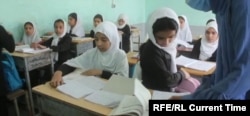
She said approximately 250,000 more girls are permanently excluded from secondary education each year, creating a "lost generation of talent and potential."
EU Officials In Kabul
Euractive, the Europe-based news website, claim that a visit by EU and Belgian officials to Kabul in January this year laid the groundwork for a follow-up meeting with Taliban representatives in Europe.
In a June 3 article published in the Guardian newspaper, former Afghan MP Fawzia Koofi wrote that she was about to write to EU diplomats seeking support for the release of her family members from Taliban detention when she heard the "shocking news" that the EU is inviting the militants to Brussels.
Koofi told RFE/RL that under the Taliban regime over the past five years, women have basically become second-class citizens -- and the Taliban is "smart enough to use women's rights as a bargaining chip."
Quoting three EU officials, the Euractive report suggests the proposed talks with the Taliban will remain strictly technical in nature to avoid any perception of formal recognition of the regime.
In an interview with Euronews, European Commissioner for Internal Affairs and Migration Magnus Brunner said the EU and its members states must engage with governments like the Taliban for "technical talks" on migration.
Asked whether Germany is holding talks with the Taliban regarding the deportation of Afghans, he said that "this was necessary."
According to the EU Agency for Asylum, many Western states have halted deportations to Afghanistan following the Taliban's takeover of Kabul in 2021. The few cases of deportation include from Belgium in February 2023, Sweden via Uzbekistan, and Switzerland in October 2024.
The agency said Germany and Austria have deported Afghans whose asylum applications were rejected. They included the deportation of 28 Afghans "with criminal records" in August 2024 and another 81 in July 2025. Austria deported one Afghan "convicted of crime" in October 2025.
The 19 EU countries that asked for an "open dialogue" with the Taliban about the deportation of Afghans most notably include Belgium, Sweden, Germany, Italy, and the Netherlands.
Afghan Applicant Flood
According to the European Council on Refugees and Exiles, more than 1.6 million Afghan nationals left their country since the Taliban takeover of Kabul in August 2021. In Europe, the agency says, Afghans remain the second-largest group of asylum applicants following people from Syria.
Brunner says EU experts were in Kabul for technical-level talks with the Taliban on the deportation of Afghans because he believes that "not getting engaged [with the Taliban] means it does not get better."
Koofi, however, said she believes engagement by international community, including countries in the region, has emboldened the Taliban.
“The more engagement they receive from the international community, the more they suppress women," she said.

