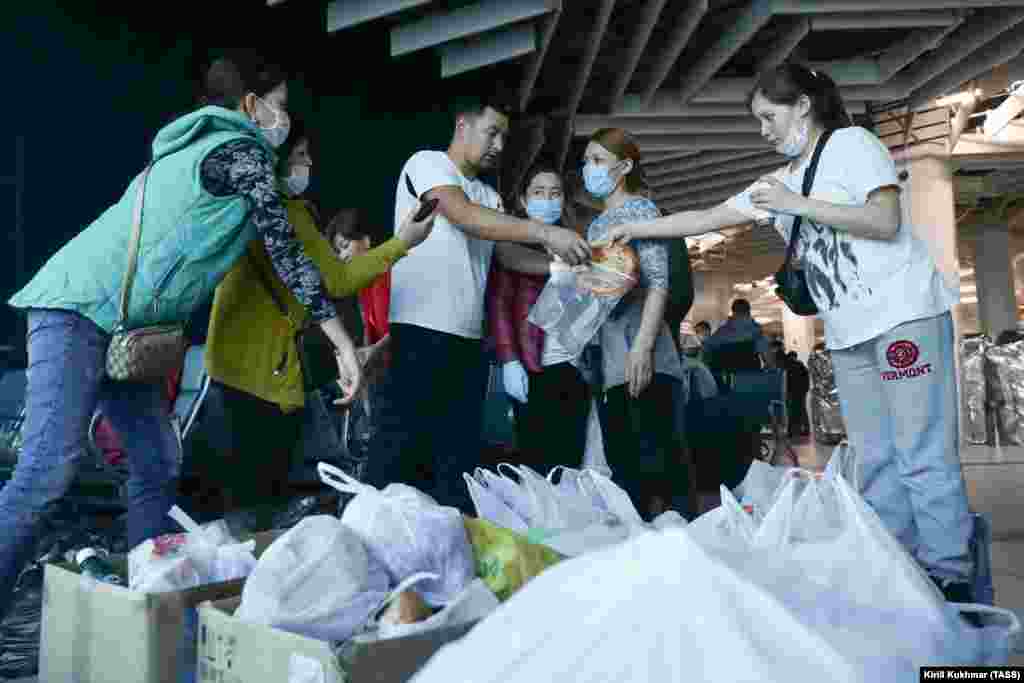



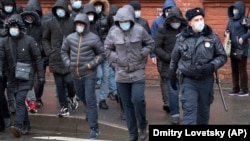
A Russian policeman accompanies a group of migrant laborers seeking to renew their work permits at a migration center in St. Petersburg earlier this month.
Photo: Dmitry Lovetsky (AP)
There was a xenophobic joke going around in Moscow, as residents were forced into an increasingly strict coronavirus lockdown, that the continued sight of migrant workers on the streets revealed who really ran the Russian capital.
But while images of seasonal workers seemingly going about their business as usual fed the notion that they were somehow being spared the strict stay-at-home measures being implemented to control the deadly pandemic, it's not like they had much choice.
For many, there was no returning home even if they wanted to, leaving them in a similar predicament to their 200 million fellow migrant workers across the globe who face economic ruin, risks to their health and safety, and overt discrimination as they try to ride out the crisis.
Can't Leave Russia, Keep Working
Russia's mid-March ban on international passenger flights and rail service, combined with similar steps taken by workers' home countries, left hundreds of thousands of the up to 7 million documented and undocumented migrants stranded.
Stranded In Russia's Airport Shutdown
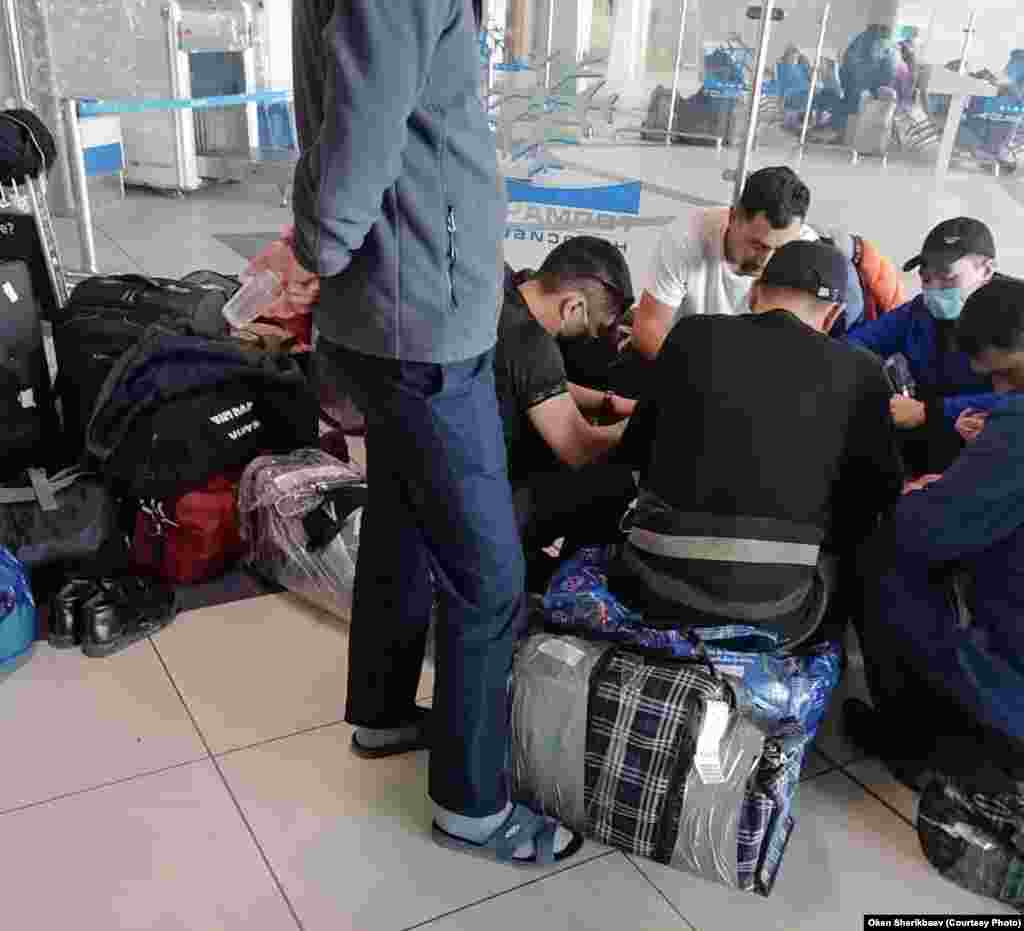
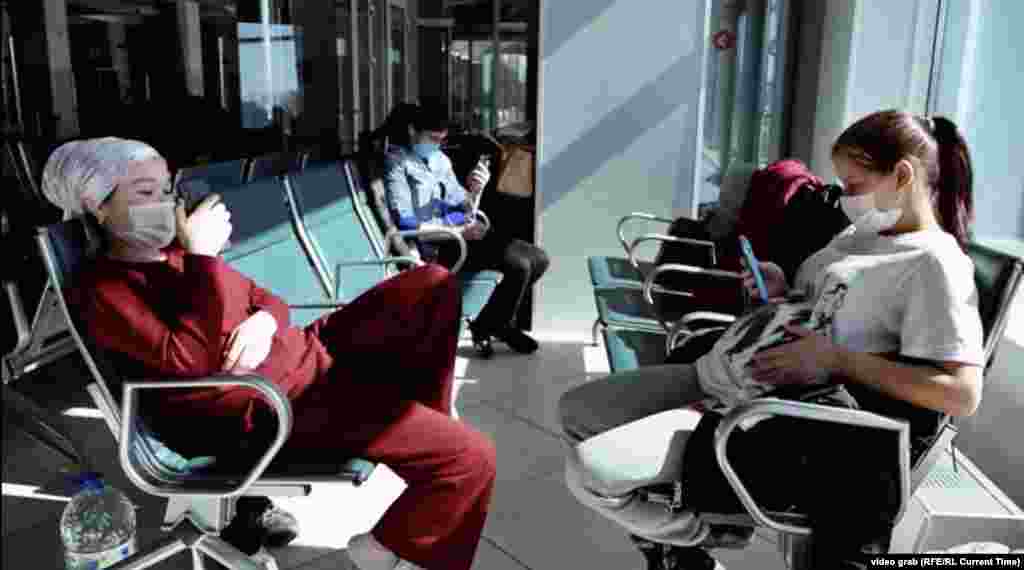
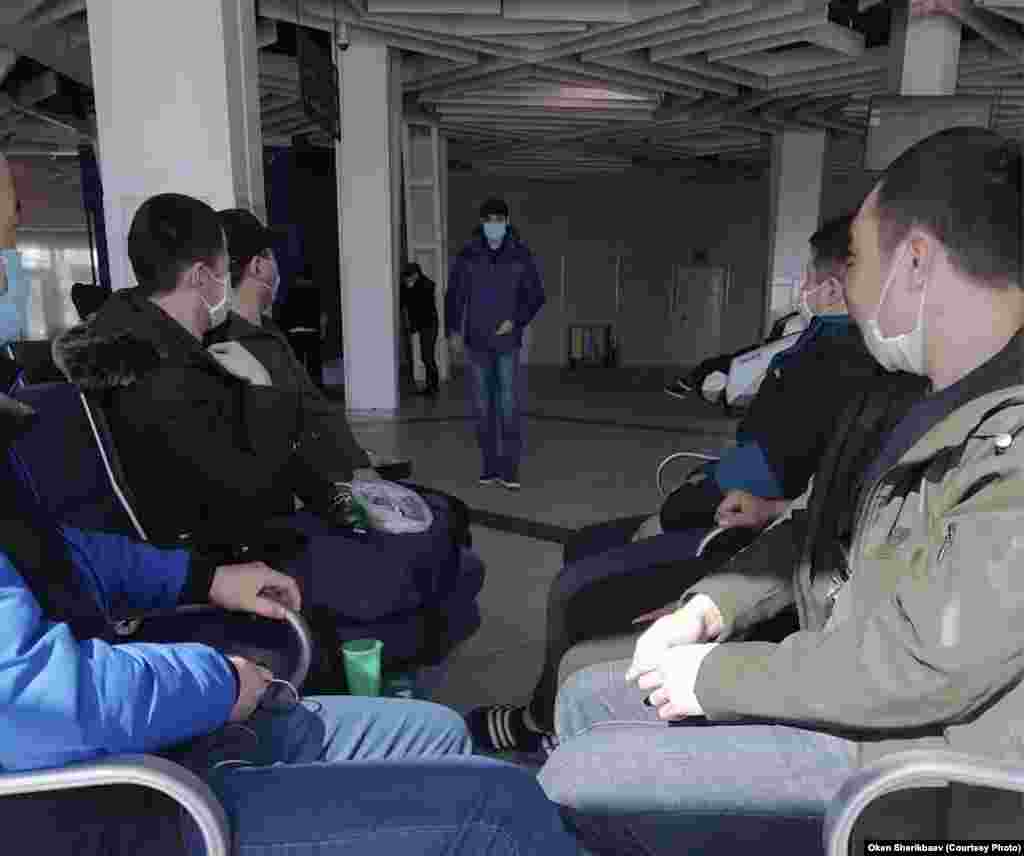
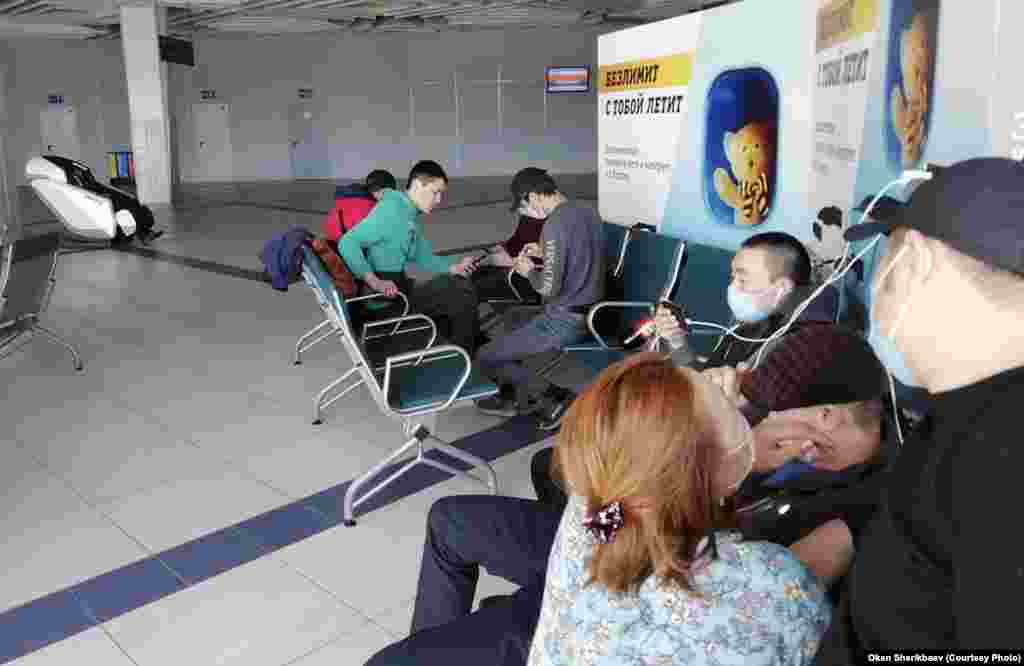
1/15Kyrgyz migrants wait at Tolmachevo Airport in Novosibirsk on March 31. About 200 people have been living at the airport since March 27, when both Kyrgyzstan and Russia canceled international flights in a bid to stop the spread of the coronavirus.
With flights canceled and borders closed in Russia, many migrant workers from Central Asia have found themselves trapped and unable to return to their home countries. Hundreds are stranded at airport terminals across Russia.
Show moreShow less
2/15Kyrgyz migrants wait at Tolmachevo Airport in Novosibirsk on March 31.
With flights canceled and borders closed in Russia, many migrant workers from Central Asia have found themselves trapped and unable to return to their home countries. Hundreds are stranded at airport terminals across Russia.
Show moreShow less
3/15Kyrgyz migrant waits at Tolmachevo Airport in Novosibirsk on March 31.
With flights canceled and borders closed in Russia, many migrant workers from Central Asia have found themselves trapped and unable to return to their home countries. Hundreds are stranded at airport terminals across Russia.
Show moreShow less
4/15Kyrgyz migrants at Tolmachevo Airport in Novosibirsk say they lost their jobs and their apartments. They are living in limbo and are desperate for help from the Kyrgyz government.
With flights canceled and borders closed in Russia, many migrant workers from Central Asia have found themselves trapped and unable to return to their home countries. Hundreds are stranded at airport terminals across Russia.
Show moreShow less
5/15A Kyrgyz migrant worker checks his phone at Tolmachevo Airport in Novosibirsk. This is one of several photos taken at the airport by Oken Sherikbaev, a Kyrgyz citizen who is waiting to get home.
With flights canceled and borders closed in Russia, many migrant workers from Central Asia have found themselves trapped and unable to return to their home countries. Hundreds are stranded at airport terminals across Russia.
Show moreShow less
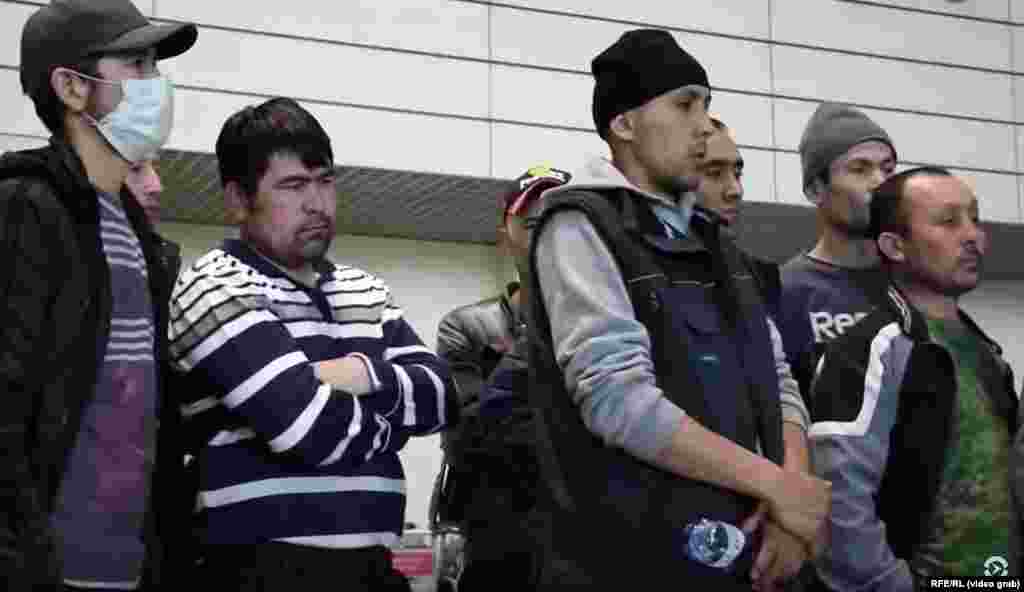
6/15Workers from Kyrgyzstan wear face masks on March 30 as they wait to find out how the can leave Tolmachevo International Airport in Novosibirsk. They do not appear to be practicing physical distancing to prevent the spread of the coronavirus.
With flights canceled and borders closed in Russia, many migrant workers from Central Asia have found themselves trapped and unable to return to their home countries. Hundreds are stranded at airport terminals across Russia.
Show moreShow less
7/15Stranded Kyrgyz migrant workers share bread at Tolmachevo International Airport in Novosibirsk after boxes of food arrive.
With flights canceled and borders closed in Russia, many migrant workers from Central Asia have found themselves trapped and unable to return to their home countries. Hundreds are stranded at airport terminals across Russia.
Show moreShow less
8/15Tajik citizens were unable to fly home from Mosow's Domodedovo Airport. After 10 days of waiting inside the terminal, they were removed and thrown onto the streets by Russian security forces on March 31.
With flights canceled and borders closed in Russia, many migrant workers from Central Asia have found themselves trapped and unable to return to their home countries. Hundreds are stranded at airport terminals across Russia.
Show moreShow less
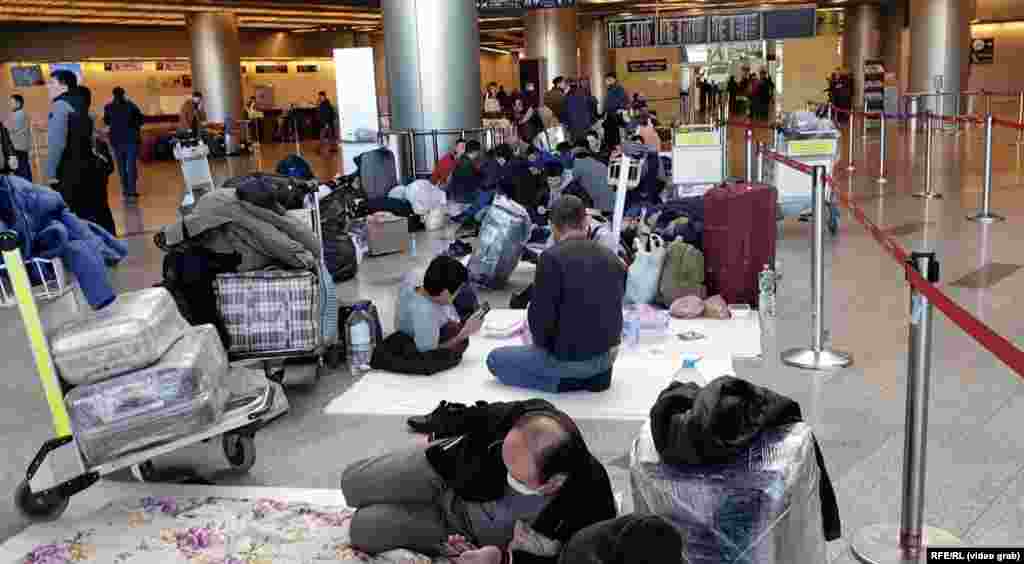
9/15Uzbek migrant workers sprawl out on the floor at Vnukovo International Airport outside Moscow.
With flights canceled and borders closed in Russia, many migrant workers from Central Asia have found themselves trapped and unable to return to their home countries. Hundreds are stranded at airport terminals across Russia.
Show moreShow less
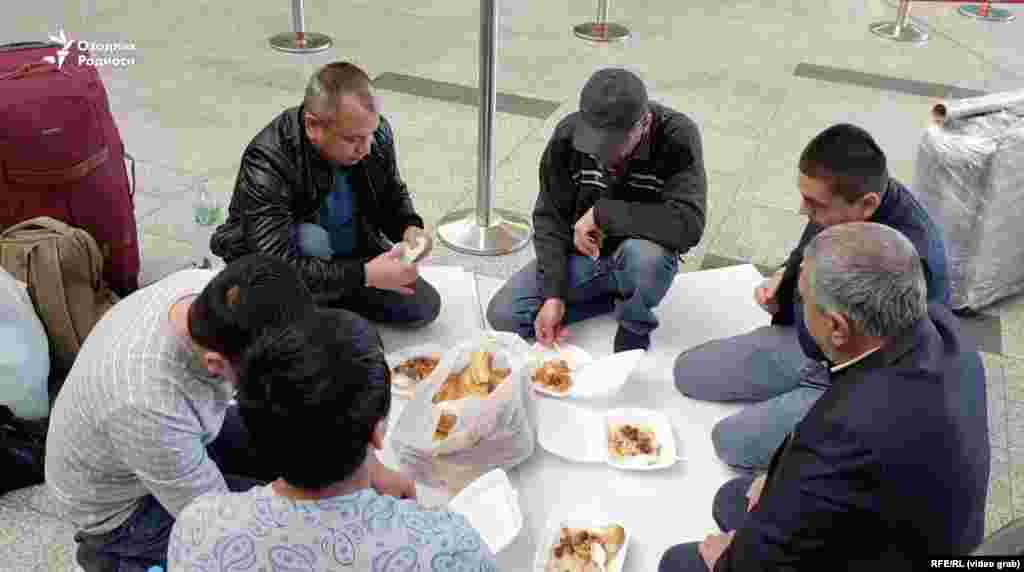
10/15Uzbek people eat a meal on the floor of Vnukovo International Airport on March 28.
With flights canceled and borders closed in Russia, many migrant workers from Central Asia have found themselves trapped and unable to return to their home countries. Hundreds are stranded at airport terminals across Russia.
Show moreShow less
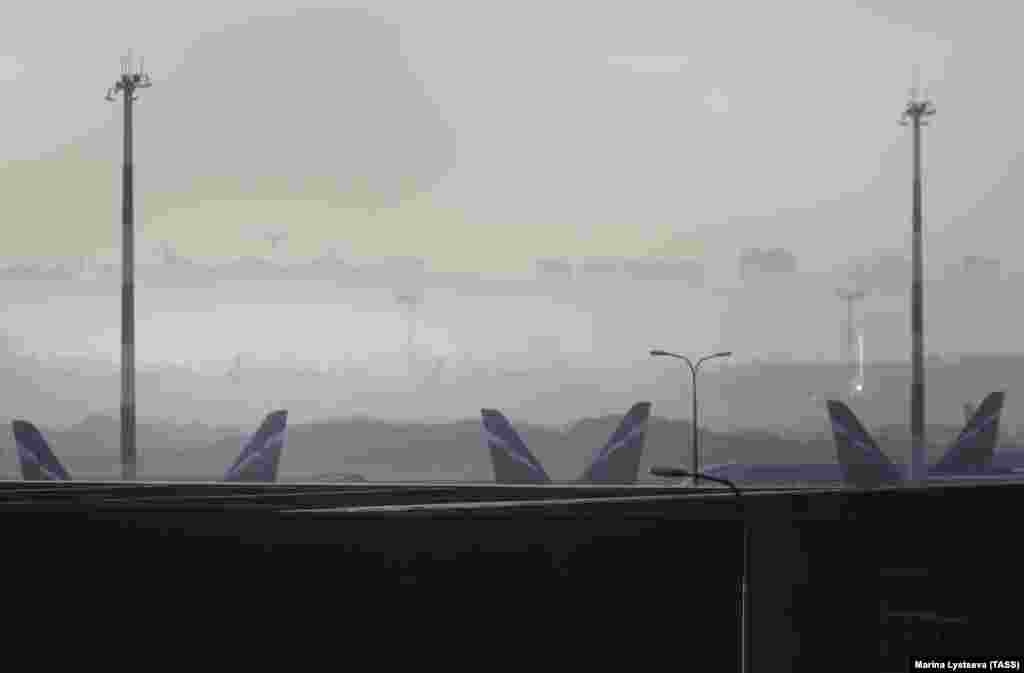
11/15Passenger planes stand idle at Moscow's Sheremetyevo International Airport on the first day of the international flight ban ordered by the Russian government.
With flights canceled and borders closed in Russia, many migrant workers from Central Asia have found themselves trapped and unable to return to their home countries. Hundreds are stranded at airport terminals across Russia.
Show moreShow less
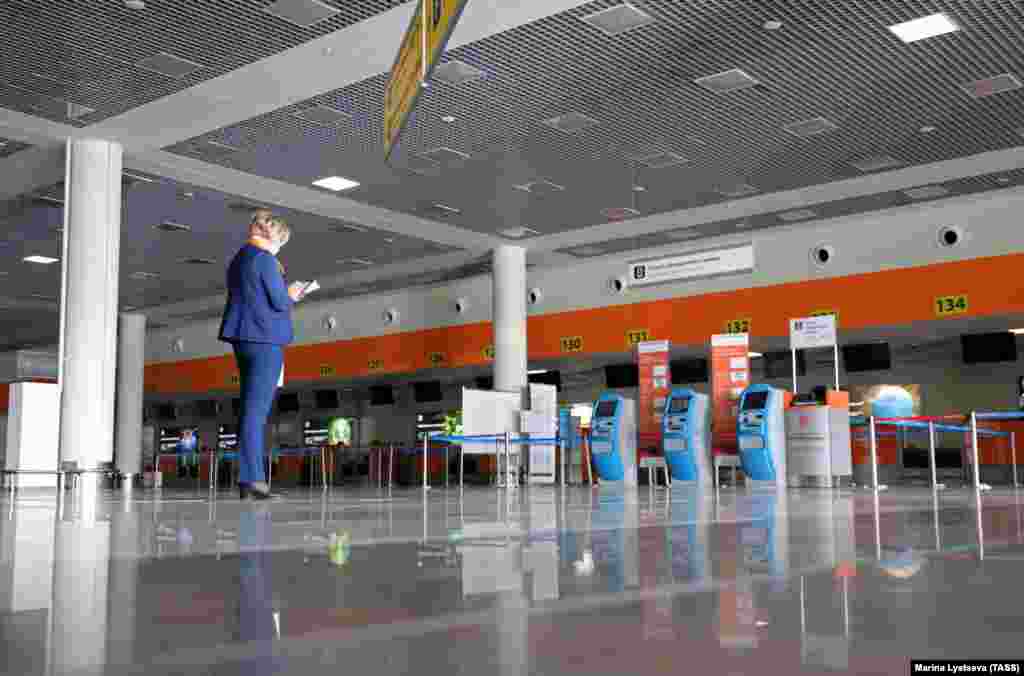
12/15Deserted check-in desks in the empty departures hall at Moscow's Sheremetyevo International Airport on March 27
With flights canceled and borders closed in Russia, many migrant workers from Central Asia have found themselves trapped and unable to return to their home countries. Hundreds are stranded at airport terminals across Russia.
Show moreShow less
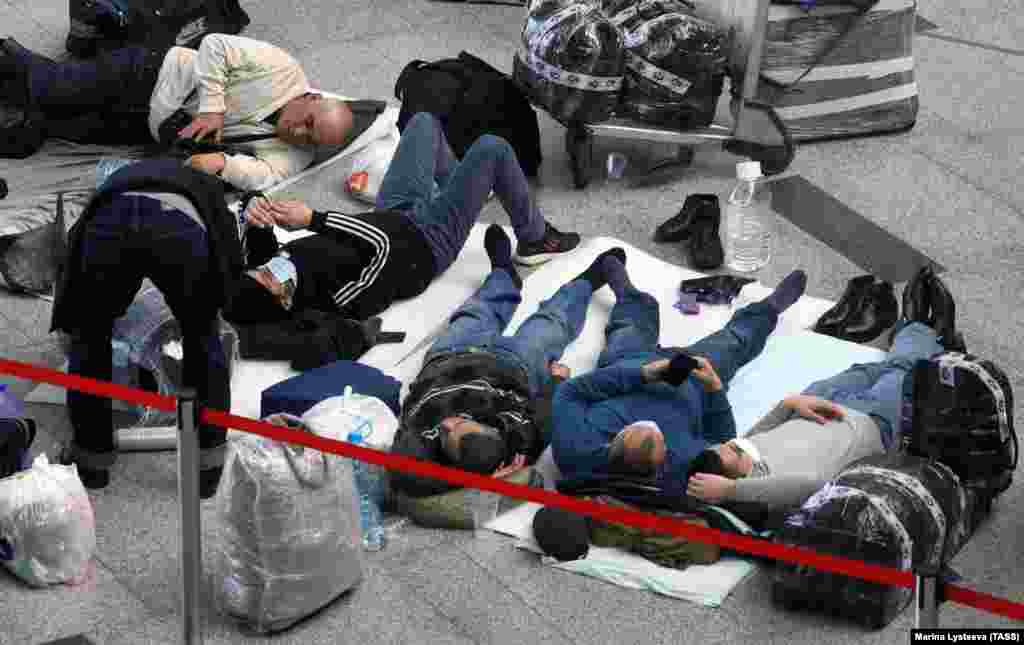
13/15Stranded travelers sleep on sheets at Vnukovo International Airport near Moscow on March 27, the first day the international flight ban ordered by the Russian government
With flights canceled and borders closed in Russia, many migrant workers from Central Asia have found themselves trapped and unable to return to their home countries. Hundreds are stranded at airport terminals across Russia.
Show moreShow less
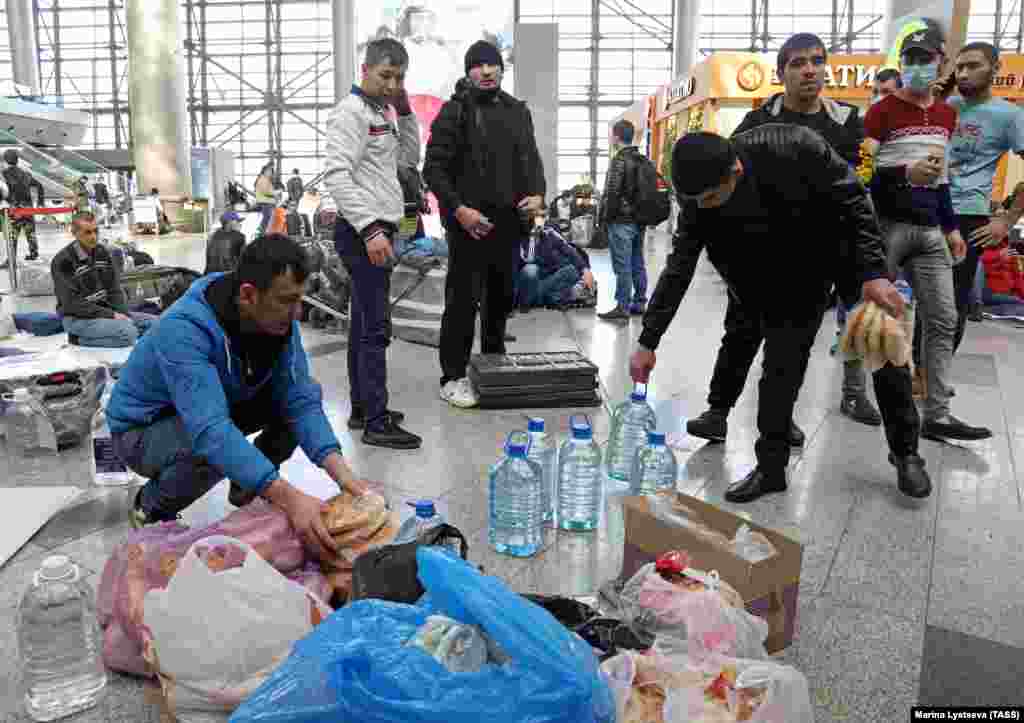
14/15Stranded travelers stock up on bread and water at Vnukovo International Airport.
With flights canceled and borders closed in Russia, many migrant workers from Central Asia have found themselves trapped and unable to return to their home countries. Hundreds are stranded at airport terminals across Russia.
Show moreShow less
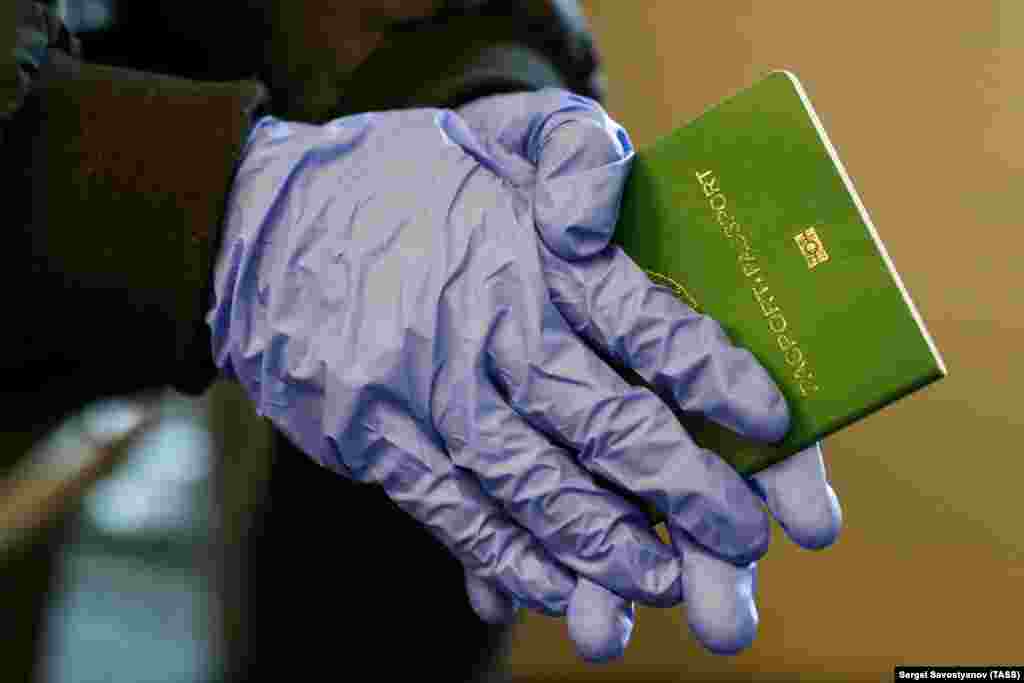
15/15A traveler with gloves and an Uzbek passport waits at Vnukovo International Airport on March 25.
With flights canceled and borders closed in Russia, many migrant workers from Central Asia have found themselves trapped and unable to return to their home countries. Hundreds are stranded at airport terminals across Russia.
Show moreShow less
Previous slide
Next slide
And comments by Russian officials certainly indicated that it was safer for the economy and the laborers themselves to keep working than to be holed up in self-isolation.
“We believe that somewhere from 1 to 2 million migrants, according to various estimates, work in the regions," Deputy Prime Minister Marat Khusnullin told the government in early April, before Russia was hit with the full force of the outbreak, in advising them why it was essential that the construction sites that employ many laborers keep working. "They cannot leave -- many because the borders and possibilities of moving are already closed...and it would be better if they are at work and not in the dormitory."
On April 14, as authorities grappled with the detection of 35 coronavirus infections at a dorm housing more than 470 migrant workers in Leningrad Oblast, a proposal was floated in parliament to automatically extend laborers' work permits, sparing them from having to line up outside immigration offices to ensure they remain in legal good standing.
Reversal Of Fortunes
The vast majority of the migrant workers in Russia are from the countries of Central Asia, and reportedly sent more than $8 billion home in the form of remittances in 2019. But the money transfers that migrants' families and native countries heavily depend on have reportedly been halved due to the COVID-19 crisis.
"I used to send $400-$500 every month. But for the past two months, we were not able to send anything back to Uzbekistan," 23-year-old Kasim Rakhimov told RFE/RL's Uzbek Service. "Due to the coronavirus, our restaurant eventually stopped working and 50 people were left without any salaries. They are all from Uzbekistan, Tajikistan, and Kyrgyzstan. Now we are all looking for some other jobs. Hopefully, we will find something."
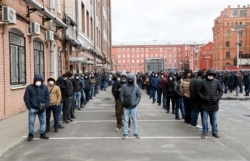
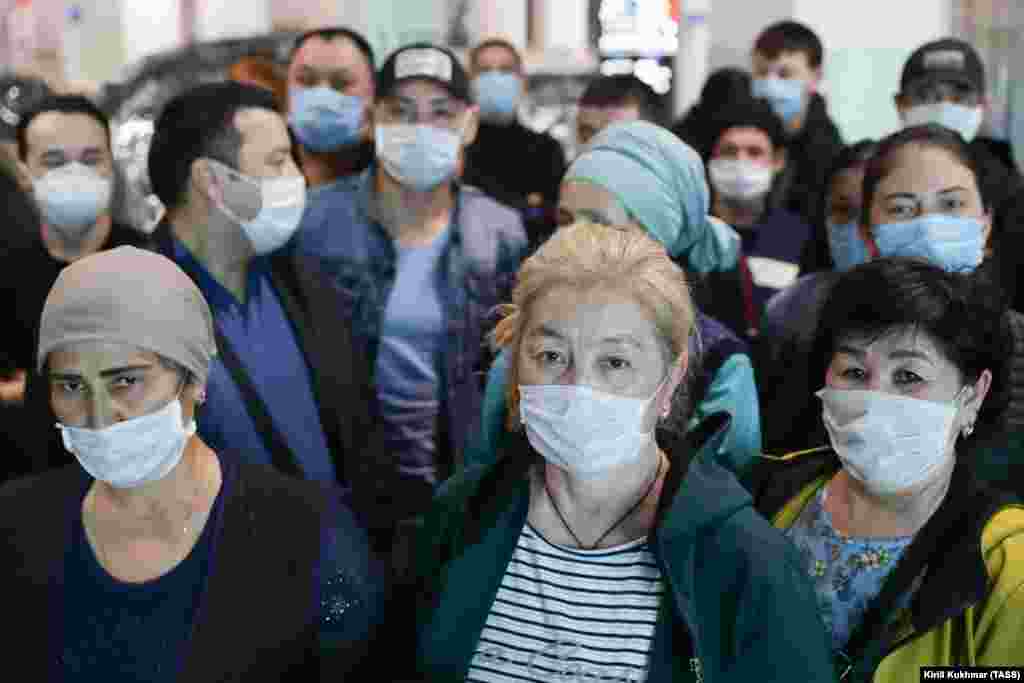
Migrant workers wearing protective face masks line up outside a migration control center in St. Petersburg to prolong their stay in Russia amid the ongoing coronavirus pandemic.
The situation among the roughly 1 million Tajiks who perform seasonal work in Russia, sending $2.6 billion home and accounting for more than 30 percent of the impoverished country's economy, is so dire that family members at home are looking for ways to send money back to Russia to support them.
Farrukh Zardakov, 33, is among those stuck in Russia. He told RFE/RL's Tajik Service by phone that "there are no jobs, and no money."
"They called from home and told me to send money, but I couldn't," he said of his family. "They bought a sack of flour, but maybe they will borrow from someone, here I am unemployed and we have 18 people living in one house."
No Place At Home For Ukrainians
Ukrainian migrant laborers contributed $12 billion -- more than 10 percent of GDP -- to their home country's troubled economy in 2019. More than 3 million were working abroad, the majority in EU states such as Poland, the Czech Republic, and Italy, when the coronavirus outbreak struck, prompting tens of thousands to return home at a time when Ukraine was already grappling with skyrocketing unemployment as COVID-19 took hold there, too.
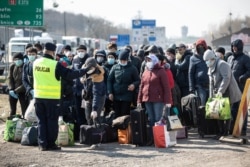
Many Ukrainian migrants line up to go home after the announcement that the Polish-Ukrainian border crossing at Dorohusk was to be closed following a coronavirus outbreak in March..
More than 155,000 Ukrainians -- including tourists, migrant workers, and others -- returned in the month of March alone. Large numbers of them formed long lines at checkpoints on the Polish and Hungarian borders as they tried to reenter their country after strict border restrictions were imposed.
"The COVID-19 outbreak, consequent business closures and economic slowdown in the EU and near abroad caused a surge in returning migrant workers to Ukraine, posing a number of protection concerns and placing further weight on the far-reaching socioeconomic impact of the pandemic," Anh Nguyen, chief of mission of the UN-affiliated International Organization for Migration's (IOM) Ukraine office said early this month.
Online Trolls And Human Trafficking
Migrant workers abroad, organizations like the IOM warn, are at greater risk of exploitation, including human trafficking, at times of crisis. And those contemplating a return home risk being accused of bringing the coronavirus disease with them.
The IOM said that the quarantining in early March of Ukrainians evacuated from China's Wuhan Province, where the coronavirus outbreak originated, "showed how a perceived threat to public health could rapidly escalate into [an outbreak of violence] in the community."
The organization wrote that "in many countries, the coronavirus brought out fears, stereotypes, and xenophobia."
There is no shortage of examples of cyberbullying on social and other media.
Irina Corobcenco, an activist with human-rights group Promo-LEX, explained that the phenomenon of hate speech recently reared its head in Moldova, which according to the International Labor Organization contributes about 430,000 people to the global pool of migrant workers.
"Depending on how the pandemic develops...the intensity of this hate message might get higher, it might turn into violence because any society has to find a culprit," she told RFE/RL's Moldovan Service.
Other examples are less direct, such as the flood of comments and repostings that accompanied the publication by the pro-Kremlin newspaper Izvestia on April 14 of an article titled Born Of Isolation: Migrants Try Their Hand At Drug Trafficking. Massive Loss Of Work By Foreigners Can Lead Them To Organized Crime.