





In parts of Central Asia, thousands of girls disappear before they ever take their first breath.
Armed with ultrasound scans, blood tests, and centuries-old patriarchal traditions, families across the region are quietly deciding which children deserve to be born, and which do not.
The targets are unborn girls.
In Uzbekistan and Tajikistan, the natural balance between male and female births has been distorted for years. In some areas, as many as 110 boys are born for every 100 girls, a gap that experts say cannot happen naturally.
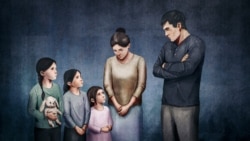


Behind the numbers lies a hidden system of sex-selective abortions, often driven by pressure from husbands, mothers-in-law, and cultural expectations that a son is essential for status, inheritance, and family survival.
Fifty-year-old Nafisa from Tashkent calls the abortion she underwent one of the hardest decisions of her life. At the time, she and her husband already had two daughters. When doctors told her she was carrying another girl, she terminated the pregnancy.
“My husband adored our daughters and always spoiled them. But at the same time, he never hid the fact that he also wanted a son,” Nafisa told Azattyq Asia, RFE/RL's Russian language unit covering Central Asia.
“I wanted to give birth to a third child and not have any more children after that. If I had given birth to a daughter then, I would have had to think about a fourth pregnancy because I also wanted a son. I decided my body would not withstand such a burden. I have poor health. That’s why I terminated the third pregnancy.”
Two years later, Nafisa became pregnant again.
“At the 12-week ultrasound, the doctor said that there was a high probability it was a boy,” she said. “I kept the pregnancy despite my health problems, and indeed a son was born.”
The Man With 8 Daughters
For others, the pressure disrupts families.
Guli, a 35-year-old woman from Ferghana, in southern Uzbekistan, says her husband’s family openly demanded a son during each of her pregnancies. When doctors revealed her fourth child would also be a girl, relatives pushed her to have an abortion. She refused.
“At first I thought my husband was joking,” Guli told RFE/RL. “But my mother-in-law constantly repeated that it was my fault we kept having girls.”
After the birth of the fourth daughter, the pressure escalated.
“She finally convinced her son to take a second wife, believing she would give him a long-awaited son,” Guli says, adding that her husband took a second wife, as his mother advised.
"But she also gave birth to four girls. Now my husband has a total of eight daughters.”
Stories like theirs are repeated across the region.

In both Tajikistan and Uzbekistan, abortions at a woman’s request are permitted up to the 12th week of pregnancy. At later stages, the procedure is allowed only for medical or social reasons.
But activists and psychologists say the law is often bypassed.
“I know of cases where women were forced to terminate pregnancies even at 21 weeks simply because they were expecting a girl,” said Muazzam Ibrakhimova, a psychologist at the Ferghana-based nongovernmental organization Mehrjon, which works on the protection of mothers and children.
Dilmurad Irgashev, head of the Association of Reproductive Specialists of Uzbekistan, says the problem is deeply rooted in culture and patriarchal expectations.
"In their view, the boy supposedly remains in the family, and his children, the grandchildren, are considered 'their own,'" Irgashev told RFE/RL. "They think: 'We’ll marry off the girl, and she will go to another family.'"
142 Million Missing Girls
The consequences now extend far beyond individual families.

According to information published by the United Nations Population Fund in 2023, some 142 million girls are "missing" worldwide as a result of "son preference, daughter aversion. and gender-biased sex selection."
The United Nations has urged governments not only to ban technologies that are being used to help sex-selection by parents, but also to confront the psychological coercion and family pressure that push women into abortions they may not freely choose.
A 2026 report from the Max Planck Institute describes a growing wave of “male childlessness” across Asia, as men born during the peak years of sex-selective abortion reach adulthood and struggle to find partners.
Experts caution that this could fuel rising social instability, trafficking, forced marriages, and increased violence against women in societies where females are decreasing as a share of the population.
“The imbalance will hit poor men hardest,” said Gulnora Beknazarova, director of the "Zerkalo" Center for Sociological Research in Dushanbe, which is the most prominent independent research firm in Tajikistan.
“And women will face even greater pressure because they become a limited resource.”
Yet even now, in many families, the obsession with sons remains deeply embedded.
Across Central Asia, traces of that longing can be seen in old traditions.
In Tajikistan, unwanted daughters were once given names meaning “Enough,” “Last,” or “No More Girls.” In Uzbekistan, some parents still name daughters Ugiloy -- meaning "Moon-Boy" -- in the hope that by incorporating the word "boy" into the girl’s name the next child will finally be male.
Doctors say biology has never supported myths.
“The child’s sex depends on the father, not the mother,” explained geneticist Farangis Mamadbokirova, co-founder of the medical genetics center Vita in Dushanbe. “But society continues blaming women.”
The Tashkent government is trying to counter sex-selective abortions by involving religious leaders in public awareness campaigns.
Reproductive specialist Dilmurad Irgashev, himself a father of two daughters, said he sometimes turns to religion when trying to dissuade couples from such decisions in a predominantly Muslim society.
"When people want an abortion or have undergone IVF and are dissatisfied because the result was a girl, parents come and say they do not want this child,” he says. “I begin explaining from the perspective of religion that in Islam, raising daughters is considered a great blessing for which the reward promised is paradise… And I always tell fathers: 'You absolutely need a daughter.'"