




Before the Taliban stormed to power in Afghanistan in 2021, Ahmad Dawood dreamed of expanding his small tailoring business, getting married, and buying a car.
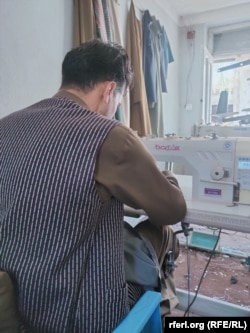
But five years after the militant Islamist group’s takeover, Dawood works on his family’s farm outside the capital, Kabul, growing fruit and vegetables. He sews dresses in secret for the few female customers who make orders.
“I had hoped to study fashion design at a university. I had a plan to import fabric from Turkey, create my own designs, and hire dressmakers. I imagined taking part in fashion shows and selling my designs in neighboring countries,” the 29-year-old told RFE/RL.
“None of that happened,” he added. “Everything went upside down.”
Dawood is among the millions of Afghans whose dreams were dashed when the Taliban seized power following the end of the nearly 20-year international military presence in Afghanistan.
Under the Western-backed Afghan government, corruption and violence were rife.
But young, educated Afghans, especially in major cities, had freedoms and opportunities that were unthinkable before the US-led invasion toppled the Taliban’s first regime in 2001.
Since regaining power in 2021, the Taliban has created one of the world’s most repressive regimes, depriving many Afghans of their basic rights, especially women.
Unrecognized and sanctioned by the international community, the hard-line group has overseen rising poverty and unemployment.
Hundreds of thousands of Afghans have fled to neighboring countries or the West to escape extreme poverty and the Taliban’s repressive rule. But many Afghans are unable to leave their homeland and have grudgingly learned to live under the militant group.
Dawood, who lives with his parents and two younger sisters, said they do not have the money to leave Afghanistan, a country of some 40 million people that in the grips of major humanitarian and economic crises.
“I’m still not married because I don’t earn enough to support a wife and children,” he said. “Whatever I earn goes to support my parents and my sisters.”
Secret Life Under The Taliban
For women and girls, the Taliban’s return to power has been a nightmare.
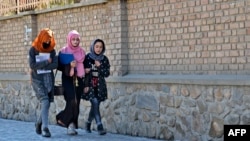
The militant group has severely curtailed women and girls’ appearances, freedom of movement, and right to work and study, essentially erasing women from public life.
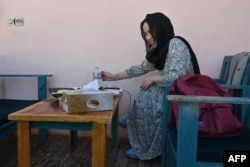
Zainab Ramz, who completed a journalism degree, was unable to land a job as scores of independent media outlets across the country closed due to Taliban pressure or financial constraints.
After two years with no work, Ramz works for a Kabul-based radio station. The media is among the few places where women can work, although with severe restrictions.
"There is safety," the 27-year-old told RFE/RL. "No one stops me on the street to ask me why I'm going to work or walking alone."
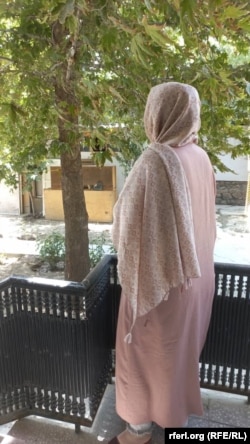
But Taliban rule has transformed women's everyday lives. Women face restrictions on travel and accessing public spaces. Women are barred from gyms and swimming pools, while beauty salons have been outlawed.
Ramz used to go running and hiking near her home. Now, she said, jogging is effectively impossible. Women must wear loose, long, body-covering clothes and be accompanied by a male relative.
The restrictions have forced some women to lead a secret life. Former beauticians operate underground salons from their homes, with customers finding them through word of mouth.
Ramz recently went to one before a family wedding. The beautician instructed the women to enter and leave separately so that the neighbors would not become suspicious.
"Imagine that I must go to a beauty salon secretly to have my hair done for a family wedding, as if it were some major security operation," Ramz said.
She knows of another woman, a former sports coach, who secretly opened a women's gym in the basement of her home.
Neighbors noticed women coming and going and reported her to the Taliban. She closed the gym before the authorities acted.
'We Can't Dream Big Anymore'
For young, educated Afghans, Taliban rule has not only restricted what they can do. It has also removed the opportunities they once had.
Naseem Karimi once imagined a career in government. After completing university, he thought he could compete for a government job or even run for parliament.
But under the Taliban’s political system, there is no parliament and power rests almost exclusively with members of the hard-line group.
"Young people don't dream like before," Karimi told RFE/RL. "We can't dream big anymore."
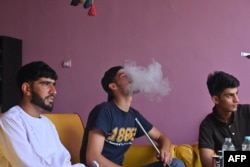
The 30-year-old spent two years in neighboring Iran, where jobs for Afghan migrants are limited to manual work.
He eventually returned to Afghanistan, where he now teaches at private schools on temporary contracts. He and several friends tried to open a private college, but the project failed to attract enough students. Many Afghans, he said, can no longer afford to pay for higher education.
Karimi’s ambitions have become more modest. "I just want to have a stable job," he said.
Karimi recently got married and earns 7,000 afghanis ($105) a month. About 1,000 ($15) goes toward his daily commute, leaving little for food, utilities, medicine, and other necessities.
After decades of war, Karimi said, many Afghans just want to be able to go outside without the fear of being killed in a bombing or attack.
"People just want to live in peace," Karimi said.
The price of relative peace has come at a steep cost. Afghans have lost many of their rights, opportunities, and hopes. But many have stopped waiting for the pre-2021 Afghanistan to return.
"We have learned to live with the country as it is," Karimi said.