




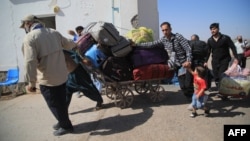
When Nizam Hematkhil heard the news, he rushed to a remote corner of Iran near the border with Pakistan.
A group of illegal migrants from Afghanistan had died in Iran’s southeastern province of Sistan-Baluchistan.
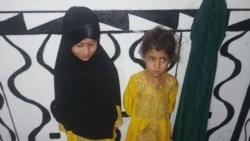
When Hematkhil arrived in the village of Mak Sukhteh, he found the bodies of his stepmother and her four daughters.
“The cause of their deaths was thirst,” Hematkhil told RFE/RL’s Radio Azadi. “I personally recovered their bodies.”
They were among the 17 Afghans who died of extreme dehydration in mid-September after crossing Iran through Pakistan, according to foreign-based Iranian human rights group Haalvsh.
The deaths have highlighted the dangers faced by Afghan migrants and refugees who risk crossing illegally into Iran to escape extreme poverty and the Taliban’s repressive rule.
Escaping Extreme Poverty
Hematkhil’s stepmother and her daughters, who were aged between six and 15, had been on their way to join him in Iran.
The family had all moved to Iran in search of a better life, but most of them returned to Afghanistan last year.
“Instead of finding a way to start over, we exhausted all our savings and resources," said Hematkhil, whose family are from the northern Afghan province of Baghlan. “There was little work and no realistic way for the family to support themselves.”
“Consequently, they were compelled to return to Iran to survive, as there was practically no other option left," he added.
The Taliban’s seizure of power in 2021 worsened one of the world’s largest humanitarian crises. Without international development assistance, the Afghan economy has further shrunk as joblessness and poverty rise.
Meanwhile, the hard-line Islamist group has committed gross human rights violations, including extrajudicial killings and torture, leading to an exodus to neighboring countries.

Critical Condition
Hematkhil’s stepmother and her young girls had crossed into Iran without taking water with them, said a relative who accompanied them on the journey.
Hematkhil’s stepmother's son, who was also with them, survived.
"The son was in critical condition. He had left the women behind," the relative said. "Locals transported him to [the Iranian town of] Saravan, and fortunately, he is doing well."
A Taliban diplomatic source confirmed to Radio Azadi that a mother and her four daughters died on September 11 due to severe thirst while crossing Iran. But the source disputed Haalvash’s claim that 17 Afghans had died.
Haalvsh released a video appearing to show locals digging graves. Another video purportedly shows people listening to a sermon in Pashto, one of Afghanistan’s two main languages.

Deadly Routes
For decades, millions of Afghans fleeing war, persecution, and poverty have sought refuge in Iran. Hundreds of thousands more have moved to the Islamic republic since 2021.
The UN refugee agency, UNHCR, estimates that around 4.5 million Afghans live in Iran, including more than 2 million undocumented migrants.
Many undocumented Afghans pay traffickers to smuggle them into Iran. The journey is arduous, and migrants often have to cross remote stretches of desert and mountains where food and water are scarce.
In July, the bodies of 14 Afghan migrants were found in a desert in southeastern Afghanistan near the border with Iran. The group was believed to have been attempting to cross illegally into Iran.
Similar cases have been reported in the past, with migrants dying after running out of water or food.

Crossing the 921-kilometer-long border has become increasingly dangerous for many Afghans as Iran violently cracks down on illegal migrants.
At least 10 Afghans were shot dead by Iranian border guards in December, according to Taliban officials, after they entered Iran illegally from western Afghanistan's Farah Province. Seven others were shot dead by border guards in November.
The incidents underscore the risks Afghans are willing to take to escape poverty and the dire economic situation in their country.
"They think about their futures, believing that if they reach Iran, they can at least find work and earn an income to provide a better life for their families,” Sefatullah Zahedi, a Germany-based migrant rights activist, told Radio Azadi.